SPAR coming after Checkers Sixty60 in South Africa


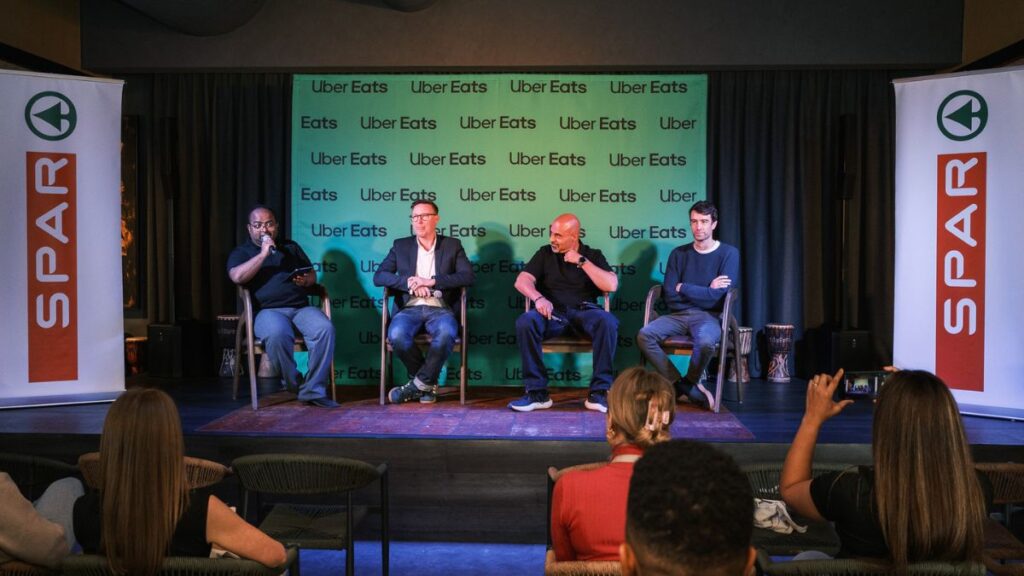
SPAR and Uber Eats have announced big plans to expand their partnership significantly in South Africa.
This comes as South Africa’s on-demand delivery battle is heating up, with local retailers fighting for market share.
On Tuesday, 14 October, SPAR announced that 275 of its stores are already live on the Uber Eats app, with plans to scale to over 800 nationwide.
The retailer said this collaboration will bring everyday essentials closer to millions of South Africans while helping independent retailers compete in the digital economy.
“By combining Uber Eats’ technology, logistics, and consumer reach with SPAR’s trusted national footprint and strong franchise network, the partnership demonstrates what is possible when global innovation meets local expertise,” it said.
The companies said this collaboration is set to be a benchmark for South Africa’s digital retail future.
“Together, the two brands are building a model that not only extends convenience to millions of South Africans, but also empowers independent retailers and creates new income streams across communities,” they said.
“This is more than a retail partnership – it is a blueprint for how digital and physical ecosystems can work together to drive growth, inclusion, and consumer trust.”
This comes as South Africa’s on-demand delivery battle is heating up among local food retailers, with each major brand investing heavily in its offerings.
Shoprite’s Sixty60 has been a runaway success, accounting for a significant share of the market, while Pick n Pay has invested heavily in its ASAP! offering and ongoing partnership with Takealot’s Mr D.
SPAR has its own in-house on-demand delivery service, SPAR2U, and has now sealed this deal with Uber Eats to expand its reach.
The retailer pointed to McKinsey’s State of Grocery Retail 2024 report, which showed that online grocery sales have grown 54% annually since 2019 to reach R23 billion, and 26% of consumers plan to increase their online grocery spending.
Convenience first
“This surge reflects the same consumer appetite fuelling the rapid adoption of SPAR on the Uber Eats app,” it said.
“Consumers are shopping differently, and their reasons are clear: 43% of South Africans shop online to save time, while 30% cite convenience as the key driver.”
“Uber Eats data echoes this, showing that South Africans save over 12.7 million hours each year by ordering on the app, time that is reinvested into work, family, and community.”
Uber Eats’ EMEA RGM for Grocery & Retail, Alex Troughton, explained that consumers no longer view delivery as a luxury – they expect it.
“Expanding SPAR stores on the Uber Eats app means we’re not just enabling convenience – we’re reimagining retail around consumer behaviour, backed by data, insights, and real outcomes,” he said.
The company explained that SPAR’s independent retail model – with around 80% of stores independently owned – positions the retailer as a platform for local empowerment.
“By bringing SPAR, TOPS, and KwikSpar stores online, the partnership supports hundreds of entrepreneurs, helping them compete in a digitising retail landscape while connecting them to millions of new customers,” it said.
“As a deeply local retail network, SPAR’s roots are in community,” said SPAR Southern Africa Omnichannel Executive Blake Raubenheimer.
“By scaling SPAR with Uber Eats, we’re extending that community connection into the digital economy – helping our independent retailers access new markets and more customers.”
The company added that the platform also plays a role in fuelling economic growth. In 2023, Uber contributed R17 billion to the South African economy, equivalent to 3.5% of the transport, storage, and communication sector GDP.
It said Uber Eats has also unlocked R1.6 billion in incremental value for restaurants, while drivers and delivery people on the platform earn on average 57% more than their next best alternative.






Comments