Good news for Cape Town homeowners


The City of Cape Town is looking to lower its property rates formula to shield homeowners from significant increases and keep property ownership costs among the lowest in South Africa.
The City of Cape Town announced that it will propose a 10.2% reduction in the rate-in-rand for residential properties following the 2025 General Valuation.
Cape Town’s rate-in-rand – the formula used to calculate property rates – is already the lowest in South Africa across all rates categories, but is set to fall further after healthy property value growth in the latest valuation.
The city’s indicative residential rate-in-rand is 0.006428 (down from 0.007159), pending finalisation of the draft budget.
The lower rate-in-rand is among several proposed measures to help keep property rate increases to a minimum for most homeowners, despite strong property value growth in Cape Town.
Other proposed measures in the forthcoming draft Budget 2026/27 include raising the ‘rates-free benefit’ to the first R500,000 of property value, up from R450,000.
It has also proposed that this benefit should be extended to all properties up to R8 million, up from R7 million.
The City said these planned measures will ensure that 60% of residential properties experience either a rate decrease or no change in rates, even though their property values have risen.
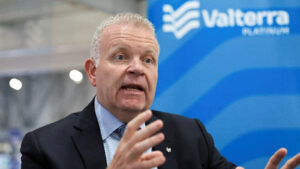
Cape Town Mayor Geordin Hill-Lewis said the proposed 10.2% rate-in-rand decrease and extended rates benefits to more middle-class homes will shield the large majority of ratepayers (over 60% of all homes).
These ratepayers will benefit from very low rate increases despite their property assets showing strong value growth, also increasing their family’s net worth. “Cape Town is South Africa’s one city that works,” Hill-Lewis said.
He claimed the city offers the best services, record infrastructure investments, and “the chance for your property assets and personal wealth to grow in value no matter who you are”.
It also boasts the lowest total monthly bills of South Africa’s metros, even when taking higher property values into account.
“This is the difference compared to other cities, where property values are declining even as rates rise and services sadly collapse,” the mayor said.
The increases

The City said it will also deliver a balanced budget while keeping tariff increases to the minimum necessary to avoid severe service delivery cuts.
Indigent relief thresholds will be raised, while property value bands for fixed charges will be altered to mitigate the number of properties moving between bands as far as possible.
More details will follow when the 2026/27 budget draft is tabled in City Council on 26 March and when the full public participation process commences.
The 2025 General Valuation Roll (GV2025) public inspection and objection period is prescribed under the Municipal Property Rates Act and runs from 20 February 2026 to 30 April 2026.
According to the City, the overall value of rated properties in Cape Town across all categories increased by 16.65% between GV2022 and GV2025, from R1.85 trillion to R2.16 trillion.
For residential properties in particular, the total rated value increased by 17.1% from R1.4 trillion to R1.63 trillion.
The median rates increase for properties under the R3 million range from R3 to R27 per month. For properties in the R1 million to R3 million range, the increase is roughly 0% to 2.5%.
Even in the worst case, 90% of properties under R3 million will avoid a rates increase of more than R100 resulting from the valuation.
The median rates increase ranges roughly from R27 to R200 monthly for properties valued at R3 million to R6 million – a 2.5% to 6% increase. For properties valued R6 million to R10 million, the increase ranges from R200 to R350.
The lowest rates in South Africa

Cape Town said its indicative 2026/27 rate-in-rand is by far the lowest of South Africa’s metros, even before the other cities apply their annual increases for next year. Residential rate-in-rand for the ‘Big Five’ metros are –
- Cape Town 2026/27 (indicative) – 0.006428
- Johannesburg 2025/26 – 0.009545
- Tshwane 2025/26 – 0.010117
- Ekurhuleni 2025/26 – 0.011520
- eThekwini 2025/26 – 0.014254
“Cape Town’s vastly lower rate-in-rand shows that it generally costs less to own a property asset here than it does anywhere else,” Hill-Lewis said.
“This asset can also be expected to grow in value over time, increasing the net worth of families and personal wealth of ratepayers across the income and property value spectrum.”
The next metro, Joburg, has a 48.5% higher rate-in-rand before even applying their increase for next year.
“This means that – even with higher property values in Cape Town – you’re still likely to pay less here, while living in a city that works,” the mayor said.
“Also, the higher your property value, the bigger your savings will be in Cape Town compared to property rates elsewhere for an asset of the same value, due to the big differences in the rate-in-rand.”
Cape Town’s GV2025 is available for public inspection on the city’s website from 20 February 2026.
The final rate-in-the-rand will only be determined in May 2026, when the Annual Budget, tariffs, and rates are approved by Council following public participation.
The city subjects the Valuation Roll to extensive data verification and statistical accuracy checks, as well as an extensive external assurance or audit review.
It is the only municipality in South Africa that does this, as far as can be established.





Comments