The new state-owned company that will become South Africa’s biggest landlord overnight


The establishment of South Africa’s new state-owned enterprise marks the most significant change in the management of state property since 1994, with the potential to save billions each year.
Set to oversee 88,000 buildings and 5 million hectares of land, the State Property Company became the bigget landowner in South Africa overnight following a Presidential announcement.
The government currently owns the largest property portfolio in the country, but many of its assets have remained vacant, vandalised, hijacked or underused for decades.
Now, this is set to change after President Cyril Ramaphosa announced the establishment of a property investment vehicle that will unlock value from these assets for reinvestment.
The President made this announcement in his recent State of the Nation Address, in which he explained that the government will fundamentally change how South Africa manages its public assets.
“This year, we will begin the work to establish a professional State Property Company to transform the 88,000 buildings and 5 million hectares of land owned by the state into professionally managed engines of growth and development,” the President said.
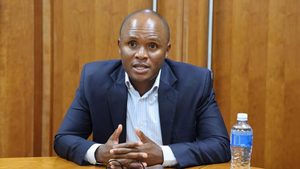
In a recent media statement, Infrastructure Minister Dean Macpherson explained that this is the “ most significant change in the management of state property since 1994”.
He explained that, for decades, the government has owned the largest property portfolio in the country, yet spends up to R6 billion every year leasing private buildings.
“We own prime property that stands vacant. Yet we pay rent for plush offices. We hold strategic land parcels in the metros while people live in informal settlements,” he said.
“We sit on an enormous asset value base, yet we don’t generate any revenue to fund asset maintenance. These contradictions end here.”
Macpherson explained that the South African property investment vehicle will change this by “flipping the script” on unrealised property asset values, maintenance and investment.
This, he said, will create an asset book that generates wealth for the public for generations to come.
While details about the investment vehicle have not been released yet, Macpherson explained that it will be a ring-fenced, professionally governed investment platform.
This platform, he said, will consolidate income-generating and strategically located assets into a single structure with one mandate – unlock value for reinvestment.
“It introduces the best in asset management, development finance and property development,” he said.
“It establishes a verified, digitised asset register – a single source of truth covering ownership, condition, leases, valuation and performance.”
“For the first time, the state will manage its property portfolio with real-time data, not fragmented spreadsheets.”
Private sector participation
Macpherson said the investment platform will also create structured, long-term development rights that allow private capital to invest in precinct upgrades, mixed-use housing and redevelopment.
“It reforms the revenue model to generate income from these assets to support maintenance,” he explained.
“This is how we move from reactive maintenance to planned lifecycle management. This is how we reduce the billions currently spent on leases. This is how property stops being a liability and starts being an asset.”
A similar version of this project has been piloted in Tshwane, which Macpherson said showed its potential for success.
Tshwane has been implementing the Government Precinct Programme, whose first phase led to 30 projects, more than one million square metres of development, and roughly R33 billion.
“Phase 1 on its own can eliminate over R400 million in annual lease costs and deliver a portfolio valued between R45 billion and R55 billion once complete – strengthening the public balance sheet instead of draining it,” the minister said.
“Phase 2 expands this momentum. It focuses on the refurbishment of underutilised public buildings – bringing them back to life as productive assets and acting as a catalyst for deeper urban regeneration.”
Macpherson added that this project will also lead to job creation, projecting around 100,000 direct construction and indirect jobs, with up to R60 billion in broader urban economic activity catalysed.
“The state does not need to own all these assets, and neither should it,” he said “No longer will these homes stand idle while those who serve our country struggle for accommodation.”
“It marks the beginning of a new era in how South Africa manages its assets.”

Comments