Harry Oppenheimer’s warning for South Africa that the government completely ignored


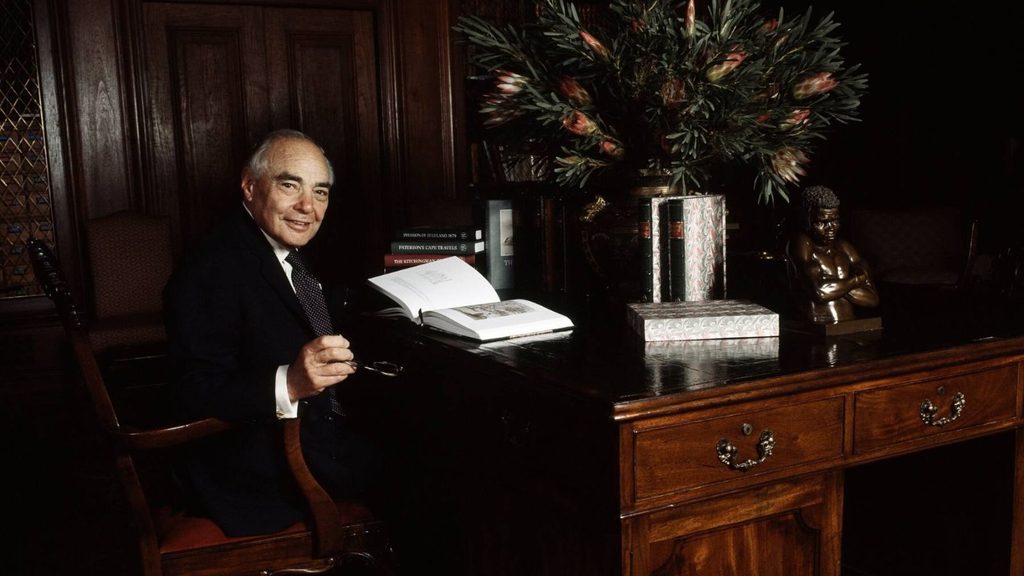
The Oppenheimer-led withdrawal of Anglo American from Zambia in the 1960s provided a cautionary tale for South Africa as the state took control of mineral resources in the early 2000s.
Despite the evidence of what would happen, the government went ahead with the Mineral and Petroleum Resources Development Act (MPRDA) of 2002.
At the time, Zambia had reversed its nationalisation policies, creating a mining boom that continues to this day.
However, South Africa has maintained state custodianship of all mineral and petroleum resources and onerous Black Economic Empowerment (BEE) regulations.
This has resulted in the country’s mining output declining over the past 20 years and exploration spending falling to below R1 billion in 2025.
Despite evidence of a rich mineral bounty, companies simply do not want to invest in extracting those minerals in South Africa.
What began as a decline in investment in the 2000s has become a cliff, with mines reaching the end of their productive lives and no new facilities to replace them.
The MPRDA has made South Africa one of the most difficult environments in which mining companies can operate.
South Africa is ranked among the ten worst mining jurisdictions in the world by the Fraser Institute, crushing investor sentiment.
This is a world away from the country that dominated mining in the 20th century due to its stable policy, efficient service delivery, and light-touch regulation.
“We were massive in the 1980s. Nobody could beat us. Anglo American was the largest investor in the United States. The Americans were terrified of South African miners,” mining analyst Peter Major recalls.
“But you are now seeing what happened in Zambia and Zimbabwe, now happening in South Africa. Things are steadily getting worse.”
The MPRDA copied the playbook of many post-colonial African states, which made the mistake of nationalising key industries and scaring off investors.
While South Africa did not explicitly nationalise mining, the MPRDA abolished private ownership of mineral rights and gave the state custodianship of all mineral resources.
“You can imagine. You put billions into projects for 100 years and are now threatened with state ownership,” Major said.
“New investment just stopped. Exploration and expansion just stopped. Why put money in something the state owns?”
Oppenheimer’s warning

South Africa is going through a process similar to Zambia’s in the 1960s and 1970s, when it found that nationalisation, no matter how it was executed, would destroy an industry.
By all accounts, Zambia’s nationalisation process was among the best implemented in history as the government actually paid to take over mines rather than expropriating assets.
Newly independent, Zambia wanted full control over key industries, and in 1968, the Mulungushi reforms nationalised several sectors of the economy.
A year later, the Matero Declaration placed 51% of Zambia’s copperbelt mines under state control, with compensation in the form of government bonds.
These bonds would be redeemable over the next decade, with the government effectively paying for control of the mines over a five-year period.
This was more positively perceived than many other instances of hostile nationalisation on the continent, where the government forcefully expropriated assets.
At the time, Anglo was one of the dominant players on the copperbelt and did not resist the process of nationalisation to a large degree.
Instead, chairman Harry Oppenheimer took it in stride and made it clear in his 1971 letter to shareholders that the company would not commit any capital to Zambia.
“Zamanglo has taken advantage of the substantial flow of funds from the Zambian redemption payments ot make investments in Australia and the United States,” Oppenheimer said.
Oppenheimer did not withdraw Anglo from Zambia entirely, maintaining minority stakes in the company’s mines.
What he did was take all the money he could from the Zambian operations and invest it in creating Anglo American Australia and in taking a stake in the American giant Engelhard.
The money from Zambia made Anglo the largest foreign investor in America at the time and helped it become a global giant.
Zamanglo was redomiciled to Bermuda and renamed Minorco. It was only reabsorbed into Anglo in 1999 after the company moved its head offices to London.
As is happening in South African mining now, Anglo took the proceeds from Zambia to invest elsewhere, leaving the local industry to steadily decline.
The trickle of money out of the country became a flood, and no new exploration occurred, leaving Zambia’s copperbelt underdeveloped.
In the 1990s, the country reversed course and passed the Privatisation Act of 1992 to dismantle state monopolies in key sectors of the economy.
Zambia’s copper mines were sold to private investors to facilitate development and exploration. Anglo American returned, along with Glencore and many other international giants.
Today, the country is one of the world’s largest copper exporters and has enjoyed annual economic growth of more than 4% for the past three decades.






Comments