Three investment lessons from Paul Theron


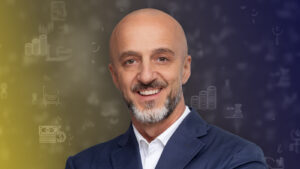
Vestact founder Paul Theron is one of South Africa’s best-known and most respected analysts and fund managers.
Theron is a respected trailblazer in the South African financial services industry. However, unlike many other investment heavyweights, he did not come from a financial background.
Theron graduated with a Master’s Degree in Energy Engineering from the University of Cape Town, specialising in oil, gas, coal, and electricity.
He then worked for a corporation in energy policy but quickly realised he was better suited to be an entrepreneur and run his own company.
The internet was starting to gain traction, and he joined forces with a few friends and associates to start an online sports business.
This business was sold to the Mweb/M-Net group, which became the foundation of the SuperSport website.
They also started South Africa’s first online stockbroker Tradek. Although briefly listed on the JSE, Theron said it was a disaster and was ultimately delisted and shut down.
In 2002, he started Vestact. The company showed exceptional growth, and in February 2024, it had R10.5 billion in assets under management.
Vestact’s model New York portfolio’s compound annual return in the last decade is 16.2% in US Dollars.
This is significantly higher than the average annual return of the S&P 500 over the same period of 9.9%.
“Our favourite sectors are technology, healthcare and consumer. We are looking for what we call transformative investments,” Vestact said.
Vestact has an excellent daily newsletter in which the team provides an update on the markets and personal insights into various subjects.
Here are three pieces of investment advice Paul Theron shared in the company’s newsletter.
Always take money seriously

If you are very young, start saving. Develop a lifetime habit of spending less than you earn (or are given by your parents). Keep things simple, and maintain good records.
Once you are a qualified adult and find a job, keep your spending in check and start investing in high-quality assets. Don’t take on too much debt. Work hard to get a raise and sock away as much as you can.
Good outcomes depend on healthy habits. It’s not enough to have vaguely positive intentions – you need rock-solid competence.
If you are approaching the end of your career or are actually retired, find a way to keep working and earn enough money to help cover your living costs.
We have no idea how long we will live or what our priorities will be later in life, but the larger our savings, the more options we’ll have as we grow older.
Try to get as rich as possible

A famous 2010 study suggested that happiness climbs with income but plateaus at $75,000 per annum. For the record, that’s about R1.35 million a year, a little more now due to inflation.
This finding spread like wildfire and soon became conventional wisdom.
However, this research has since been thoroughly debunked. A team at the Wharton School, the business faculty at the University of Pennsylvania, re-ran the study and found that people earning $500,000 per year were even happier.
The lead academic on the study, Matthew Killingsworth, is an expert in the field and has fine-tuned a system for measuring happiness more objectively.
He now contends that there is no plateauing at all – millionaires and billionaires feel very good about themselves. The richer people get, the more fun they have.
So, here’s Theron’s advice: try to get as rich as possible. Don’t become one-dimensional or kill yourself working, but once you’ve achieved material wealth, just aim higher and keep going.
Be a fox, not a hedgehog

Theron referred to an acquaintance of his who asked on a forecasting forum, “Why don’t people spend more time trying to predict the future?”
“That’s a good question because if we were better prepared for what might happen next, we would be a more successful species,” Theron said.
It’s even more pressing for equity investors. Accurately anticipating future trends is hugely beneficial if it leads to better stock picking.
Two answers come to mind:
- Forecasting is hard, and most people are not very good at abstract thinking. They’d rather focus on the very near term, like what’s for dinner?
- Brainstorming and assigning probabilities to possible outcomes requires specific training and regular practice.
Anyway, once you have a view of what you think is quite likely to happen in future, prepare to make changes to that forecast.
Constantly monitoring news events and reading insightful analyses of current trends should be allowed to influence one’s sense of what’s shaping up in the years ahead.
You have to remain actively open-minded. Be a fox, not a hedgehog.





Comments