South Africa’s most iconic hotel group going from zero to hero


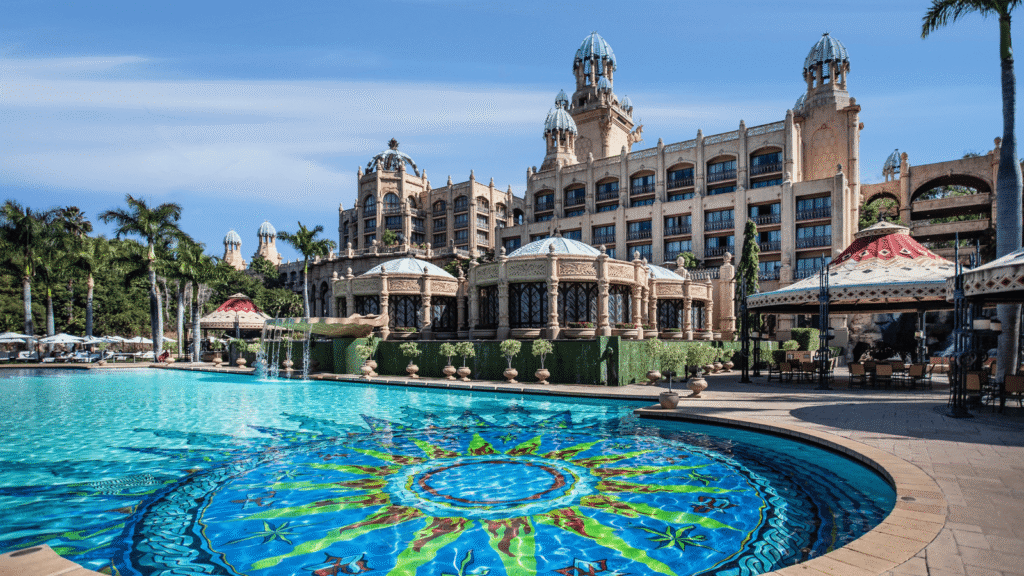
Sun International has gone from a fast-growing casino and hotel operator to a company that nearly collapsed during the Covid-19 pandemic and is now finding its feet again.
Since its founding nearly 60 years ago, the group has experienced major successes, costly investment mistakes, and a significant restructuring.
Now, it is positioning itself as a digitally led gambling business, with its online platform, Sunbet, becoming a key driver of growth.
This is according to Allan Gray portfolio manager Pieter Koornhof, who has followed the company’s performance for three decades and outlined the changing investment case in the firm’s November 2026 Quarterly Commentary.
Sun International was founded in 1967 by Sol Kerzner, whose hospitality business began with a Durban beachfront hotel bought in 1962.
Kerzner went on to build the Beverly Hills Hotel in Umhlanga, South Africa’s first five-star-graded hotel, and the 450-room Elangeni Hotel overlooking Durban’s beachfront.
In 1969, he partnered with South African Breweries to establish Southern Sun Hotels. By 1983, the group operated 30 hotels with more than 7,000 rooms. Kerzner also expanded internationally, opening Le Saint Géran in Mauritius in 1975.
His most ambitious South African project was Sun City, which opened in 1979 near Pilanesberg National Park in Bophuthatswana.
The resort included four hotels, a man-made lake, two Gary Player-designed championship golf courses and an entertainment centre with a 6,000-seat indoor arena.
Its opening, headlined by Frank Sinatra, helped establish Sun City as one of the country’s best-known hospitality destinations.
Sun International also developed a significant casino business, with resorts and gambling operations becoming central to its growth.
By 2001, the company was investing heavily in new casinos, resorts and hotels. This required substantial upfront capital expenditure and debt, but the assets were expected to generate additional revenue once completed.
Allan Gray’s investment case at the time was that accounting earnings understated the company’s underlying cash-generating potential.
The costs of constructing new assets were reflected in depreciation over several years, while the cash expenditure had already occurred. The new properties were also not generating revenue while under construction.
Once operational, they could generate additional income and help the company repay debt, reducing interest costs.
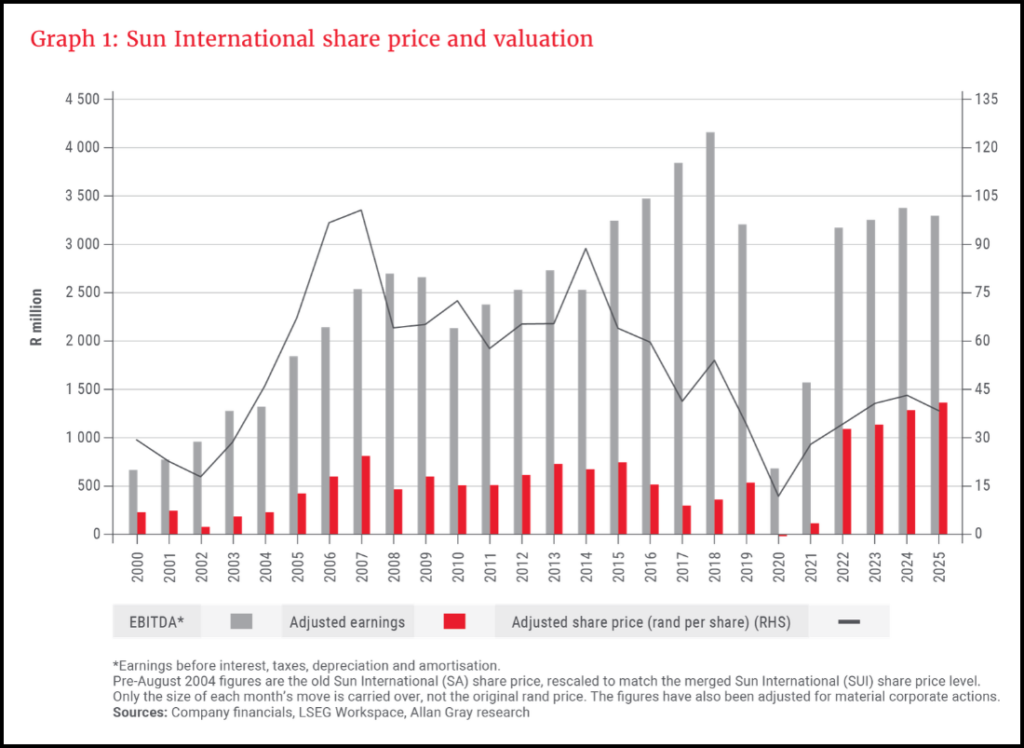
Allan Gray’s then-chairman Simon Marais identified this as an investment opportunity. The company’s share price rose from around R30 in 2001 to more than R100 by 2007.
It reached a peak of more than R130 per share that year, while its market capitalisation climbed to R17.4 billion. However, the company’s strong performance did not continue.
The Covid crash

By 2019, Sun International’s share price had fallen to around R40. The company faced weak economic growth, pressure on consumer spending and increasing competition from other leisure activities.
The hotel market was also oversupplied following the 2010 FIFA World Cup. Allan Gray said management had compounded these challenges through poor capital allocation.
The group spent heavily on acquisitions and projects that destroyed value or generated disappointing returns.
These included underperforming hotels, resorts, and casinos in Africa and Latin America; excessive investment in the Boardwalk Casino and The Maslow; and high capital spending on Time Square Casino in Pretoria.
Sun City was also overcapitalised relative to its performance. The Covid-19 pandemic then pushed the group towards financial distress.
Casinos, resorts, and hotels remained closed for months during lockdowns, causing revenue to fall to almost zero while fixed costs continued.
Sun International’s debt peaked at R15 billion in June 2020, more than 200 times its earnings before interest, taxes, depreciation and amortisation (EBITDA).
Its share price fell to R11 in May 2020, while its market capitalisation dropped to R1.1 billion.
The company announced a R1.2 billion rights issue in June 2020, priced at R9 per share. Existing shareholders, including Allan Gray clients, funded the capital injection.
The money gave Sun International additional liquidity to withstand the lockdowns, continue paying wages and other costs, and negotiate more manageable debt repayment terms with its lenders.
The group also used the crisis to accelerate its restructuring. It cut costs, exited its African and Latin American operations, restructured smaller, underperforming casinos, and invested in properties with better long-term prospects.
Sun International’s recovery
Sun International’s share price recovered to more than R40 by 2023. However, the company soon faced another challenge as online gambling expanded rapidly in South Africa.
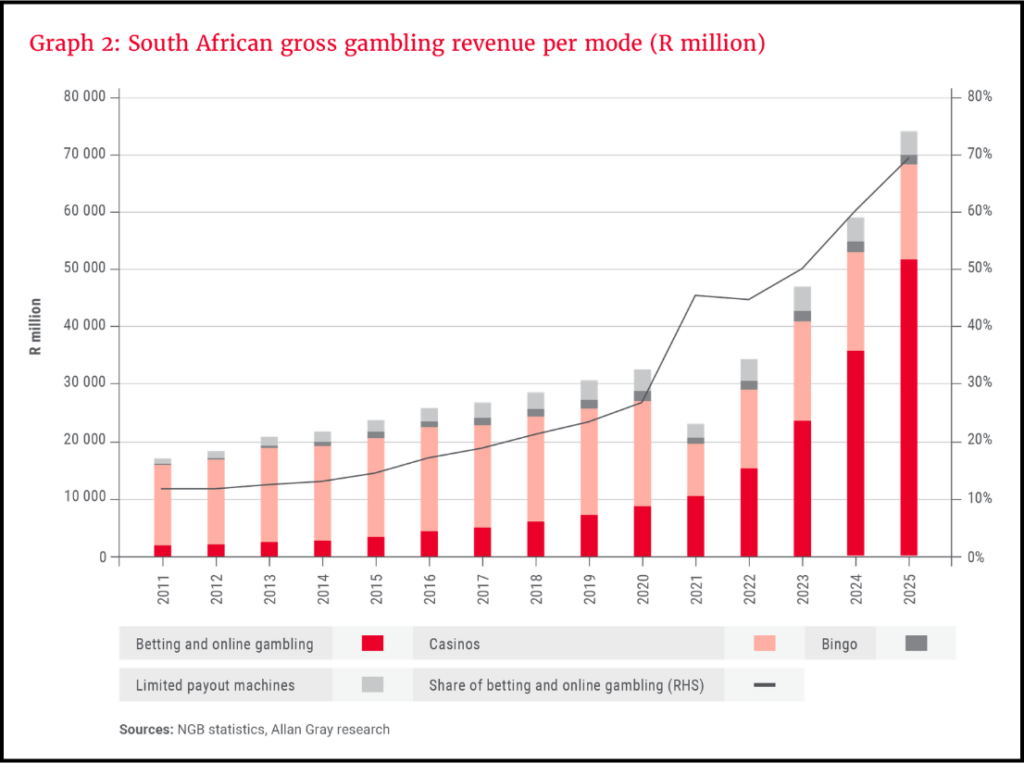
Online gambling grew from less than a quarter of the country’s gross gambling revenue in 2019 to more than 70% by 2025. Greater smartphone penetration, additional licences and the Covid-19 lockdowns helped accelerate the shift.
While online gambling expanded the overall market, it also took business away from traditional casinos.
Sun International had anticipated this shift and invested in Sunbet, its online gambling platform. The platform has since become the group’s largest asset by earnings, Koornhof explained.
Sunbet recorded net gaming wins of R2.05 billion and adjusted EBITDA of R612 million in 2025, more than double its 2024 earnings.
The company is now pursuing an omnichannel strategy that connects its online offering with its land-based casinos and resorts.
New CEO Ulrik Bengtsson, who took over in 2025, has made this strategy central to the group’s plans.
It includes investment in technology and new products to grow online market share and create stronger links between Sunbet and the group’s physical properties.
The strategy requires substantial upfront investment, which means that reported accounting earnings may not fully reflect the company’s potential cash-generating ability in the short term.
Sun International’s balance sheet is also stronger than in 2020, with net debt below 2 times EBITDA.
However, Koornhof warned that the success of the omnichannel strategy remains uncertain and that the group must keep its casinos and resorts relevant as gambling becomes increasingly digital.
The latest results show both the progress and the work still ahead. For the six months to June 2026, group income increased by 6.4% to R6.58 billion.
Sunbet income grew by 35.5% to R1.18 billion, while land-based casino income increased by 1.5% to R3.42 billion.
The group’s land-based casinos returned to growth for the first time in three years, taking their market share to 49%.
Sun City also benefited from a R400 million refurbishment, with revenue rising 9.9% to R1.07 billion.
However, Sun International is still trying to improve the profitability of smaller, underperforming casinos.
It has introduced a lower-cost, centralised operating model known as the Casino Lite project and launched formal Section 189A consultations to reduce and restructure its workforce.
The changes are intended to improve operational efficiency and the profitability of these properties.
Login or register for unlimited free access.