Top South African asset manager plans to give executives R600 million in shares for 1 cent each


Sygnia shareholders are set to vote on the expansion of the company’s employee share option scheme to 25 million shares from the previous 15 million.
At the company’s current share price, this amounts to R600 million in shares, which will be available to eligible executives and employees at a strike price of 1 cent per share.
This strike price will effectively make the shares free to qualifying employees, allowing the scheme to function as a direct reward.
Sygnia revealed this plan in a circular distributed to shareholders on 25 September.
On 23 October, the company will hold a general meeting where shareholders can vote on the changes.
The company explained that the changes to the scheme were necessary to attract, retain, and motivate key executives and staff.
These changes will enable the company to give incoming executives and current employees an ownership stake in the business, aligning their interests with those of shareholders.
The main change to the scheme is an increase in the number of shares reserved for the employee scheme from 15 million to 25 million.
6,999,500 shares have already been awarded, leaving 18,000,500 to be issued and awarded to executives and staff in the future.
Other changes include raising the maximum number of shares an individual employee can receive to 1.5 million per year. The overall limit is 7.5 million shares per individual.
To ensure that rewards are earned for doing work that benefits the business, any share grant exceeding 5 million shares must be tied to specific performance conditions set by the board.
The board, under the changed scheme, will be free to apply performance targets to smaller awards and to make single, multiple, or annual share offers.
Sygnia’s board will also have the freedom to set holding periods that it deems appropriate. Previously, recipients were limited to a fixed 5-year restricted period before they could freely trade shares.
A safety net will also be included, allowing Sygnia to cancel options and claw back settled values if an employee engages in misconduct, dishonesty, or fraud.
CEO enrichment scheme or succession planning?
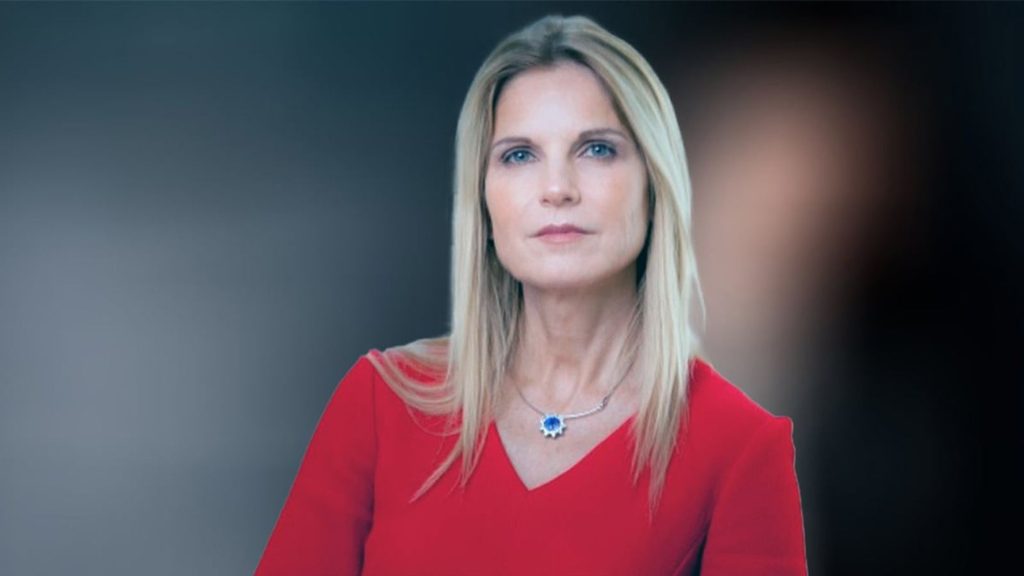
The planned changes have put Sygnia CEO and founder Magda Wierzycka in hot water with shareholders.
Wierzycka founded Sygnia in 2006 with R2 billion in assets under management after leading a management buyout of the Africa Harvest Group.
Since then, she has turned the company into an asset management giant with R460.8 billion in assets under management and 350 employees.
Estimates of her wealth vary, with most putting it at $250 million (R4.1 billion). A large part of this wealth is tied up in Sygnia.
Wierzycka holds 43% of Sygnia shares directly and indirectly, which are worth R2.2 billion at the company’s current share price.
The Financial Mail reported that several shareholders, including Wierzycka’s former business partner, Andre Crawford-Brunt, are planning to vote against the scheme.
These shareholders described the scheme as a way to enrich Wierzycka and other executives at the expense of minority shareholders. Sygnia’s board has recommended that shareholders approve the changes.
Wierzycka has pushed back against this, denying any efforts to personally enrich herself or other shareholders, maintaining that it is about incentivising good leadership over the long run.
Speaking to BizNews, Wierzycka explained that the aim of increasing the scheme’s share pool to 25 million is to help attract and retain senior talent.
“Our objective is to really try and reward them for what they have built and retain them at the company,” Wierzycka said.
As an example of why the changes are necessary, Wierzycka outlined the company’s current search for a new CFO.
“We have been looking for a CFO for the better part of six months. You look at the share option scheme which we have to buy them out from, and we are looking at R10 million before we can even hire somebody,” Wierzycka said.
“The current scheme cannot support that. It really is a commercial decision, and there should be nothing controversial about it.”
A more serious case would arise if something happened to Wierzycka and she had to step down as CEO.
Under the current scheme, Wierzycka said Sygnia would be unable to attract a high-calibre replacement or incentivise one without impacting the company’s finances.
“We’ve never had a share option scheme, you know, in terms of structure for a CEO,” she said.
“So, let’s assume I get run over by a bus tomorrow. We don’t have a share option scheme that would attract or reward a new CEO.”
Wierzycka is confident that the changes to the scheme will reach the 75% support threshold from shareholders when they vote on 23 October.
This is partly due to her own 43% stake and that of her ex-husband, Simon Peile, who owns 17% of Sygnia. Wierzycka said Peile supports the changes.
“Institutional shareholders with significant shareholdings have also spoken to me. As long as the executive team is properly incentivised and retained, they have no issues with the scheme,” Wierzycka said.
Sygnia’s CEO dismissed claims of greed, saying that 57% of her time is technically spent working for other shareholders.



Conversation
1 commentsThis is exactly one of the major problems in the New South Africa: Executive remuneration packages are distorting the total economy. Soon after such a step by private enterprise, government institutions will follow suit “in order to retain staff”! It’s a vicious circle in which the middle class gets caught up and becomes poorer by the day!