Where does your investment return actually come from?


Most investors can tell you what their portfolio returned last year. Some can do it to two decimal places.
Ask them where that return actually came from, and the conversation may become a little less precise.
It’s not that the numbers don’t matter. They do. But a return is the outcome of an investment, not an explanation of it.
To understand whether a return is sustainable, we need to examine the economic activity that makes it possible.
Money doesn’t generate more money simply because we’ve put it into an investment account. Somewhere along the line, something needs to create value.
Take investments we already know. When you buy shares in a listed company, you own a small part of that business.
Its ability to sell products, serve customers and make a profit influences what those shares are worth.
When you buy a bond, you’re lending money to a company or government, which agrees to pay interest and repay the loan.
Shares and bonds may look like numbers on an investment statement, but there’s something behind them: a company that needs to perform, or a borrower that needs to pay. Their returns have roots in the real economy.
And there’s another way to make that connection.
What backs the return?
Asset-backed finance is another type of investment that connects capital to the real economy.
Rather than buying shares in a business, money is used to finance an asset that the business needs, such as machinery, property or a solar installation.
The business makes agreed payments for that finance, creating income for the funder.
The asset may also serve as security if the business cannot pay.
Investors can gain exposure through investment products, without having to own or operate the equipment themselves.
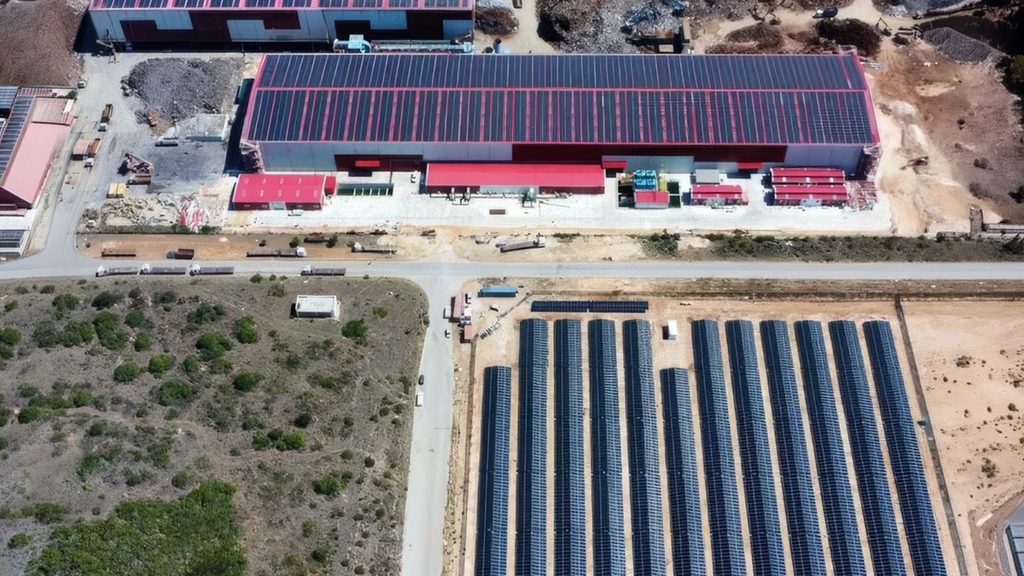
Consider a steel manufacturer in the Eastern Cape. Producing steel uses enormous amounts of electricity.
A cheaper power supply can help the business control costs and improve profitability.
At Coega Steels, Fedgroup financed a solar installation through a R51.8 million funding arrangement.
The project was expected to save the manufacturer around R19 million in electricity costs in its first year.
Those savings aren’t an investment return, but they reveal why the opportunity exists.
The infrastructure meets a genuine commercial need, delivering electricity the manufacturer would otherwise have to purchase.
The financing creates an opportunity to earn income from meeting that need.
The business gets the infrastructure it requires, while the payments made under the financing arrangement can support an investor’s return.
That’s the connection between the physical asset and the financial investment.
One serves a commercial purpose, while the other provides the capital to make it possible.
A different way to think about diversification
Financial markets react constantly to interest-rate expectations, political announcements and investor sentiment.
Prices can swing in a single afternoon, sometimes without much changing in the underlying businesses.
Productive assets have other drivers. A solar panel doesn’t consult the JSE before generating electricity. A contractor still needs machinery after a difficult day on global markets.
With asset-backed finance, income can depend more on agreed payments than on daily share-price movements.
That offers investors another potential source of returns alongside shares and bonds, and another way to spread risk across a portfolio.
But different doesn’t mean risk-free. Businesses can default, equipment can fail and some investments are difficult to sell before their term ends.
Even when an asset provides security, it may not cover every loss.
The quality of the business, the underlying asset and the financing terms all matter.
Good for the investor. Good for the economy.
In South Africa, financing productive assets can also make capital available where businesses need it.
A manufacturer can invest in more efficient power. A contractor can secure equipment for new projects. Farmers can develop productive capacity.
These are not charitable acts. They are commercial decisions that can benefit businesses and investors when the economics work.
At Fedgroup, that principle guides how we approach funding tangible assets: examining the business using them, the economic value they create and the financing structure required to support sustainable returns.
Positive economic impact doesn’t automatically make something a good investment. It still needs to stand on its financial merits.
But when capital funds assets that businesses genuinely need, investors may participate in value being created, not simply rely on a higher resale price.
Perhaps that’s a question worth asking more often: not just how much could my money earn, but what will actually generate that return?
Because the percentage tells you what you hope to get. Understanding what produces it tells you why that return might be achievable.
Click here to learn more about Fedgroup.
By Paul Counihan, MD: Wealth and Investments at Fedgroup.