South Africa’s flooring market shifts toward purpose-built surfaces


Flooring is becoming a more technical decision for South African businesses, gyms, schools and sports facilities as different spaces place very different demands on the surface beneath them.
A warehouse floor may need to withstand equipment, pallets and constant movement.
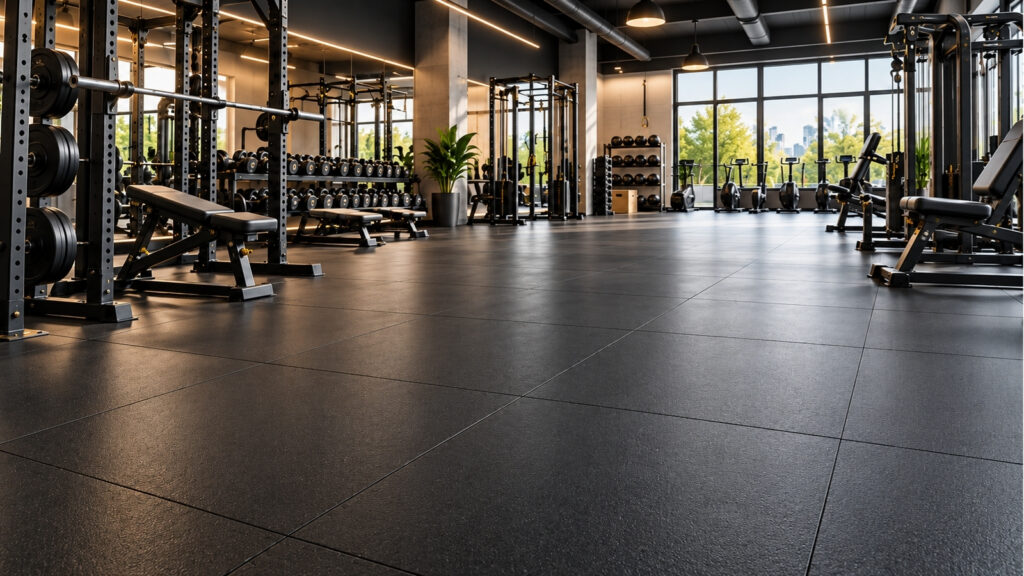
A commercial gym needs cushioning around weights and machines.
An outdoor court must deal with footwork, weather and drainage, while a workshop or garage may prioritise durability, cleaning and the ability to repair individual sections.
The result is a move away from treating flooring as a single, one-size-fits-all product.
That shift is happening at the same time as South Africa is putting renewed attention on sporting infrastructure.
The Department of Sport, Arts and Culture said its 2026/27 programme is targeting 100 new outdoor gyms and 50 combi courts, while new and refurbished multipurpose sports facilities are being rolled out in communities and schools.
The need remains substantial.
Parliamentary oversight information released this year indicated that 9,248 South African schools have no sports facilities, highlighting how much infrastructure development and maintenance is still required.
The floor is becoming part of the facility
In an active environment, the floor is no longer simply the finished surface at the bottom of a room.
It influences how equipment is positioned, how easily an area can be cleaned, how water moves away from outdoor playing surfaces and how much protection exists between an impact and the supporting concrete beneath it.
That is why PVC, rubber and polypropylene sports flooring are increasingly being treated as different systems rather than interchangeable products.
Johannesburg-based manufacturer and supplier PVC Floor Tile says the starting point should be the activity taking place in the space.
Its PVC flooring range includes modular tiles intended for garages, workshops, warehouses, factories and commercial environments where a firm, replaceable surface is required.
The company’s standard PVC systems include 500mm × 500mm formats, with four tiles covering approximately one square metre.
Unlike a permanent coating, modular flooring can allow individual compatible sections to be removed when damaged or when a floor layout needs to change.
That flexibility is becoming increasingly relevant in premises where machinery, shelving, workstations and vehicle routes do not remain in the same place forever.
Rubber answers a different problem
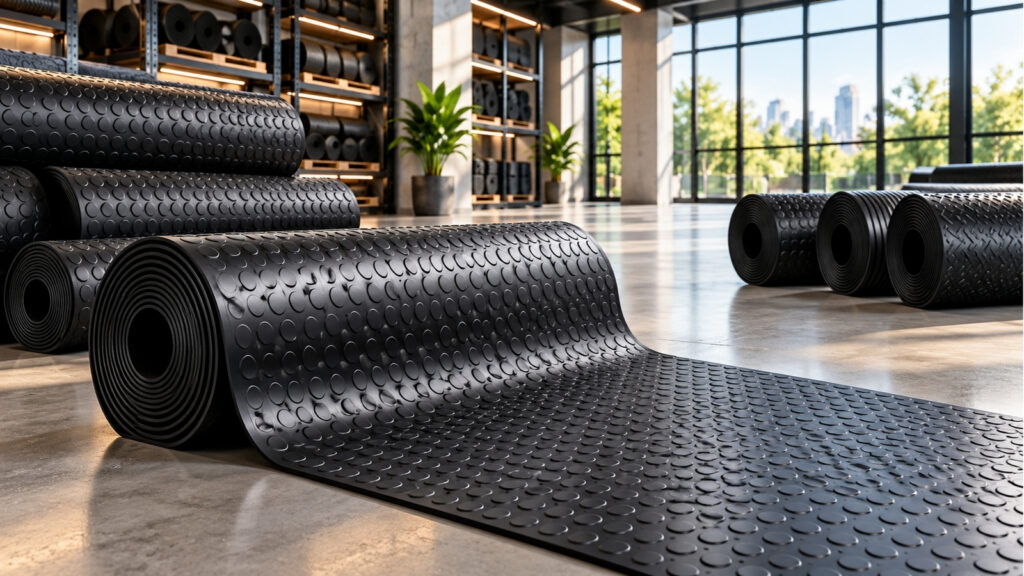
Where PVC flooring provides a firm modular surface, rubber flooring is typically considered when cushioning, impact protection and underfoot resilience become more important.
This is why rubber floor tiles are commonly considered for gyms, training spaces, equipment areas and selected workshops.
PVC Floor Tile supplies interlocking rubber systems in different sizes and thicknesses, including heavier gym-flooring options where greater rubber depth is required.
Its buying guidance notes that thickness alone should not determine the choice: equipment weight, frequency of impact, drop height, subfloor condition and the way the space is used all need to be considered.
That distinction matters in modern fitness facilities.
A cardio zone with treadmills and bikes does not place the same demands on a floor as a free-weight area.
Similarly, stretching, functional training and equipment zones can all require different levels of cushioning and protection.
Increasingly, commercial gym design is therefore moving toward zoning rather than covering every square metre with the same material.
Sports courts bring drainage and movement into the equation
Sports flooring adds another set of requirements.
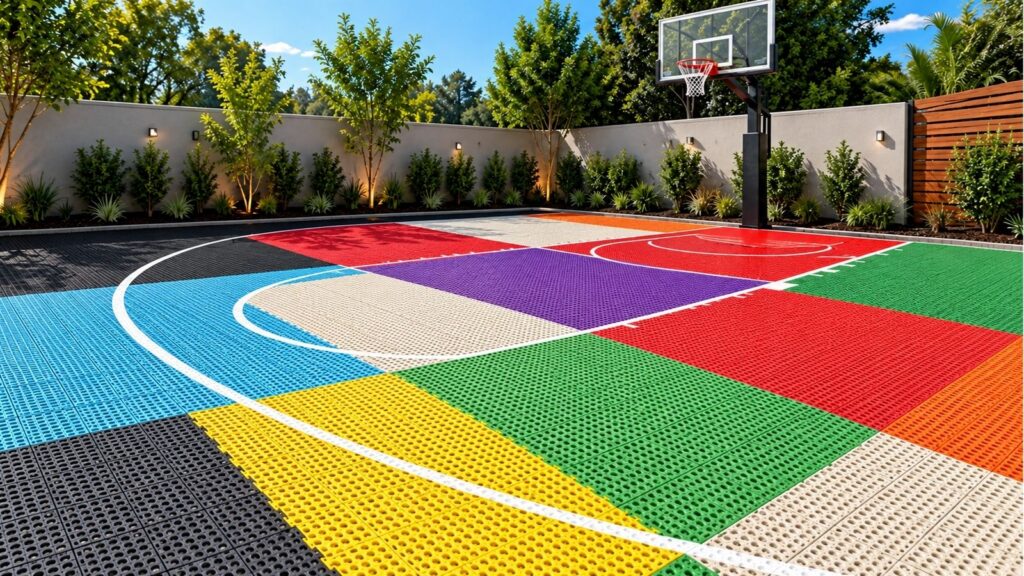
Outdoor basketball, netball, tennis and multi-sport courts must cope with repeated movement, changing weather and, in many cases, rainwater.
This is where open-grid polypropylene court systems can perform a different role from solid PVC or rubber floors.
PVC Floor Tile’s sports flooring range includes modular polypropylene court tiles designed for indoor and outdoor courts, schools and recreation facilities.
The open-grid format allows water to pass through the playing surface, although the supporting base must still be properly prepared and able to drain.
Different colours can also be used to create court boundaries, activity zones and multi-use layouts.
That is becoming increasingly relevant as public investment focuses on multipurpose facilities rather than single-code venues.
In July, the national Department of Sport, Arts and Culture handed over multipurpose facilities at schools in Gauteng as part of a wider programme aimed at improving access to sports infrastructure.
Earlier in 2026, another school facility in KwaZulu-Natal was designed to accommodate sporting codes including basketball, netball, volleyball, soccer and tennis.
Materials are also part of a wider recycling story
The growth of modular flooring also intersects with South Africa’s circular-economy conversation.
Plastics SA reported that 485,000 tonnes of plastic were mechanically recycled in 2025, up 3% from the previous year, while recycled material represented an increasing share of material used in new products.
That does not mean every PVC, rubber or polypropylene flooring product has the same recycled content.
Product specifications still need to be checked individually, particularly where buyers are making environmental claims.
But the broader direction is significant: recovered materials increasingly need durable markets where they can remain in useful products for longer periods rather than returning rapidly to the waste stream.
One building can now need several different floors
Perhaps the biggest change is that buyers are becoming less likely to ask simply, “What is the best flooring?”
The more useful question is: best flooring for what?
A warehouse traffic lane, gym weight zone, wet garage, school playground and outdoor basketball court may all exist within a single facility, yet require very different surface characteristics.
PVC can provide firm modular protection. Rubber can add cushioning and impact resistance. Open-grid sports flooring can address movement and drainage on courts.
None is automatically the best material everywhere.
And as South African businesses, schools and sporting facilities place more emphasis on durability, maintenance and adaptable infrastructure, the industry is moving toward a more practical approach: selecting the floor around what the space is expected to do.