South African tax drama


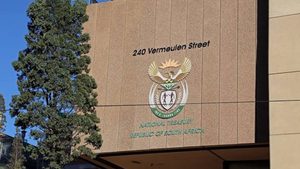
South African Finance Minister Enoch Godongwana proposed a shock consumption-tax increase to help rein in government debt, but other parties in the nation’s coalition government rejected the move, which derailed the budget’s unveiling.
Budget documents released in Cape Town on Wednesday but withdrawn pending a review envisioned raising the value-added tax rate by 2 percentage points to 17% from April 1. That would have yielded an additional R191 billion over three fiscal years.
Godongwana will release a revised budget in three weeks. A VAT increase would have been the first since 2018 and wasn’t anticipated by any economists surveyed by Bloomberg earlier this month.
The Democratic Alliance, the second-biggest party in the administration, which was formed after the African National Congress lost its parliamentary majority last year, said it wasn’t adequately consulted about the tax changes.
The country’s powerful labor unions have previously rejected higher consumption taxes on the grounds that the poor will be the most severely impacted.
“A tax such as VAT carries political risk,” Godongwana told reporters before the budget was withdrawn. “There will be a great deal of negotiations to manage that political risk.”
In the withdrawn budget review, the Treasury reiterated a point it has made for years — that the nation’s debt trajectory was unsustainable — and said the need to raise more revenue has become unavoidable.
It aimed to mitigate the effect by increasing welfare grants, adjusting tax brackets for lower-income earners to fully account for inflation, leaving fuel taxes unchanged and scrapping VAT on additional food items.
“Increasing taxes on consumption through a higher VAT rate will have the least-detrimental effect on economic growth and employment over the medium term relative to increases in personal or corporate income taxes,” the Treasury said in the withdrawn document.
Higher taxes on companies would also erode their competitiveness while collecting more from individuals would likely be inefficient, it added.
The government owes a net R5.5 trillion, and interest payments consume 22% of all the revenue it collects.
The budget review envisioned debt stabilizing at 76.1% of gross domestic product in the next fiscal year, slightly higher than was forecast in October.
A budget deficit of 5% was foreseen for the year through March this year, unchanged from the prior estimate, falling to 3.4% in fiscal 2028.
The outlook for the economy was expected to pick up and GDP was seen expanding by an average of 1.8% over the next three years, up from about 0.8% this year, according to the Treasury.
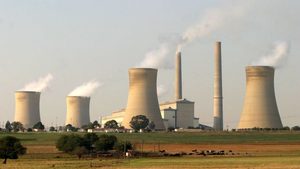
It expected the expansion to be underpinned by a stable electricity supply, lower interest rates and additional spending on new railways, roads, dams and other infrastructure.
An additional R46.7 billion will be invested in those projects – mainly by state companies — over the next three years, bringing the total to R1.03 trillion.
Risks to the growth outlook included geopolitical tensions, trade disruptions, growing protectionism and a strengthening of the US dollar that triggers outflows from emerging markets and raise risk premiums.
Treasury officials also said they are concerned about US President Donald Trump’s decision to freeze most aid to South Africa after he criticized its land-expropriation laws and relations with Iran and its proxy Hamas.
The withdrawn budget provided for state workers to get 5.5% pay increases this fiscal year and inflation-linked raises over the next two years, adding an additional R23.4 billion to the government’s wage bill.
More money was also allocated to hiring additional doctors, improving access to medicines, and improving early childhood development.
The Treasury said in the documents that net additional non-interest expenditures totalling R173.3 billion were envisioned over the next three years and were expected to be fully funded by tax increases.


Comments