Reserve Bank keeps interest rates unchanged amid South Africa’s rand crashing to its worst level in months


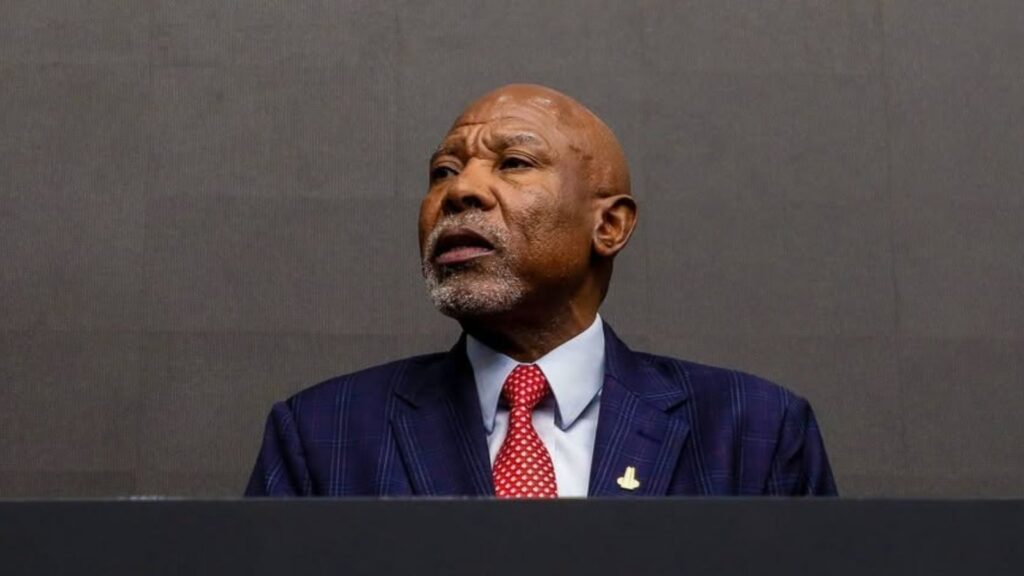
The South African Reserve Bank’s Monetary Policy Committee (MPC) voted to keep interest rates unchanged at its November meeting.
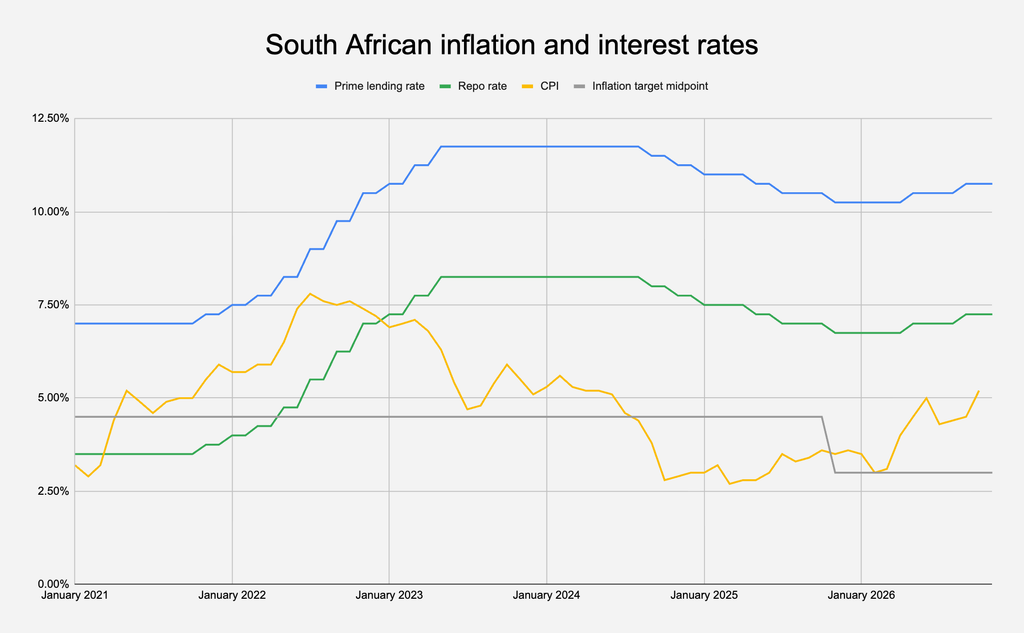
This will see the repo rate remain at 7.25%, and the prime lending rate stay at 10.75%.
On Thursday, 19 November, Reserve Bank Governor Lesetja Kganyago said the MPC’s vote was not unanimous, with four members favouring a pause and three preferring a hike.
The MPC’s decision comes after Statistics South Africa revealed that CPI inflation accelerated to 5.2% in October, up from 4.5% in September.
Record-high petrol and diesel prices continued to put upward pressure on inflation in October, resulting in CPI inflation reaching its highest level since May 2024.
At the same time, the rand has weakened to its worst level in 2026 so far, reaching R17.35 against the US dollar before strengthening slightly to R17.22/USD by Thursday afternoon.
This is largely due to a stronger dollar, with the greenback having been supported by rising expectations for a US interest rate hike.
Should the US Federal Reserve opt to raise rates at its upcoming meeting, the interest rate differential between the United States and South Africa would narrow.
This narrowing gap will make South African assets less attractive relative to lower-risk US assets, putting downward pressure on the rand and potentially fueling local inflation.
Despite these pressures, the MPC opted to keep South Africa’s interest rates unchanged, saying monetary policy is sufficiently restrictive following the May and September hikes.
“After two policy adjustments this year, and with a moderately restrictive policy stance, we decided to pause for now,” Kganyago said.
“We are mindful of risks, and will not hesitate to raise rates if needed, to return inflation to target over the policy horizon.”
Kganyago reiterated the MPC’s commitment to bringing inflation back down to the Reserve Bank’s 3% target.
He said the MPC’s inflation forecast has not changed since the September meeting, with the committee still seeing above-5% inflation prints persisting into early 2027.
“After that, the forecast starts showing somewhat lower inflation. The main reason for this is that we will no longer be comparing to pre-war fuel prices,” Kganyago said.
The MPC’s decision to keep rates unchanged was widely expected, with 19 out of 20 economists surveyed by Bloomberg predicting a pause.
Ahead of the vote, some economists also warned that an interest rate hike would do more harm than good to South Africa’s fragile economy.
Login or register for unlimited free access.






Conversation
1 commentsBig mistake