Five top economists share good news about interest rate hikes in South Africa


Many economists and experts believe that the South African Reserve Bank will hold interest rates steady at its November meeting.
These experts believe another rate hike is unnecessary and could do more harm than good to South Africa’s fragile economy.
This is despite a hotter inflation print in October 2026, which saw prices accelerate at their fastest pace since May 2024.
On Wednesday, 18 November, Statistics South Africa (Stats SA) revealed that inflation hit its highest level in years in October.
CPI inflation rose to 5.2% in October 2026, up from 4.5% in September, and a substantial increase from 3.6% in October 2025.
Stats SA reported that the annual rate for food and non-alcoholic beverages increased for a third successive month in October, rising to 1.4%.
It said categories that placed upward pressure on food inflation included fish and other seafood, vegetables, and sugar, confectionery, and desserts.
In addition, annual transport inflation was 15.2% in October, contributing 2.1 percentage points to the overall headline rate of 5.2%.
This was primarily driven by higher petrol and diesel prices, with fuel increasing by 11.8% between September and October.
Stats SA revealed that annual fuel inflation reached 42.9% in October, sharply up from September’s 27.9%.
Despite these inflationary pressures, economists believe that the Reserve Bank’s Monetary Policy Committee (MPC) will keep interest rates stable at its upcoming meeting.
The MPC will announce its decision about South Africa’s interest rates on Thursday, 19 November.
At its last meeting in September, the MPC voted unanimously to hike South Africa’s interest rates by 25 basis points.
This brought the Reserve Bank’s policy rate, also known as the repo rate, to 7.25%, and the prime lending rate to 10.75%.
At this September meeting, Reserve Bank Governor Lesetja Kganyago said the MPC sees upside risks to inflation.
While the committee voted to hike rates, he said the MPC’s Quarterly Projection Model forecasts the policy rate to remain broadly stable through the remainder of this year.
Daily Investor has compiled the views of five top economists on what they expect from the MPC in November, which can be seen below.
Maarten Ackerman – CAM Asset Management chief economist

CAM Asset Management’s Maarten Ackerman said South Africa’s deteriorating inflation outlook will place the Reserve Bank under renewed pressure.
He said conditions have deteriorated since the September MPC meeting, when the Reserve Bank raised interest rates.
“Higher oil prices following attacks on parts of Saudi Arabia and renewed pressure on the rand amid a global risk-off environment add risks to domestic fuel prices and inflation,” he said.
“With the latest inflation print at 4.5%, inflation is moving towards 5%. There is a strong case for another rate hike.”
However, Ackerman warned that the nature of the shock complicates the decision, as there is only so much that monetary policy can do to counter a supply-driven inflation shock.
“Trying to suppress demand in an economy as weak as South Africa’s risks doing more harm than good,” he said.
Ackerman said the Reserve Bank may take some comfort from the US Federal Reserve’s decision to hold rates at its recent meeting despite relatively sticky inflation.
“This could support a similar approach locally, allowing inflation to run hotter for longer rather than hiking to force it lower,” he said.
“Looking at the bigger picture, I think there is a reasonable chance the SARB could pause rather than hike again.”
Dr Lerato Ntuli – Anchor Capital economist

Anchor Capital’s Dr Lerato Ntuli said she expects inflation to peak around current levels in the fourth quarter of 2026 before moderating into early 2027.
This view is based on Brent crude oil prices having fallen sharply from $115 per barrel at the end of October to $90 per barrel today.
“Current Central Energy Fund data point to a petrol price cut of more than R2.00/litre in December, even as part of the temporary fuel-levy relief is unwound,” she said.
However, Ntuli noted that some risks to the inflation outlook remain, including the rand’s weakening by more than 3% over the past month.
The rand’s weakness reflects broad US dollar strength, elevated US Treasury yields, and domestic political uncertainty following the local government elections.
“While domestic political risk should ease as coalition arrangements in key metros become clearer, external risks remain significant,” she said.
“A further US Federal Reserve rate hike in December would narrow the interest-rate differential between South Africa and the United States.”
This narrowing would place additional pressure on the rand and increase imported inflation.
Despite this, Ntuli believes that the MPC will leave the repo rate unchanged at 7.25% on Thursday.
“Some upside risks to the inflation outlook have moderated, with lower oil prices and temporary fuel-levy relief expected to ease fuel-price pressure,” she said.
“However, given rand weakness, elevated administered-price inflation, and the recent uptick in core inflation, we expect the Reserve Bank to maintain a hawkish stance.”
Johann Els – PSG Financial Services chief economist
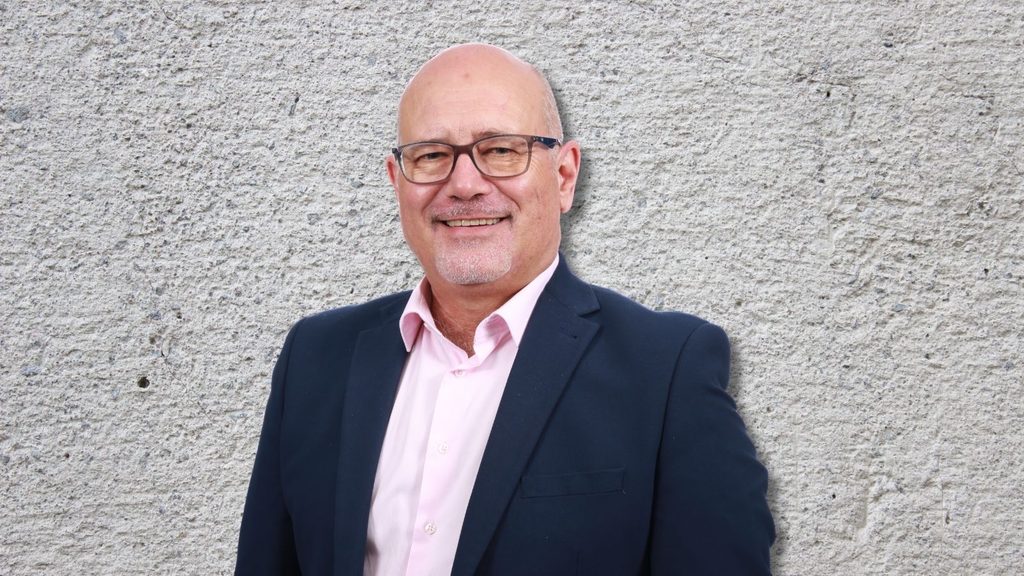
PSG Financial Services’ Johann Els correctly predicted that CPI inflation would rise to 5.2% in October, and he expects further readings above 5% in November and December.
However, Els believes inflation will then start to moderate over the course of 2027.
“This should become particularly evident from April onwards as the base effects start to work in the other direction,” he said.
However, Els noted that these forecasts are premised on the expectation that oil prices will continue to moderate.
“I maintain the view that the longer oil prices remain high, the greater the eventual deflationary impact,” he said.
“We therefore expect oil prices to moderate quite substantially during 2027, with local petrol prices also providing some relief.”
It is against this backdrop that Els said he expects the MPC to leave the policy rate unchanged at its November meeting.
He believes that some MPC members will favour another rate increase, mainly as insurance against the risk of higher inflation expectations over the next few months.
These members may also be concerned about the potential impact on headline and core inflation during 2027.
However, Els said expected petrol price declines from December onwards and a relatively stable rand should help contain inflation expectations.
“The Reserve Bank will probably continue to highlight the upside risks to inflation, as well as some downside risks to economic growth,” he said.
“But, on balance, I think the majority of the MPC will favour keeping interest rates unchanged. I do not think further rate increases are necessary.”
“In fact, I suspect there will be room for rate cuts to be reconsidered during the second half of 2027.”
Shireen Darmalingam – Standard Bank Economist

Standard Bank’s Shireen Darmalingam said October’s CPI print marked a meaningful acceleration in inflation.
She said the October CPI increase reflects a substantial rise in domestic fuel prices, with transport costs the main source of inflationary pressure in September.
However, she explained that underlying inflation pressures appeared contained in October.
“The October increase therefore appears to be driven primarily by the energy shock rather than a broad-based deterioration in inflation dynamics, although core inflation also increased,” she said.
“We expect inflation to average around 5.3% in the final quarter of this year, intensifying the squeeze on real household incomes before some relief emerges next year as fuel price pressures ease.”
For now, Darmalingam said October’s CPI print will complicate the outlook for monetary policy ahead of the MPC’s decision on Thursday.
“However, despite the near-term inflation spike, our base case is for the SARB to pause at tomorrow’s MPC meeting,” she said.
“Real interest rates are already restrictive, underlying inflation pressures have remained relatively contained, and growth risks have increased.”
Nevertheless, Darmalingam said the MPC’s decision is likely to be a close call, as the committee must weigh these considerations against several factors.
This includes rand weakness, possible second-round effects from the oil shock, and uncertainty around the adjustment of inflation expectations towards the 3% target.
Frank Blackmore – KPMG South Africa lead economist

KPMG South Africa’s Frank Blackmore said that, with inflation still well above the Reserve Bank’s 3% target, there is pressure for a potential 25-basis-point increase.
“This is largely due to the substantial petrol price increases over this period, as well as international developments and pressure on the Federal Reserve to also increase interest rates,” he said.
However, he said there is also a contrary view that forecasts are behaving in line with expectations, and that a rate hike may therefore be unnecessary.
“If I look at the current over- and under-recovery on fuel prices, we are sitting at approximately R3 over-recovered,” he said.
“This suggests that in December, we could see a reduction of around R3 per litre in fuel prices.”
“This tells us that, although we may see an increase in the October inflation number, November is likely to bring softer inflation into December.”
This should see South Africa move towards the Reserve Bank’s forecast that inflation will return to the 3% target in 2027, without any additional supply shocks.
“I also think the Bank is cognisant of the fact that this is an important period for consumers, who are already under significant pressure from rising living costs,” he said.
“Therefore, I believe we could see the bank hold rates at its November meeting and reassess the position at its January meeting next year.”
Login or register for unlimited free access.




Conversation
2 commentsI suspect The African American Pastors in the USA are behind our Rand price weakening They are behind the Taxi Shootings They are behind my persisting unemployment they are behind The El Nino 😂 They are behind The Boks losing to France 🇫🇷 on Friday The African American Pastors are also behind The Republican Loss in the US Midterm Elections my friend God will kill them