Government plan to make minibus taxis cashless


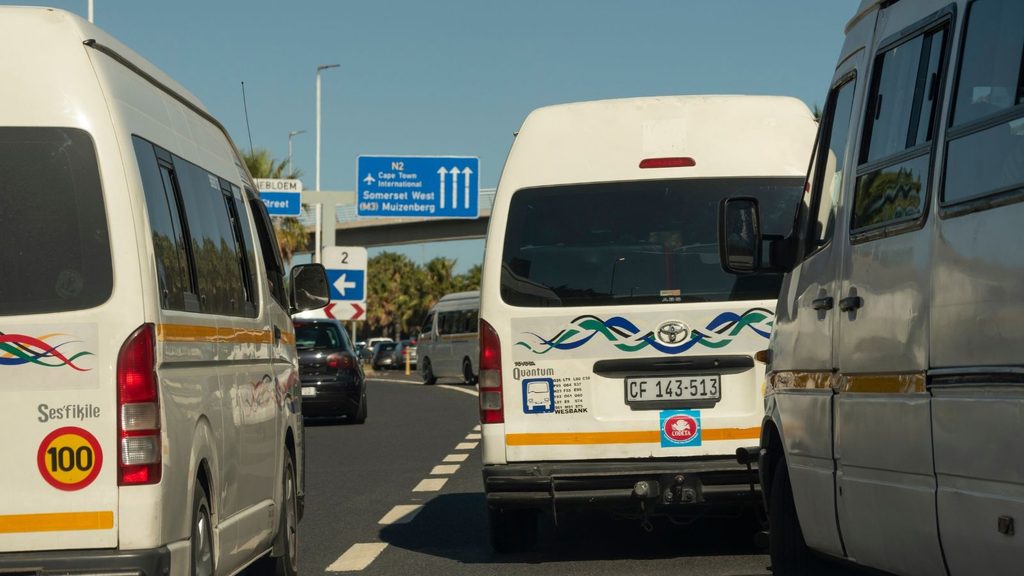
The Department of Transport is piloting cashless systems through the Taxi Recapitalisation South Africa programme.
These systems replace cash with commuter cards or smartphone payments to reduce cash-handling risks and generate payment records.
In theory, this should enable individuals to gain access to formal financial services and further government assistance, helping them grow their businesses.
This was revealed by Transport Minister Barbara Creecy in a response to a parliamentary question from MP Katherine Christie.
Christie asked Creecy whether there had been any progress in transitioning key sectors of the informal economy to digital payments.
One of the main sectors in this regard is the taxi industry, which remains one of the largest users of cash and largely operates under government radar and without formal financial services.
Creecy said her department has promoted the transition to digital payments since 2011 when it launched the Integrated Fare Payment Regulations.
“The department worked closely with the Reserve Bank and the Payments Association of South Africa to contribute to these regulations,” Creecy said.
“The department has also supported and advised SANTACO on digital payments. SANTACO is currently funding its own pilot project in Gauteng.”
Creecy explained that the department is also conducting its own projects to help taxis reduce their use of cash.
“One of these projects involves piloting cashless systems where commuter cards or smartphone payments replace cash fares,” she said.
“This technology improves operators’ revenue visibility, reduces cash-handling risks, and creates verifiable payment records that can support access to formal financial services.”
Creecy said the department is working with four automated fare collection providers to customise and implement sustainable solutions for the industry.
One provider currently operates a smart card system within the minibus taxi industry in the Western Cape.
Creecy made it clear that all national taxi-industry structures are aware of this project.
South Africa turning away from cash
South Africa’s economy appears to be gradually turning away from cash towards digital payment methods, with banks noticing a sharp rise in virtual cards and digital wallets.
Data from Discovery Bank and Visa shows that these methods are now the preferred payment methods for South Africans, with cash use declining and physical cards flatlining.
This has been boosted by banks encouraging their clients to use virtual cards and digital wallets to enhance their safety.
These methods are broadly safer to use for consumers than physical cards, both online and in person, as they are harder to clone.
The data also showed that 23% of South Africans use cash only once a month or never, with 64% using cash a few times a month.
Discovery Bank said this pattern shows cash is no longer the default option for a large chunk of payments in South Africa, but rather a fallback when digital alternatives cannot be used.
Respondents in the bank’s survey also expect the country to be cashless within five years, with some believing South Africa is already cashless.
Banks and other bodies, such as the Department of Transport, have been pushing individuals to use alternatives to cash given the cost of using physical bank notes.
The Reserve Bank estimates the cost of cash usage in South Africa is R90 billion a year. This includes withdrawal and deposit fees, queuing times, crime, and cash losses.
Despite this, physical cash remains popular among many South Africans, particularly for small payments, such as taxi fares.
56% of all transactions are done in cash, with the vast majority coming from lower-income individuals. Cash usage is almost non-existent among the wealthy.
Reserve Bank data shows there is R171 billion in hard cash in circulation in South Africa – the same amount as in 2009.
This indicates that digital payments are growing strongly in South Africa, with cash usage flatlining but still remaining popular.
The Reserve Bank said many consumers remain hesitant to fully transitoin to a cashless society, pointing to concerns around control, trust, and safety.






Conversation
2 commentsGee, I wonder where the problems in that plan are?