South African importers face application fees, hourly charges, and additional costs


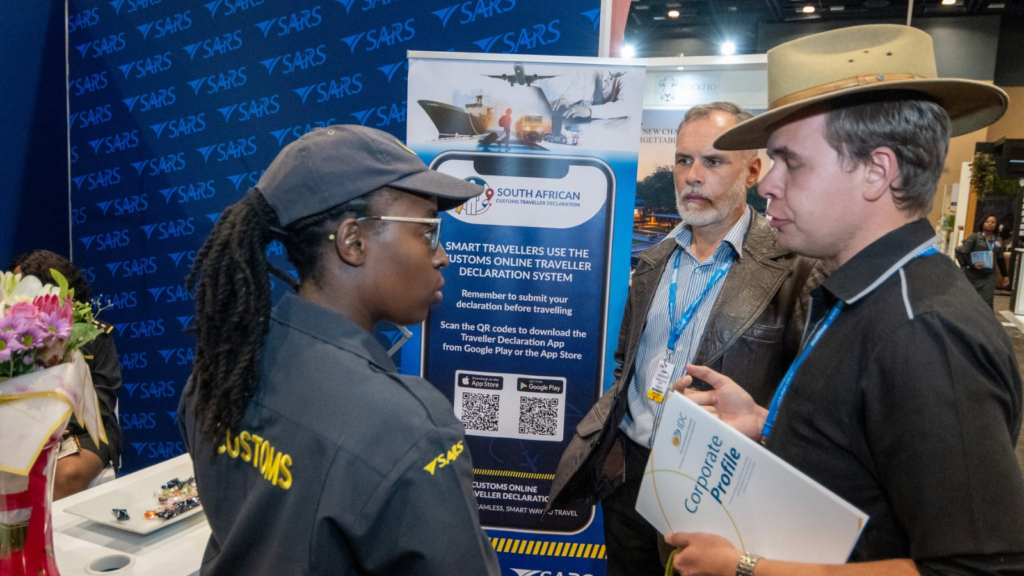
South African importers could face application fees, hourly charges, and additional costs from the South African Revenue Service (SARS) under proposed new rules.
The draft rules would require applicants to pay an application fee of R2,500, plus R650 per hour for ordinary applications or R1,000 per hour for urgent applications.
Importers would also be liable for additional costs, including laboratory testing, technical analysis, and fees for external experts.
This is according to Shepstone & Wylie partner Taryn Hunkin, who warned that the proposed costs and information requirements could discourage businesses from using the service.
SARS published the draft rules on 14 October 2026 for public comment. They set out the procedures for obtaining advance rulings under Chapter IXA of the Customs and Excise Act.
Advance rulings allow businesses to obtain a formal decision from SARS before importing goods. They can cover tariff classification, customs valuation, and the country of origin of goods.
These decisions can help importers understand how SARS will treat their goods for customs purposes, providing greater certainty when calculating duties and planning international trade costs.
Importers can face uncertainty when determining the correct tariff classification of goods, how those goods should be valued for customs purposes or which country they originate from.
An advance ruling provides an opportunity to obtain the revenue service’s decision before goods are imported, which would help businesses manage potential customs risks.
Under the proposed rules, applications would have to be submitted electronically through eFiling or at a SARS office. Applications would no longer be accepted by email.
Applicants would also have to provide detailed information about themselves, the goods involved and the specific ruling they are seeking.
SARS could request additional information or supporting documents before considering an application. Applicants would have 21 working days to provide the requested information, although an extension may be granted.
Failure to provide the information could result in the application being rejected.
Depending on the type of ruling, supporting documents could include technical specifications, product catalogues, photographs, manuals, and supplier declarations.
SARS may also require manufacturing records, laboratory reports, and even physical samples of the goods.
The level of information required means businesses would need to prepare their applications carefully and ensure that their technical and supplier documentation is available.
Risks for importers
Hunkin explained that one of the main concerns surrounding the new rules is the proposed fees.
In addition to the R2,500 application fee, applicants would pay a cost-recovery fee of R650 per hour for ordinary applications or R1,000 per hour for urgent applications.
The final cost would depend on the time required to process the application. Additional expenses could arise where SARS requires laboratory testing, technical analysis or assistance from external experts.
The draft rules require SARS to provide estimates of anticipated additional costs and obtain approval before incurring significant expenses.
However, Hunkin questioned how the application and cost-recovery fees would be used. She also noted that the draft rules do not indicate how long SARS would take to consider an application.
Without a clear indication of processing times or the likely total cost, businesses may find it difficult to determine whether obtaining a ruling is worthwhile.
The potential value of an advance ruling will depend on the goods being imported, the complexity of the customs question, and the financial risks associated with an incorrect classification, valuation, or origin determination.
For businesses importing high-value goods or dealing with recurring customs uncertainties, the certainty provided by a ruling could justify the expense. For other importers, the fees and administrative requirements may prove a barrier.
The proposed rules also address recordkeeping and the publication of decisions. Recipients of advance rulings would be required to retain the application, supporting documents, correspondence, and the ruling for 5 years.
SARS could publish tariff and origin rulings to help other importers dealing with similar goods, provided confidential information is not disclosed. However, Hunkin raised concerns about the fairness of this arrangement.
An importer could incur the cost of obtaining a ruling, while other businesses could benefit from the published decision without paying for the original application.
This creates a potential imbalance between the importer funding the process and other businesses benefiting from the resulting information.
As such, Hunkin stressed that the proposed publication process would need to balance the benefits of greater transparency and consistency with the costs borne by individual applicants.
Businesses face ongoing obligations

The proposed rules would also place ongoing obligations on businesses after a ruling has been issued.
Recipients would have to notify SARS within 10 working days if the circumstances affecting the ruling change. They could also apply to have the ruling amended.
SARS could withdraw a ruling if it was obtained through fraud, misrepresentation, or incomplete information. A ruling could also be withdrawn if it conflicted with an applicable international trade agreement.
These provisions mean that businesses would need to ensure the information supporting their applications remains accurate and that they notify SARS when relevant circumstances change.
Advance rulings can provide an important risk-management tool for importers by helping them establish how SARS will treat goods before an import transaction takes place.
However, Hunkin questioned how many businesses would choose to use the service given the proposed fees and the amount of information required.
Importers and other interested parties have until 4 November 2026 to submit comments on the draft rules to SARS.
Login or register for unlimited free access.



Conversation
1 commentsALL tax is theft and in this country the only government department that does not allow incompetence is SARS. They are nothing more than thieves for the corrupt government and should be disbanded post haste