South Africa’s government borrowed R288.8 billion from international institutions and it wants more


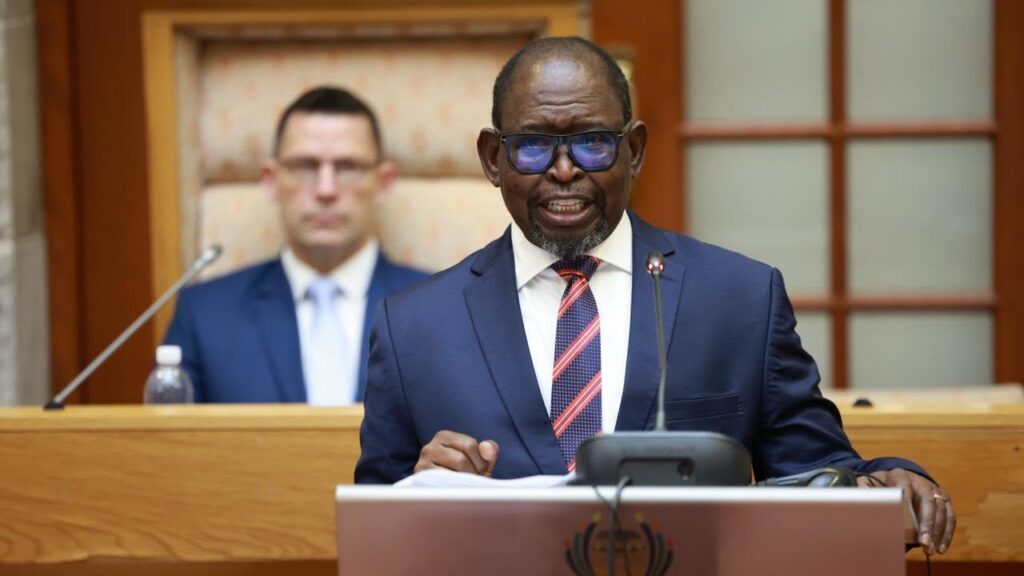
The South African government borrowed R288.8 billion from international financial institutions, but it is still not enough, and it is getting more loans to make ends meet.
This was revealed by Finance Minister Enoch Godongwana in response to a Parliamentary question from National Assembly member Vuyolwethu Zungula.
Zungula asked Godongwana for the value of all loans secured by the Republic of South Africa from international financial institutions from 15 February 2018.
He also asked for the breakdown of the loans in terms of the financial institution, the amount borrowed, the date on which the loan was concluded, and the purpose.
The Finance Minister revealed that South Africa secured loans from nine international finance institutions over the last eight years.
These include the New Development Bank, the International Monetary Fund, the African Development Bank, the World Bank, and the French Development Bank.
It also borrowed money from the KfW Development Bank, the Government of Canada, the OPEC Fund, and the Asian Infrastructure Investment Bank.
Most of them were development policy loans, money to support South Africa’s metro trading reform program, and sustainable development loans.
Three of the loans related to the COVID-19 pandemic, including one for an emergency response project.
The largest loan is R69 billion from the International Monetary Fund, which was a rapid financing instrument to address the COVID-19 pandemic.
South Africa received R100 billion in loans from the World Bank, R48 billion from the New Development Bank, and R18 billion from the African Development Bank.
The table below shows the South African government’s loans from international financial institutions from 2018.
| Institution | Date | Terms (years) | Amount (billion) | Amount ( billion) |
| New Development Bank | 13-Jul-20 | 30 | US$1.0 | R16.16 |
| International Monetary Fund | 22-Jul-20 | 5 | US$4.3 | R69.48 |
| African Development Bank | 09-Sept-20 | 20 | R5.00 | R5.00 |
| New Development Bank | 08-Jun-21 | 30 | US$1.0 | R16.16 |
| New Development Bank | 15-Oct-21 | 25 | US$1.0 | R16.16 |
| World Bank | 20-Dec-21 | 13 | US$0.75 | R12.12 |
| World Bank | 22-Jun-22 | 13 | EUR0.45 | R8.42 |
| French Development Bank | 04-Nov-22 | 20 | EUR0.3 | R5.61 |
| KfW Development Bank | 04-Nov-22 | 20 | EUR0.3 | R5.61 |
| African Development Bank | 17-Nov-23 | 12 | US$0.3 | R4.84 |
| World Bank | 15-Nov-23 | 15 | US$1.0 | R16.16 |
| KfW Development Bank | 17-Nov-23 | 15 | EUR0.5 | R9.36 |
| Government of Canada | 02-Mar-24 | 10 | CAD0.120 | R1.39 |
| French Development Bank | 14-Nov-24 | 15 | EUR0.4 | R7.48 |
| World Bank | 20-Jun-25 | 16 | US$1.5 | R24.24 |
| KfW Development Bank | 16-Jul-25 | 13 | EUR0.5 | R9.36 |
| African Development Bank | 24-Jul-25 | 16 | US$0.475 | R7.75 |
| OPEC Fund | 11-May-26 | US$0.150 | R2.42 | |
| World Bank | 18-May-26 | 15 | US$1.5 | R24.24 |
| World Bank | 02-Apr-26 | US$0.925 | R15.02 | |
| KfW Development Bank | 29-Jul-26 | 5 | EUR0.2 | R3.74 |
| Asian Infrastructure Investment Bank | 24-Jul-26 | 16 | US$0.5 | R8.08 |
| Total | – | – | – | R288.8 |
South Africa continues to borrow money
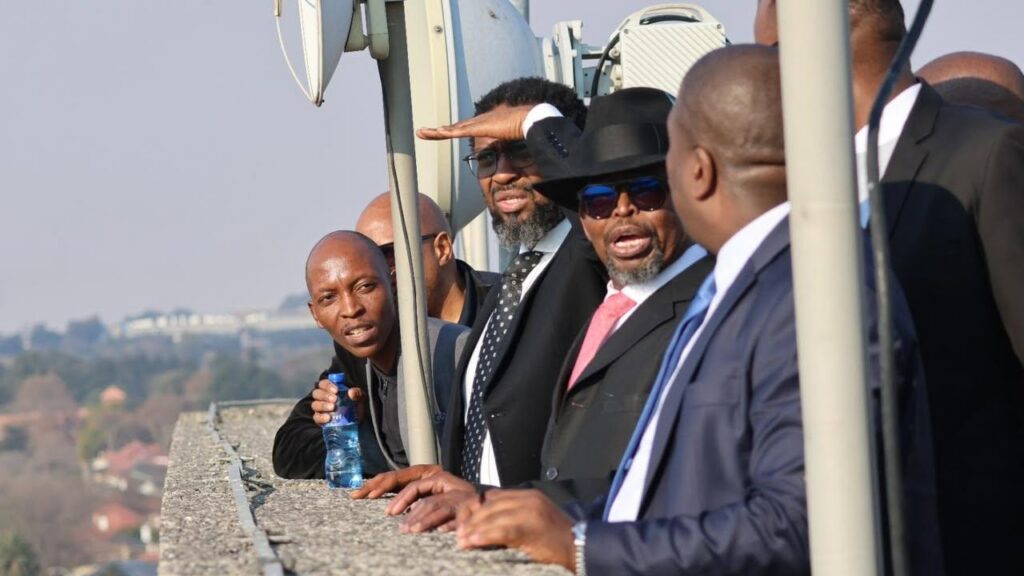
Last week, the National Treasury announced that the New Development Bank (NDB) and the Government of South Africa have signed two loan agreements.
These loans are to support the Limpopo Central Hospital Project and the Magalies Bulk Water Supply Scheme.
The New Development Bank provided a US$ 200 million loan agreement to finance the Limpopo Central Hospital Project.
The bank will also finance the Magalies Bulk Water Supply Scheme project for US$205 million to improve access to reliable drinking water.
Both loans have a 10-year maturity, including a 4-year grace period, with an interest rate equal to the Secured Overnight Financing Rate (SOFR) plus 0.94%.
The National Treasury expressed its appreciation to the New Development Bank for its continued partnership and support.
“This money is critical to staying the course and advancing South Africa’s infrastructure development and long-term sustainable development objectives,” it said.
It added that the New Development Bank’s project loans have enabled the government to meet its 2026/27 foreign currency borrowing requirement of US$3.2 billion.
Nelson Mandela turning in his grave
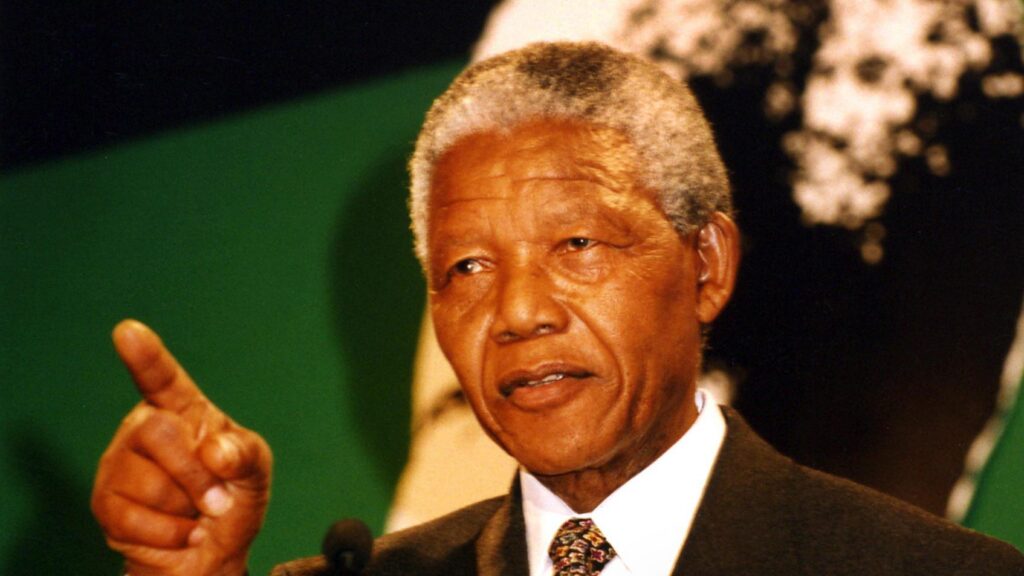
Nelson Mandela and his successor, Thabo Mbeki, reduced South Africa’s inherited debt and avoided a World Bank or IMF bailout. However, this work has been squandered.
When Mandela became South Africa’s first democratic president, he was concerned about the country’s debt burden.
Debt service costs as a share of gross domestic product (GDP) were crippling, and economic growth rates were declining.
The economy’s annual average growth rate was 1.0% between 1985 and 1990, falling to 0.2% between 1990 and 1994.
Simply put, South Africa was in dire financial straits and required drastic measures to resolve the situation. A bailout would have been the easy route.
However, Mandela opposed bailouts from the International Monetary Fund or the World Bank, as they came with stringent conditions.
“The difficulty with you is that you impose conditions which violate the sovereignty of a country,” Mandela told him.
Instead, Mandela and Mbeki developed and implemented a policy framework to reduce government debt and stimulate economic growth.
Mandela’s strategy focused on fiscal discipline and budget redirection to avoid a “debt trap” that would trigger a World Bank or IMF bailout with restrictive conditions.
They gradually reduced the fiscal deficit, avoided a debt trap, and limited any real increase in recurrent government expenditure.
The Mandela presidency stabilised the country’s finances and achieved an average economic growth rate of 2.7%.
Under Mbeki, with Trevor Manuel as Finance Minister, the country achieved even stronger economic growth and significantly reduced its debt-to-GDP ratio.
In 2008/09, South Africa’s gross loan debt totalled R627 billion, equivalent to 26% of the country’s gross domestic product (GDP).
Between 1994 and 2007, S&P Global and other ratings agencies upgraded South Africa’s credit rating numerous times.
Nelson Mandela and Thabo Mbeki’s financial legacy destroyed
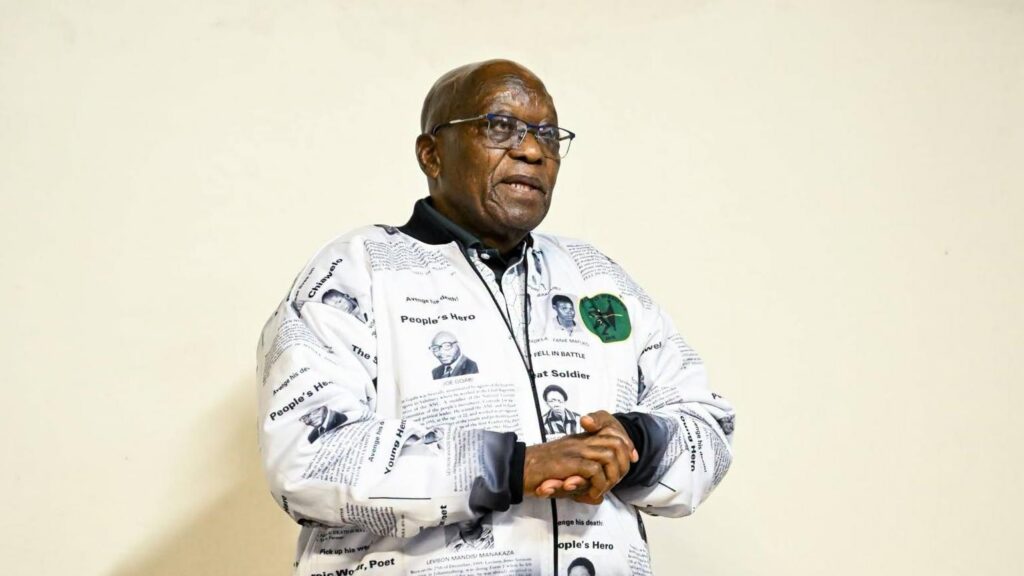
Under the Jacob Zuma administration, South Africa’s economic growth stalled, and the country began to run significant deficits.
Under Zuma and his finance minister, Pravin Gordhan, South Africa’s debt-to-GDP ratio increased tremendously, undoing the good work of Trevor Manuel.
Over the next fifteen years, under Zuma and Ramaphosa, the government’s gross loan debt ballooned to R5.21 trillion, or 73.9% of GDP.
Renowned economist Dawie Roodt stated that the negative trajectory began with Gordhan, when South Africa’s debt-to-GDP ratio doubled from 26% to 50%.
He gave large salary increases to civil servants, and state-owned enterprises that were mismanaged and corrupt received billions in bailouts.
The poor policies implemented under Zuma, with Gordhan as finance minister, continued even after they left office.
Exorbitant government spending and a stagnant economy resulted in the state’s debt burden surging from 26% of GDP in 2008 to over 77% in 2025.
South Africa spends R1.2 billion per day servicing its growing debt burden, diverting money from education, healthcare, and policing.
However, this is not the only debt South Africa has. The government also has R707.8 billion in contingent liabilities, which include SOE guarantees.
South Africa’s deteriorating financial position also saw it break its long-standing tradition of avoiding IMF and World Bank debt.
Mandela and Mbeki’s reforms, aimed at creating a sustainable financial situation for South Africa and avoiding bailouts, are now long forgotten.
The government treated state finances and state-owned enterprises as tools for personal enrichment, and South Africans are now paying the price.

Comments