Lotto tickets can find SARS’ missing R195 billion



The printing of lottery ticket numbers on sales receipts in Taiwan boosted the government’s tax revenue by 75% in a single year.
This tactic was implemented by the Taiwanese authorities to improve tax compliance in the country’s heavily cash-dependent economy.
The situation is similar to where South Africa finds itself with regard to the informal economy, which still largely operates on a cash basis.
This economy is estimated to generate R900 billion in turnover on an annual basis and employs millions of South Africans.
However, its contribution to the country’s fiscus and economy is difficult to quantify, given that most transactions occur in cash and many businesses are unregistered.
While experts such as GG Alcock say that informal businesses pay tax in the form of value-added tax (VAT) on stock and through supplementing consumer spending, they do not contribute in the same way a formal business does.
This has led to calls for the South African Revenue Service (SARS) to crack down on the sector and improve compliance among small business owners to boost government revenue.
SARS estimates that South Africa has a tax gap of up to R800 billion a year, which, if closed, would be enough to make up the government’s entire budget deficit.
This gap is the difference between the amount of tax assessed by SARS and that which is actually paid. It is typically created through illicit activity and informal operations.
SARS’ research shows that the tax gap is primarily driven by unpaid VAT, which is estimated to cost the government R195 billion in revenue every year.
The revenue authority has worked hard to close this gap by investing in enhanced audit capabilities and accessing third-party data.
It is also investing in modernising its VAT collection systems to enable real-time monitoring and mandatory e-invoicing.
This investment should also enable automated VAT assessments, making compliance less burdensome for businesses and SARS.
Despite these initiatives, South Africa’s tax gap has proven stubbornly wide as SARS relies heavily on data created when a transaction has a clear paper trail and is officially recorded.
This is the same challenge Taiwan faced over 50 years ago – an all-cash economy full of small shops that did not record their sales. Auditors cannot catch what was never recorded.
Lotto tickets on sales receipts
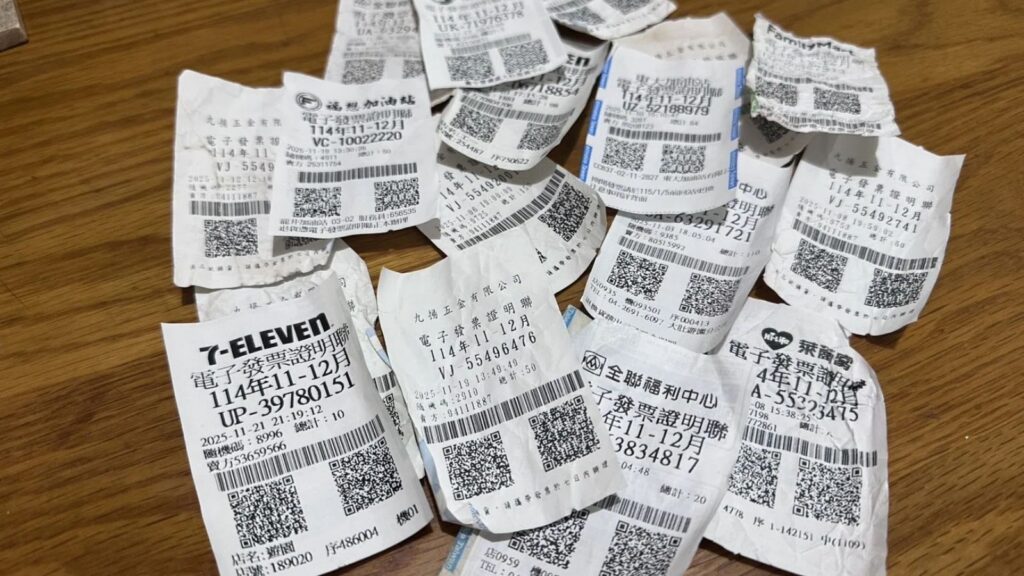
Taiwan’s Finance Minister Ren Xianqun found a solution to the problem in 1951 after teams of auditors were unable to find a way to track cash-based transactions.
In the country’s cash-based economy, a merchant would often pocket the cash from a sale and never produce a receipt. Thus, the sale officially never existed.
Foreigners who travel to the country to this day are often shocked at the desire of Taiwanese people to collect piles of receipts and how they demand them from shopkeepers. This is Xianqun’s solution at work.
In 1951, Xianqun and his team decided to introduce a policy whereby a lottery number would be printed on every receipt.
At the stroke of a pen, the Taiwanese had millions of auditors on the ground in the form of customers who would demand a receipt to enter into the lottery.
In effect, customers demand that a paper trail be created through the declaration of a sale and the issuance of a receipt. Once a record is created, it can be tracked by auditors.
This policy proved immensely successful, with small business owners being forced to record sales through official electronic tills. Cash could no longer be pocketed directly to avoid sales taxes.
The policy also required little enforcement from the government, with Taiwan’s millions of consumers driving compliance.
It is estimated that in the first year of its implementation, the policy boosted sales tax revenue by 75%. Today, over 70% of Taiwanese people still play the lotto using sales receipts.
The government gives away around NT$7 billion or $20 million (R324 million) every year to have millions of unpaid auditors around the country.
However, the system is not completely flawless, with individuals trying to game the system to improve their odds of winning the lottery.
For example, some people make a huge number of tiny purchases, such as buying hundreds of plastic bags individually, to generate hundreds of tickets. This loophole has been blocked by the government.
With the advent of digital payment methods, sales in Taiwan are now often linked to the purchaser’s ID or phone app. This creates a digital record to automate auditing and limit receipt manipulation.






Comments