One cup of coffee created a R180 billion South African giant


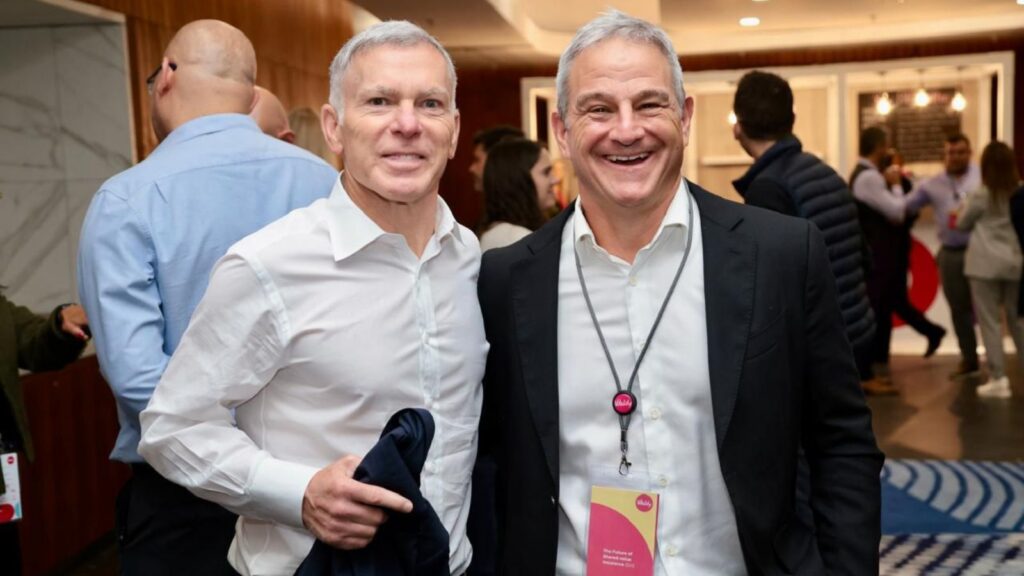
34 years ago, Adrian Gore asked Barry Swartzberg over a cup of coffee if he would join him in starting a small medical aid company called Discovery.
It was not as simple as an overnight success, but from that cup of coffee, the beginnings of a R180 billion insurance giant were born.
Swartzberg said that Gore still jokes about it being the most expensive cup of coffee he has ever had, with it kickstarting three decades of work.
Discovery’s growth has been meteoric since then, but it has not been plain sailing, with regulatory challenges and intense competition pushing Gore and Swartzberg hard.
Gore has more recently overseen the evolution of Discovery into an integrated financial services provider through the launch of a bank and the expansion of Discovery Invest.
“It has been 34 years since we founded Discovery, an idea built on a simple but powerful belief: that a business can improve people’s lives while creating lasting value,” Swartzberg said in a social media post.
“From our inception, our Core Purpose has been clear: to make people healthier and to enhance and protect their lives.”
Swartzberg explained that this informs everything the company does, serving as its North Star. Most importantly, this is the backbone of the Vitality Shared-Value Model.
It continues to inform Discovery today, with Swartzberg saying the company is at an inflection point where it is reinventing itself for the future.
Gore has spent much time explaining to investors and analysts the “organic growth phase” that Discovery is entering after a decade of major investment in new offerings.
The past decade saw Discovery launch its own bank, build out its short-term insurance offering, create an asset management giant, and invest heavily in its global Vitality network.
Discovery is now a company straddling every aspect of financial services in South Africa and has its technology deployed in China, the United Kingdom, the United States, and Europe.
Valued at around R180 billion on the JSE, the company is now vying with Sanlam to be the most valuable non-banking financial institution in Africa.
If Discovery meets Gore’s ambitious targets over the next five years, the company is expected to nearly double in size.
Forgotten beginnings

Discovery has become so entrenched in the lives of South Africans that it is often forgotten that it was started only 34 years ago.
Gore was just 27 years old at the time and had enjoyed a stint working at Liberty, where he was part of the team building its Medical Lifestyle product.
While working on this product, Gore had the idea of launching his own health insurance business and reached out to Rand Merchant Bank (RMB) for backing.
FirstRand co-founder Laurie Dippenaar was the one who answered Gore’s call and granted him the opportunity to pitch his idea.
Dippenaar was impressed, but he actually told Gore that it was not disruptive enough. “If you do come up with something that is truly disruptive, please call me,” he told the young entrepreneur.
RMB had a storied history of entrepreneurship and backing ideas, having incubated OUTsurance and Momentum, among others.
Gore continued working at Liberty and leveraged this experience to come up with a more disruptive product.
“A year later, he gave me a call. He described the Discovery Health product with a medical savings account. That triggered something in me,” Dippenaar said.
This was a truly disruptive product. RMB agreed to back Gore and matched his salary at Liberty, giving him three months to build a business plan for Discovery.
RMB loved the plan and became Discovery’s first client. However, the good success was very nearly derailed by regulatory changes in the late 1990s.
In 1999, Discovery was on the verge of being shut down by regulators under the new Medical Schemes Act, which mandated that all medical schemes be open to all.
Under these regulations, medical aids were not allowed to decline cover to anyone who could afford the premiums. This effectively ended Discovery’s unique risk-rated health insurance model.
Discovery faced an ultimatum only seven years after it was founded – change the business model or be shut down in 14 days.
The insurer went through three phases of trial and error – Apollo 1, 2, and 3. These phases were not only a moonshot, but they ended up making Discovery as it is known today.
This period produced the shared-value model that underpins all its operations to the present day.
Instead of controlling entry to its medical scheme, Discovery created a model to incentivise individuals in its scheme to become healthier.
This supercharged Discovery’s innovative Vitality model, which was then a clinical wellness programme, into a comprehensive behavioural incentive programme.
The model informs all of the company’s operations today, from improving financial behaviour through its bank to driving at Discovery Insure and retirement saving at Discovery Invest alongside its medical aid.




Comments