Taxpayers forced to clean up SARS’ mistakes themselves


Taxpayers cannot rely on the courts or SARS to correct errors, and if they do not spot and raise breaches themselves, they risk losing the opportunity to challenge an incorrect decision.
Unicus Tax Specialists SA founder Nico Theron explained that recent case law has made it clear that SARS cannot ignore the rules that govern how tax disputes are handled, but taxpayers must actively enforce those rules.
In practical terms, this means SARS cannot simply change its case, ignore its own processes, or make decisions without proper reasoning, and taxpayers have the right to challenge this.
“Many taxpayers still think an obvious procedural defect will somehow correct itself,” Theron said. “It won’t. The courts push back only when a taxpayer recognises the breach and raises it properly.”
Recent judgments show that courts are taking a firmer stance where SARS steps outside the rules that govern tax disputes, including principles of administrative law under the Promotion of Administrative Justice Act.
Importantly, courts are also enforcing the procedural rules and statutory framework governing tax matters more strictly. In real terms, this includes situations where SARS:
- Tries to change the basis of a tax assessment after it has already been issued
- Does not follow the proper dispute procedures
- Makes decisions, such as refusing to suspend payment, without proper reasoning
- Fails to follow the standards that should guide its decision-making
Theron explained that several recent South African court cases have reinforced these principles in different procedural contexts.
For example, in BASF v CSARS, the High Court confirmed that SARS cannot use its Rule 31 pleadings to introduce a materially different case to the one reflected in the original assessment.
The court reinforced that Rule 31 is not a mechanism for rebuilding or re-engineering an assessment during litigation.
Courts rein in SARS – but taxpayers must act to enforce their rights

In Erasmus v CSARS, the Supreme Court of Appeal similarly confirmed that SARS is bound by the factual and legal basis of the assessment it issues.
The court ruled that SARS also cannot shift to a fundamentally different case in the Tax Court process, as this would undermine the integrity of the dispute framework and prejudice the taxpayer.
In Ferreira v CSARS, the High Court overturned SARS’ refusal to suspend payment under the “pay now, argue later” regime.
The court found that SARS failed to properly consider materially relevant security and that its decision lacked rationality and fairness, rendering it reviewable under administrative law principles.
“The common thread is simple,” Theron said. “SARS is a creature of statute. It must operate within the limits of the law, even when those limits are inconvenient.”
While these developments strengthen taxpayer protections, they should not create a false sense of security, as courts do not monitor SARS’s conduct on their own.
If a taxpayer does not identify a procedural flaw, raise it, and pursue the correct remedy, the issue may never be properly considered.
Theron explained that this applies equally to individuals disputing personal tax matters and to businesses facing complex audits or assessments.
“The real issue is not just whether SARS is in breach. It is whether the taxpayer and their advisers can identify the problem early, protect their position, and respond strategically before real damage is already done,” he said.
Theron added that procedural rights are only effective when enforced, which means it is essential that taxpayers be proactive about their tax affairs.
“If SARS oversteps and nobody calls it out, SARS is not going to correct itself. Taxpayers need to know when to push back, how to do it, and when court intervention becomes necessary,” he said.
 Loading ...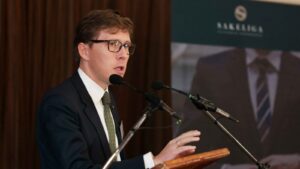




Comments