South Africa is sitting on a ticking time bomb


Economist Dawie Roodt said that although South Africa has turned the corner, it is not out of the woods yet, and its finances remain a ticking time bomb.
Roodt, Efficient Group’s Chief Economist, shares his views during a presentation about Finance Minister Enoch Godongwana’s 2026 Budget.
In his budget speech, Godongwana said South Africa has reached an important turning point in the management of its public finances.
“For the first time in 17 years, debt will stabilise, and it will continue to fall in the coming years,” the finance minister said.
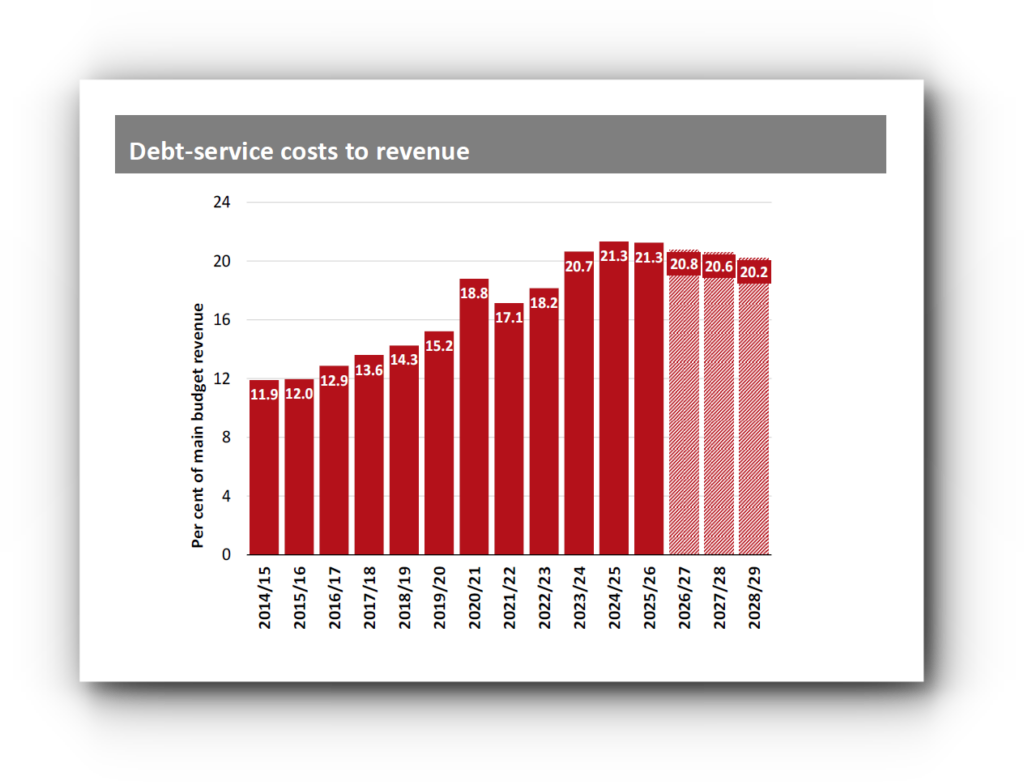
He added that the budget deficit has narrowed significantly, and debt-service costs are also falling.
South Africa has also been removed from the FATF grey list, secured its first credit rating upgrade in 16 years, and seen borrowing costs ease.
Roodt also believed that South Africa had turned the corner, but warned that the country still had a lot of work to do.
“South Africa’s fiscal accounts are still in deep trouble. We still have to do a lot of things to fix them,” he said.
He highlighted that South Africa still pays R432 billion in interest on its debt each year, making it the third-largest budget expense.
South Africa pays more on interest than it spends on health, peace and security, economic development, and general public services.
“We pay nearly R14,000 per second on interest. Each South African owes more than R100,000 than what you think you owe,” Roodt said.
He added that the state debt is essentially a burden on South African taxpayers and that they will have to repay it in time.
Finance Minister Enoch Godongwana is upbeat about the finances

Godongwana said that over the past year, the funding environment benefited from improved investor confidence, reduced perceptions of risk, and declining interest rates.
The gross borrowing requirement for 2026/27 has declined markedly, from R434.3 billion at the time of the 2025 Budget to R380 billion.
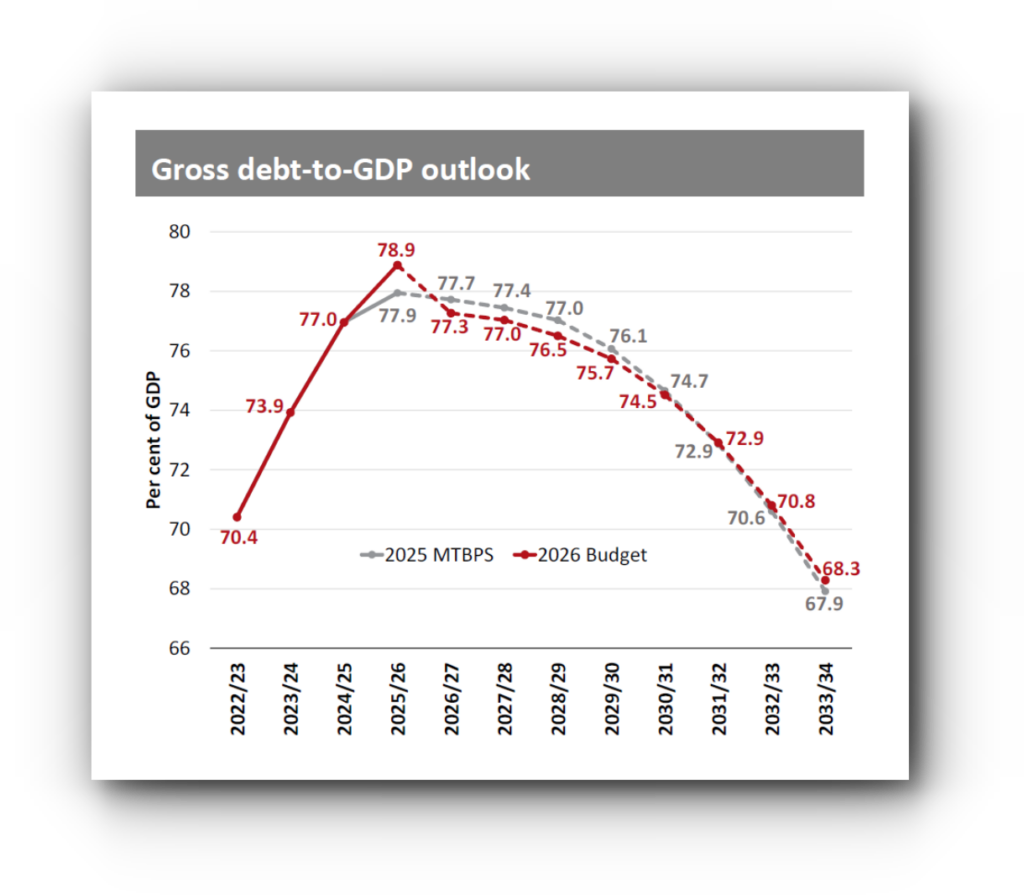
He said that gross government debt stabilised at 78.9% of GDP in 2025/26 and is expected to decline to 76.5% of GDP over the medium term.
The 2025/26 gross borrowing requirement is revised down to R563.4 billion from the 2025 Budget projection of R588.2 billion.
The stock of gross debt is expected to increase from R6.12 trillion in 2025/26 to R6.94 trillion in 2028/29.
Net loan debt, which is gross debt less cash balances, will increase from R5.91 trillion to R6.84 trillion.
“By 2028/29, the increase in the stock of debt will be R277.4 billion lower than projected in the 2025 Budget,” he said.
“This is a clear demonstration of the positive impact of improved fiscal management on the government’s fiscal accounts.”
He explained that this resulted from a better budget balance and lower discounts on new fixed-rate bonds issued at lower interest rates.
“It also reflects reduced inflation adjustments on inflation-linked bonds and lower foreign debt due to a stronger exchange rate,” he said.
Gross debt-to-GDP outlook
Debt-service costs to revenue




Comments