Reserve Bank votes to keep interest rates the same


The Reserve Bank’s Monetary Policy Committee (MPC) has voted to keep South Africa’s interest rats unchanged, as the committee expects inflation to rise over the coming months.
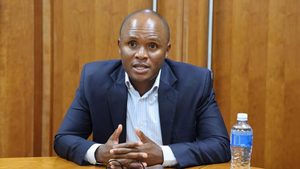
Reserve Bank Governor Lesetja Kganyago announced on Thursday, 18 September, that interest rates will remain unchanged, keeping the repo rate at 7% and the prime lending rate at 10.50%.
This comes after a lower inflation reading of 3.3% in August, down from 3.5% in July. This is within the Reserve Bank’s 3% to 6% official target range but slightly higher than its preferred target of 3%.
The decision was not unanimous, as four MPC members preferred to keep rates on hold while the other two favoured a 25-basis-point cut.
Kganyago explained that the MPC expects headline inflation to rise over the next few months, peaking at around 4%.
“Our forecast now incorporates higher electricity price inflation, of nearly 8% rather than 6%, given the recent pricing correction by NERSA,” he said.
“Our inflation projections also have upward adjustments to food and services prices, partly offset by a stronger exchange rate assumption.”
Overall, the Reserve Bank expects headline inflation to average 3.4% this year, and 3.6% next year, before reverting to 3% during 2027.
The decision to keep rates unchanged comes after the MPC implemented a cut in July, the fifth in the current cutting cycle that has seen rates decrease by a cumulative 125 basis points.
“Since September last year, we have reduced rates by 125 basis points, and we want to see how this is affecting the economy, how expectations evolve, and how inflation risks are resolved,” Kganyago said.
In the hiking cycle that preceded these cuts, the MPC raised rates by 475 basis points, which brought interest rates to 15-year highs.
While these hikes successfully tamed inflation in South Africa, the SARB remains hawkish about upside risks to the inflation outlook.
Therefore, many experts believed that the July cut would be South Africa’s last in 2025, with geopolitical uncertainty and upside risks to the inflation outlook prevailing.
However, some economists still hold hope for another cut in South Africa in 2025, especially considering the US Federal Reserve is currently in a cutting cycle.
This, combined with South Africa’s relatively low inflation, means the MPC may have more room to cut the country’s interest rates.
Regardless, South Africa’s potential shift to a lower inflation target is expected to muddy the inflation outlook.
The Reserve Bank and the National Treasury have been discussing the possibility of lowering and narrowing South Africa’s inflation target to around 3%.
This shift would see South Africa have higher interest rates for longer, but, in the long term, the country could reap the benefits of lower inflation, lower interest rates and, consequently, faster economic growth.
While this change is not official yet, Kganyago said at the MPC’s July meeting that the committee now prefers inflation to settle at 3% and, in line with this target, has decided to aim for the bottom of its inflation target range.
This is an unofficial change, with the MPC looking for inflation expectations to anchor around the 3% mark instead of the 4.5% – the midpoint of the official target range – it previously targeted.
“The MPC emphasises that stabilising inflation at 3%, rather than 4.5%, implies a lower longer-term level for the policy rate,” Kganyago said in Thursday’s announcement.
“As usual, our decisions will be taken on a meeting-by-meeting basis, with careful attention to the outlook, data outcomes, and the balance of risks to the forecast.”
The graph below shows how South Africa’s inflation and interest rates have changed since May 2021.






Comments