One South African company winning big from oil price shock


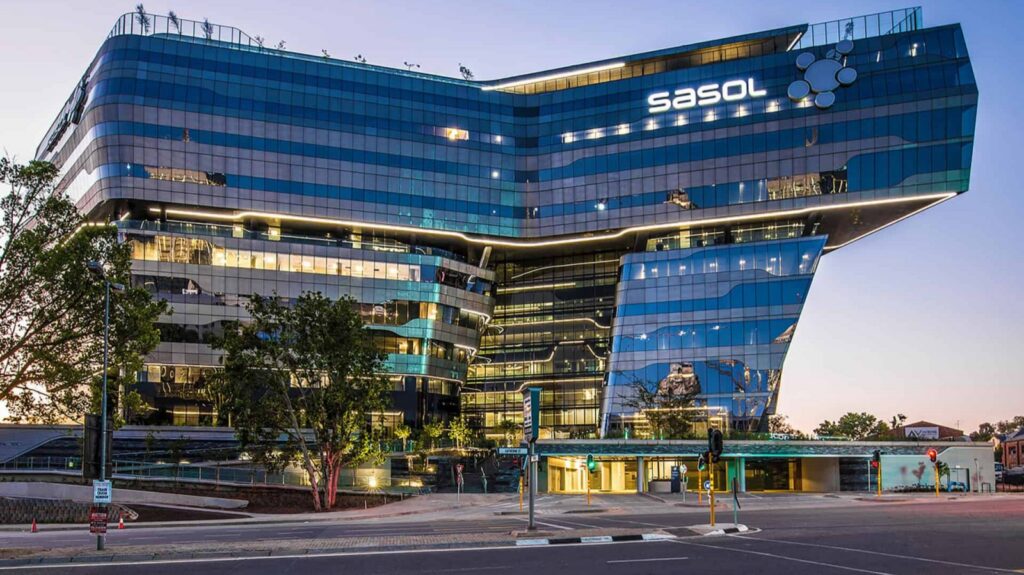
This year’s oil price rally has produced one clear winner: South Africa’s Sasol.
It is the top-performing emerging-market stock outside Asia, and many analysts are betting its bull run has further to go.
Sasol has delivered investors an almost 120% dollar return this year, building on last year’s 45% gain and putting it on track for its best annual performance since at least 1991.
That’s not far behind Asia’s giant chip and internet companies in MSCI’s main emerging-equity index.
The performance is all the more remarkable, given that it comes after years of ballooning debt and project delays, during which shares lost 85% of their value between June 2022 and April 2025.
The latest share rally is, of course, down to surging energy and chemicals prices amid the Iran conflict.
But Sasol has another advantage — it derives the majority of its oil output from coal, using special coal-to-liquids technology, which reduces its reliance on Middle East crude.
Synthetic fuel production at its Secunda facility is running at five-year highs, the refiner said in results reported on 1 September.
“It’s a great turnaround story,” said Adrian Hammond, executive director at SBG Securities in Johannesburg.
“Sasol is not like a typical refinery; their core operation takes coal that they mine and turns it into fuel and chemicals.”
While a conventional refiner would currently buy crude at around $100 a barrel, Sasol gets feedstock at a fraction of that cost, while selling the finished product at market prices, Hammond says.
He projects the share price to almost double from current levels over the coming year to R450 per share, as the stock has been overlooked by many local investors so far.
That implies “a rapid re-rating when sentiment does eventually shift,” he said.
Sasol’s outperformance coincides with greater investor optimism about South Africa, driven by economic reforms and signs of cooling inflation.
But the company’s own finances have improved too. Net debt is down 11% during the financial year ended 30 June.
Further reductions may enable it to pay dividends for the first time in more than two years, management has said.
The shares have gained more than 43% since the start of the second quarter, compared with a 1.9% decline in the local benchmark gauge.
Earlier this year, some analysts advised clients to take profits on the shares, saying they looked expensive relative to historical levels.
While the rally has continued since then, Sriharsha Pappu, global head of energy and materials research at HSBC, acknowledged that an oil price reversal could stall the momentum.
Pappu has a buy rating on the stock, with a target price of R260.
Even so, for now, the macro-economic tailwind remains in Sasol’s favour, said Aeysha Samsodien, a portfolio manager at M&G Investments.
If oil prices stay elevated, Sasol can continue to cut debt and strengthen its balance sheet, she said.
The stock has four buys, five holds and two sell-equivalent ratings from analysts tracked by Bloomberg, with an average price target of R238.01.
The shares traded around R231.60 on Monday.
 Loading ...





Comments