Eskom spent R233.4 billion to build a power station which is still not finished 18 years later


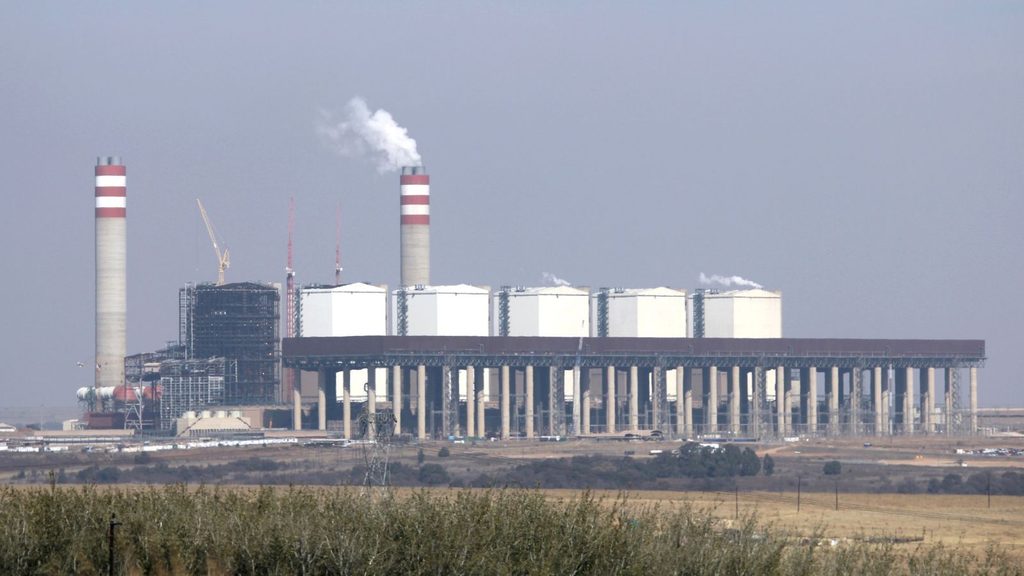
In 2008, Eskom began building Kusile Power Station, which was scheduled for completion by 2017 at a cost of R121 billion.
18 years and R233.4 billion later, the utility now expects Kusile to be completed in the 2028 financial year.
This was revealed in Eskom’s 2026 annual report, with the utility explaining that although all six generation units are operational, significant work remains at Kusile.
Eskom estimates that Kusile’s final close-out will be completed in the 2028 financial year, with plant and remedial works still to be carried out.
Kusile was planned as one of the largest coal-fired power stations in the world, and along with Medupi was intended to stabilise South Africa’s power grid after load-shedding began in 2007.
Eskom had failed to invest in expanding its generation capacity since the 1980s, despite the government’s own forecasts that demand would exceed supply in 2008.
Located near Delmas and Witbank, Kusile followed the Eskom playbook of building power stations close to large coalfields that can supply them at extremely low cost.
With an output of 4,800 MW from its six units, Kusile was the largest engineering project Eskom had committed itself to since 1994.
After breaking ground in 2008, progress was strong. Eskom said in its 2010 annual report that it was on track to be finished by 2017.
A year later, Eskom extended the deadline to 2018, while confirming the original R121 billion budget.
This is when serious problems began to surface, with the project coming under strain due to poor contractor performance.
Eskom blamed the boiler contractors’ slow progress in erecting Unit 1 and ongoing labour unrest for the delays.
The utility also had serious concerns about the quality of workmanship throughout the project, with it flagging poor welding and construction.
This would mark the beginning of the challenges for Eskom’s Kusile, as the utility ratcheted up the pressure on contractors to finish it on time.
Combined with poor contractor work and corrupt deals, the failures in the early 2010s would set Kusile back by a decade.
More money, more problems
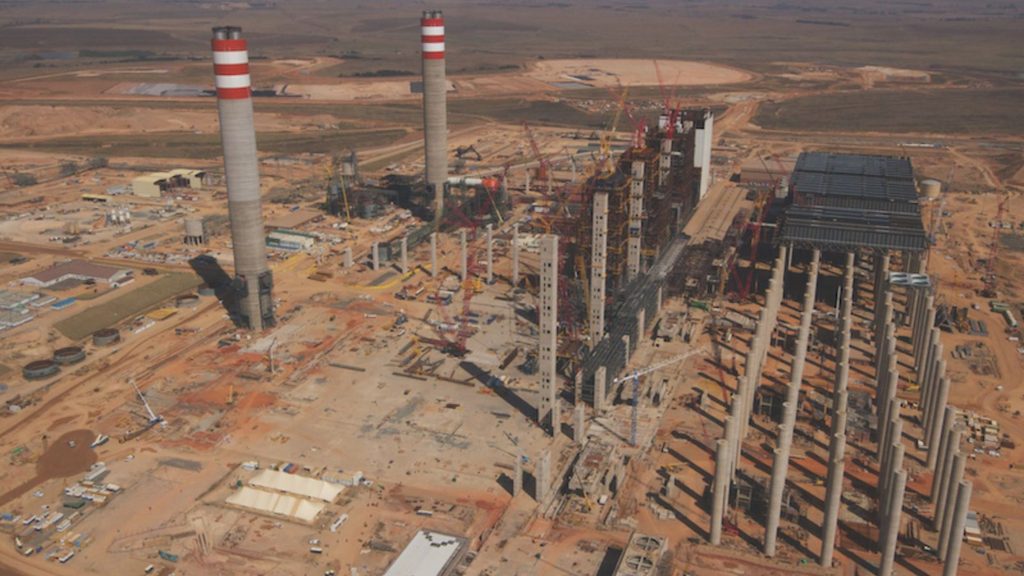
Eskom initially described the challenges at Kusile as teething problems that any major engineering project would encounter.
However, it was later forced to admit to serious design flaws, contractual collapses, and systemic overpayments for basic services.
Kusile’s boilers, for example, were found to suffer from severe design flaws, with Hitachi being replaced with Mitsubishi Heavy Industries mid-project.
The exit temperature of the boiler furnace exceeded design specifications by 150°C and could only be resolved by making the towers significantly taller at great cost.
Eskom admitted in 2013 that when the furnace was designed in 2008, the utility lacked expertise or advanced modelling tools. Instead, they relied on third parties, which had no access to their design requirements.
Another major issue at Kusile was the defects in its milling plant, which is vital for ensuring that coal is crushed before being burnt to generate power.
The mill experienced repeated failures, requiring the development of new mill throats, idlers, and gearboxes mid-project.
While the defects at the boilers and milling plant were significant, even after they were fixed, the power station could not be operated as its ‘brain’ was offline.
The brain of a power station is its Control and Instrumentation (C&I) works, which monitor performance and manage the plant.
The original contractor, Alstom, experienced ongoing failures during Factory Acceptance Tests of the boiler protection system.
With the construction schedule severely threatened, Eskom stepped in and signed a mutual termination agreement with Alstom.
Eskom subsequently awarded the recovery C&I contract to ABB South Africa to completely replace and execute the C&I systems for all six units.
While this successfully rescued the C&I scope, integrating a new contractor mid-build caused years of schedule misalignment and triggered a surge in contractor claims.
Meanwhile, the original 2017 deadline passed, and Eskom moved its completion date to 2022.
The Special Investigating Unit (SIU) began investigating Kusle’s construction in the 2020s and found that ABB was involved in irregular contracts. ABB admitted fault and repaid R1.56 billion to Eskom.
Eskom wrote off R4 billion of overpayments made to multiple contractors throughout the construction process, many of which have been linked to collusion and corruption.
This compounded the costs of design failures and delays, pushing Kusile’s budget to R233.4 billion, according to Eskom’s latest estimate. This makes it the most expensive power station in the world.
Kusile’s final unit was synchronised and achieved commercial operation in September 2025, bringing the full power station online.
The permanent repair of the west chimney stack and the reinstatement of the environmental flue-gas duct plants were completed in early 2025.
All three affected units were successfully reconnected to the permanent stack and ceased operating on temporary bypasses by 4 June 2025.
However, while all six units have achieved commercial operation, the overall final close-out of Kusile, including remedial works, is only on track to be completed in 2028.
Thus, the power station will be finished 11 years behind schedule at a cost of R233.4 billion, R112 billion more than initially budgeted.

Comments