South Africa can become a big player in the global nuclear fuel market


North-West University vice-chancellor Professor Bismark Tyobeka said South Africa has a unique opportunity to become a big player in the global nuclear fuel market.
Tyobeka argued that South Africa already has many of the resources and expertise required to become a bigger player in the global small modular reactor market.
However, he also said the country is running out of time to do so, as many of South Africa’s Pebble Bed Modular Reactor (PBMR) specialists are set to retire.
Tyobeka’s comments come as the global nuclear industry is entering a new era, with small modular reactors (SMRs), microreactors, and other nuclear technologies becoming more commonplace.
He explained that these technologies are moving from laboratories and design offices towards demonstration and commercial deployment.
“Yet, behind the excitement surrounding these reactors lies a less glamorous but increasingly decisive question: where will their fuel come from?” he said.
Some SMRs and advanced microreactors require High-Assay Low-Enriched Uranium (HALEU) to achieve compact configurations and longer operating cycles.
HALEU is uranium enriched to more than 5% but less than 20% uranium-235 and has emerged as a strategic commodity in the global nuclear economy.
The global nuclear fuel market is currently valued at $35.33 billion (R565.57 billion) and is projected to expand to $40.21 billion (R643.58 billion) by 2030.
For nuclear technologies to develop and reach their potential, a fuel supply chain must be in place – and this is where South Africa could become a major player.
Tyobeka explained that South Africa already has a head start in this regard, which started years before HALEU and similar particles became global strategic priorities.
In 2005, South Africa issued contracts to build a prototype fuel fabrication facility at Pelindaba for its Pebble Bed Modular Reactor (PBMR) programme.
By 2008, the country was already developing and fabricating experimental fuel. This fuel required 9.6% enrichment, meaning it fell squarely within today’s HALEU range.
However, the government cut funding for the programme due to financial constraints, which halted further deployment and pushed the product into care and maintenance.
However, Tyobeka said this means South Africa already has the infrastructure, manufacturing records, and downstream technical expertise required to produce HALEU at Pelindaba.
Risks involved
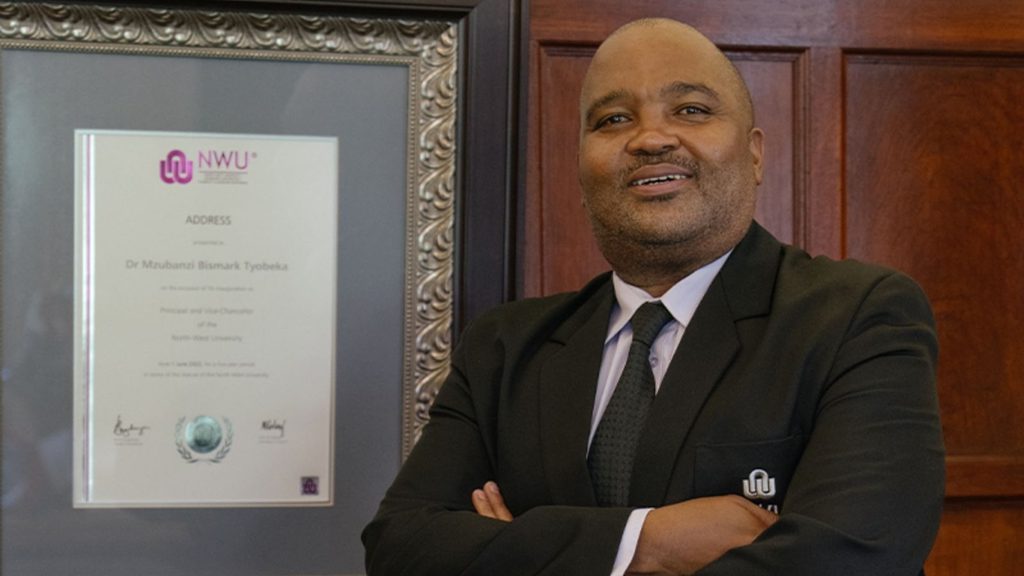
Tyobeka said that while South Africa already has much of the knowledge, infrastructure, and human expertise required to develop HALEU, it is running out of time to use it.
This is because many of the expert engineers, scientists, and technicians from the PBMR era are now reaching or have already reached retirement age.
“Their knowledge cannot simply be reconstructed from engineering drawings. South Africa should identify these specialists and systematically capture their knowledge while there is still time,” he said.
However, Tyobeka said this does not mean that South Africa should simply recreate the PMBR programme.
Instead, he advocates for identifying where the country’s historical capabilities intersect with emerging global demand.
“The nuclear fuel chain can broadly be divided into uranium mining, conversion, enrichment, deconversion, and fuel fabrication,” he explained.
Since South Africa does not currently have a commercial uranium enrichment capability, this means that re-establishing enrichment would require substantial investment.
Therefore, Tyobeka believes South Africa could start by procuring appropriately enriched HALEU feed material from international suppliers while rebuilding expertise further downstream.
“That is where our historical experience becomes particularly valuable,” he said, and suggested the following strategy:
- Conduct a PBMR fuel capability recovery study to identify what is left from the programme.
- Procure enriched HALEU feed material from international suppliers in the short term, while focusing on developing advanced TRISO fuel fabrication locally.
- Establish a Pelindaba advanced nuclear fuel centre to develop, test, and commercially manufacture fuel for the global SMR market
- Re-evaluate South Africa’s enrichment capability in 10 to 15 years once demand justifies the investment
“South Africa now has a choice. We can watch this new nuclear industrial ecosystem develop elsewhere and eventually purchase its products,” he said.
“Or we can examine what we already know, recover what we once built, partner intelligently with the international community, and re-enter the advanced nuclear fuel value chain.”





Comments