Minister warns of big petrol and diesel price hikes in South Africa


The Department of Mineral and Petroleum Resources (DMPR) warned that, while South Africa’s fuel supply is secure for the time being, motorists should expect higher prices at the pump from April.
This is due to the conflict in the Middle East, as the US/Israel and Iran war rages on, putting upward pressure on oil prices.
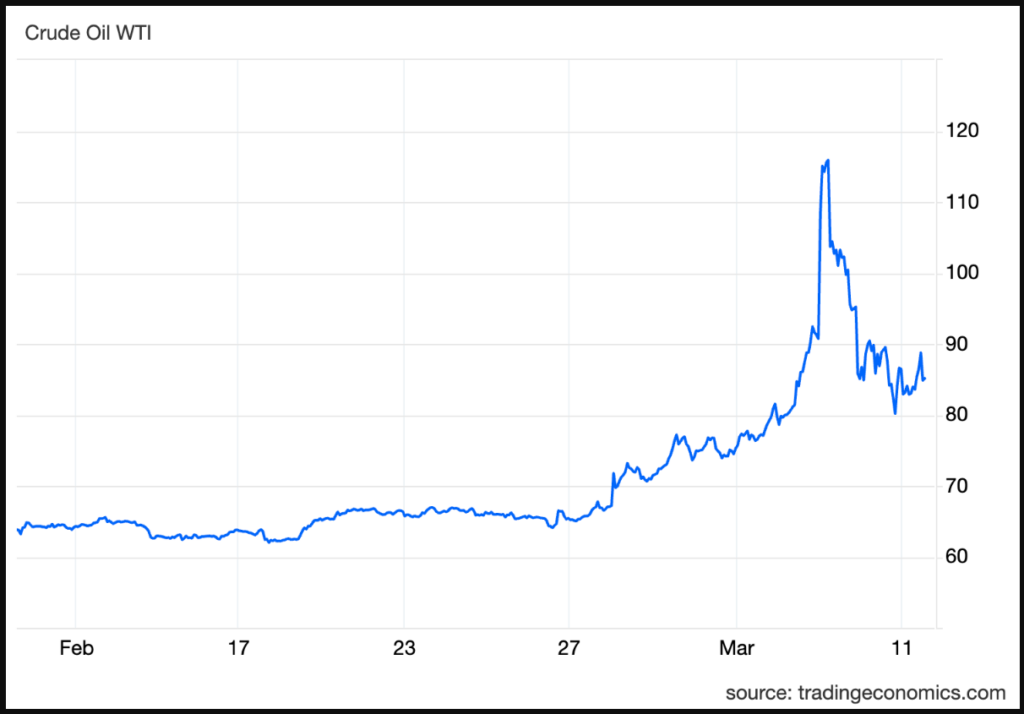
Global oil prices have fluctuated wildly since the start of the conflict on 28 February 2026, when the US and Israel launched airstrikes targeting Iranian military, nuclear and leadership sites.
At the end of trading on 27 February, a barrel of Brent Crude oil cost $73 – the highest price in over seven months. In futures trading before the market opened on 2 March, it was sitting at $80 per barrel.
Now, oil prices are sitting above $90/bbl, with some economists warning that prices could reach as high as $110/bbl in the worst-case scenario should the Middle East conflict last longer than expected.
In the meantime, these rising oil prices, combined with a weaker rand, have already influenced fuel prices in South Africa, with the Central Energy Fund currently pricing in a sharp increase for April.
In a press statement released on Tuesday, 10 March, the DMPR confirmed these fears, saying the continued rise in international crude oil prices is expected to result in higher fuel prices at the pump from April 2026.
“The under-recovery on fuel prices has been fluctuating since the onset of the conflict, and the department will continue to monitor the situation closely,” it said.
“Further updates will be provided in due course ahead of the official April fuel price adjustments.”
“The department remains optimistic that the tensions will de-escalate in the near future, which would help stabilise global oil markets and contribute to improved fuel price conditions.”
The impact of higher oil prices will be compounded by increases in South Africa’s fuel taxes announced in the national Budget, which are set to take effect from April 2026.
South African motorists have already seen higher prices at the pump this month, with petrol prices raised by 20 cents and diesel prices up by 62 to 65 cents from 4 March.
The graph below, courtesy of Trading Economics, shows the movements in crude oil prices over the past month, with the impact of the Middle East conflict at the end of February clear.
Fuel supply secure – for now
Aside from its effect on fuel prices, the Middle East conflict has also led to concerns regarding South Africa’s fuel supply.
About 20% of all global oil supply flows through the Strait of Hormuz on a daily basis, making this channel critical to fuel supply around the world, including South Africa.
The US-Iran war has led to a severe restriction of trade flow through the Strait of Hormuz, with the channel essentially closed.
This has raised concerns about fuel supply, especially given the lack of clarity about when the conflict will end.
As a net importer of oil, South Africa finds itself in a particularly vulnerable position, with the country heavily dependent on imported oil and fuel.
The Centre for Risk Analysis recently explained that South Africa imported around 4 billion litres of petrol in 2024, the largest share of which came from the UAE and India.
Therefore, the Middle East conflict and its impact on trade through the Strait of Hormuz pose a severe risk to South Africa’s fuel supply.
In its statement, the DMPR reassured the public regarding the status of fuel supply in South Africa.
The department explained that, while prolonged geopolitical tensions may exert pressure on international oil prices, there is currently no immediate risk of fuel shortages in South Africa.
“Despite the closure of several refineries in recent years, South Africa currently has two operational crude oil refineries, namely NATREF and Astron Energy, in addition to the Sasol Secunda coal-to-liquids plant,” the DMPR said.
These operations continue to play a critical role in domestic fuel production, and rely on crude oil imports sourced primarily from West Africa and, increasingly, from other African countries.
Therefore, despite continued conflict in the Middle East, South Africa’s fuel supply remains secure for the time being.
While the DMPR noted that the Astron Energy refinery is currently undergoing a planned maintenance shutdown, it said the company has secured sufficient fuel imports to cover supply requirements during this maintenance period.
“Oil companies that currently import refined petroleum products from countries affected by the conflict are actively exploring alternative supply sources to ensure uninterrupted fuel availability in the domestic market,” the department said.





Comments