Petrol price disaster looms in South Africa


Petrol and diesel prices are set to surge amid disruptions to the flow of oil out of the Persian Gulf, through which around 20% of the world’s supply flows.
US-Israeli strikes on Iran have prompted it to retaliate by striking other nations in the Gulf region and announcing the closure of the Strait of Hormuz at the mouth of the Persian Gulf.
Iran has repeatedly threatened a closure of the Strait, with it going so far as striking an oil tanker trying to traverse it. Other tankers have turned back into the Gulf to wait it out.
Chief investment strategist at Old Mutual’s Symmetry, Izak Odendaal, warned that this has the potential to see the oil price surge to $100 per barrel should the disruption to supply be severe and prolonged.
This would take the price of oil to a level last seen during the immediate aftermath of the Russian invasion of Ukraine, which sent inflation skyrocketing around the world.
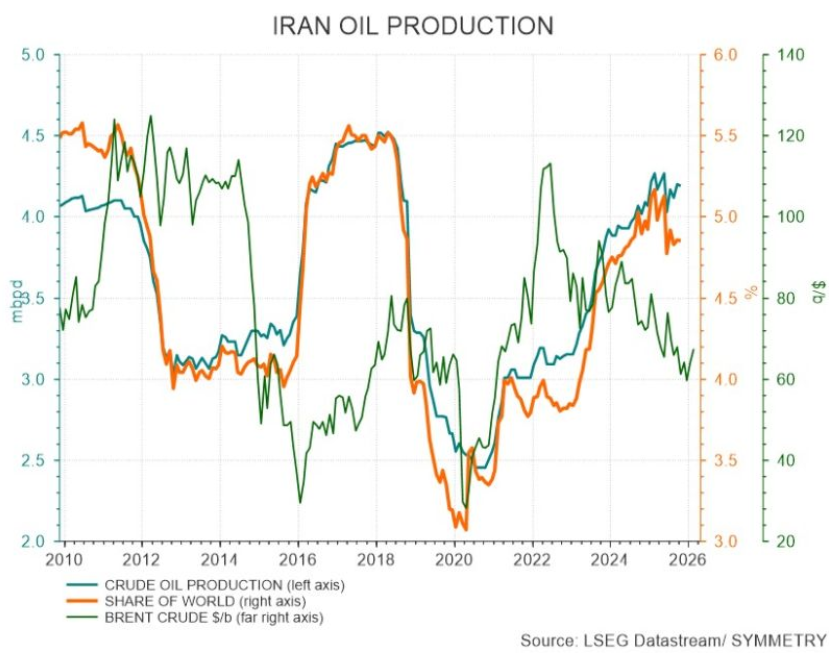
As of the end of trading on Friday, 27 February, a barrel of Brent Crude oil cost $73 – the highest price in over seven months. In futures trading before the market opens on Monday, it was sitting at $80 per barrel.
“War is hell, as General Sherman noted long ago. Those of us sitting safely thousands of miles away have the luxury of worrying about the oil market,” Odendaal said in a social media post.
“When the US snatched Maduro a few weeks back, I wrote that ‘Venezuela is not Iran.’ Well, now that the US has struck Iran, we need to think about the impact on the world economy of an oil price spike.”
Iran is a major producer of oil, with its output increasing in recent years and much of its production flowing to China – the world’s largest importer.
However, the risk is far greater than the disruption of supply from Iran, with the conflict threatening supply from the entire Gulf region.
“The threat of closing the Strait of Hormuz, through which a quarter of global seaborne crude is shipped, is significant,” Odendaal said.
“A prolonged closure could push oil up to $100/barrel, though it is probably harder than it sounds. It is not even in Iran’s interest to weaponise oil prices.”
Odendaal explained that the worst effects of any disruption are likely to be limited by slowing economic growth a declining inflation.
“The Russian invasion of Ukraine four years ago caused a destabilising spike in oil prices. However, it came against the backdrop of strong demand growth and rising inflation as the world recovered from Covid,” he said.
The effect was also compounded by simultaneous sharp increases in the prices of natural gas, fertilisers and wheat.
“A repeat would be a worst-case scenario, but it is unlikely now. Global oil markets seemed well-supplied with Brent trading near $60 not that long ago. Moreover, markets already priced in the possibility of a US attack,” Odendaal explained.
However, he warned that it ultimately depends on how long this war drags out, with any prolonged disruption likely to have a significant impact on supply and prices.
Higher taxes at the pump
A surge in oil prices globally will be coupled with increases to the various levies placed on the sale of fuel in South Africa.
These increases, which will come into effect on 1 April, were announced by Finance Minister Enoch Godongwana during his 2026 Budget Speech.
Godognwana explained that South Africa’s tax revenue has proven resilient despite slow economic growth over the past decade.
This enabled the minister to withdraw the R20 billion in tax increases provisionally included in the 2025 Budget. Much of this was due to improved collections from SARS.
However, Godongwana said that increases to certain taxes are unavoidable. This includes fuel taxes, which have remained largely unchanged in recent years.
Increases were avoided for three successive financial years because of high fuel prices in the aftermath of the Russian invasion of Ukraine.
In terms of the fuel levies, the increases are in line with inflation and will apply across all grades of petrol and diesel –
- The General Fuel Levy will increase by 9 cents per litre for petrol and 8 cents per litre for diesel.
- The Carbon Fuel Levy will increase by 5 cents per litre for petrol and 6 cents for diesel.
- The RAF Levy will increase by 7 cents per litre.
These increases will significantly increase the price of fuel at the pumps for South African motorists, with taxes now making up around a third of the total price.
National Treasury data shows that taxes as a percentage of the pump price will now be 32.9% for 93 octane petrol and 36.% for diesel.
In absolute terms, taxes will contribute R6.58 to the price per litre of petrol and R6.45 per litre of diesel.
The increases for the 2026/27 Budget follow on from an inflation-linked increase to the General Fuel Levy in the previous year. This was the first increase since 2021.
PwC’s experts explained that the increase in the RAF Levy is likely purely down to the dire financial health of the organisation, with it desperately needing funds to continue operating.





Comments