South African private hospital giant’s unique R20 million plan to keep its CEO and get him to find his own replacement


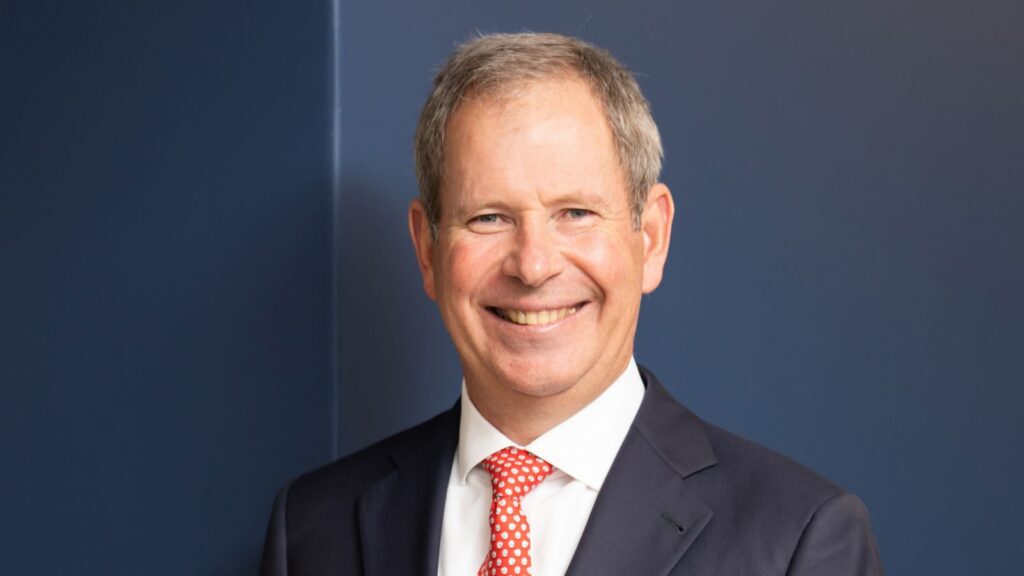
Five years ago, Life Healthcare introduced a long-term incentive scheme for its CEO, Peter Wharton-Hood, that required him to buy R5 million worth of the company’s shares with his own money.
This scheme sought to retain Wharton-Hood as Life Healthcare’s CEO while encouraging direct share ownership in the company, thereby aligning his interests with those of shareholders.
Retaining CEOs and encouraging them to find and groom a successor are things every top company must contend with, and Life Healthcare has found a unique scheme to do exactly that.
Under Life Healthcare’s scheme, Wharton-Hood committed his personal capital and invested R5 million in Life Healthcare shares, with the company matching his investment at a 3:1 ratio.
This means Life Healthcare purchased R15 million worth of its shares, a total of 862,704 shares, in the open market.
These shares were scheduled to vest over a three-year period if Wharton-Hood met four specific conditions.
These four conditions included achieving specified shareholder returns, maintaining his personal investment in the company, remaining in active service with the group for at least five years, and grooming a successor.
Therefore, if Wharton-Hood had left Life Healthcare before the company’s R15 million worth of shares were vested, or missed any of the other targets, he would retain his own investment but forfeit the unvested company shares.
If he met all the conditions, the company-matched shares were scheduled to vest in three equal tranches of 287,568 shares on the last day of each year in 2023, 2024, and 2025.
Unfortunately for Wharton-Hood, he did not meet the performance thresholds in 2023, resulting in the forfeiture of 287,568 shares.
However, he met all conditions in the two subsequent years, resulting in a total of 575,136 shares vested across 2024 and 2025.
Following the completion of this scheme and other incentives he’s received over the years, Wharton-Hood’s stake in Life Healthcare reached 7.85 million shares at the end of the 2026 financial year.
Life Healthcare’s 2026 financial year

Life Healthcare revealed these details about the incentive scheme in its results for the year through September 2026.
These results showed that the company’s revenue from continuing operations rose by 1.71% to R25.53 billion.
This was driven by a strong performance in its Complementary Services segment, which saw revenue grow by 7.69% to R2.75 billion.
The group’s largest segment, Hospitals, saw more moderate revenue growth of 1.02% to R21.54 billion.
The Healthcare Services segment also saw slower revenue growth of 1.14% to R1.25 billion.
At a group level, Life Healthcare’s EBITDA rose by 7.35% to R2.91 billion, while its operating profit showed a substantial turnaround.
Life Healthcare went from an operating loss in the 2025 financial year to an operating profit of R2.63 billion in 2026, reflecting a 618.31% swing.
However, the group’s basic earnings per share decreased by 65.36% to 91.1 cents, and its total profit after tax decreased by 63.84% to R1.45 billion.
This large gap between Life Healthcare’s operating profit and net profit is primarily due to R366 million in net finance costs and a R764 million tax expense.
Therefore, interest repayments and corporate taxes absorbed almost half of the group’s operating earnings before it reached the bottom line.
In addition, Life Healthcare recorded a R79 million loss from its discontinued operations.
Against this backdrop, Life Healthcare declared a final dividend of 40 cents per share. Combined with its interim dividend of 23 cents, total dividends for the year totalled 63 cents per share.
Log in or register for free access to all articles.