Warning for South African investors who hold billionaire Johann Rupert’s luxury giant



While Richemont is a high-quality stock that can act as a strong brand hedge, shareholders may experience a wobble in its performance over the next 12 to 18 months.
This is due to cyclical pressures, including headwinds in discretionary spending, which has emerged as a particular risk in one of the world’s largest luxury goods markets, China.
Despite this expected wobble, analysts believe Richemont remains an attractive stock to hold for a 5-year horizon, given its defensive brand power and pricing resilience.
This power and resilience have developed over many decades, with Richemont among the companies founded and operated by South Africa’s Rupert family.
It was established by billionaire businessman Johann Rupert in 1988 when his family business, the Rembrandt Group, was unbundled.
The Rembrandt Group was founded by Rupert’s father, Anton, in the 1940s, and had interests spanning numerous sectors, including resources and luxury goods.
In the 1980s, the Ruperts decided to unbundle some of these interests, and Richemont was created to house their international luxury-goods stakes.
Headquartered in Bellevue, Switzerland, Richemont has since grown into a luxury goods giant, competing against the likes of LVMH, Kering, and Hermès.
Richemont is dual-listed, with its primary listing on the SIX Swiss Exchange and a secondary listing on the Johannesburg Stock Exchange.
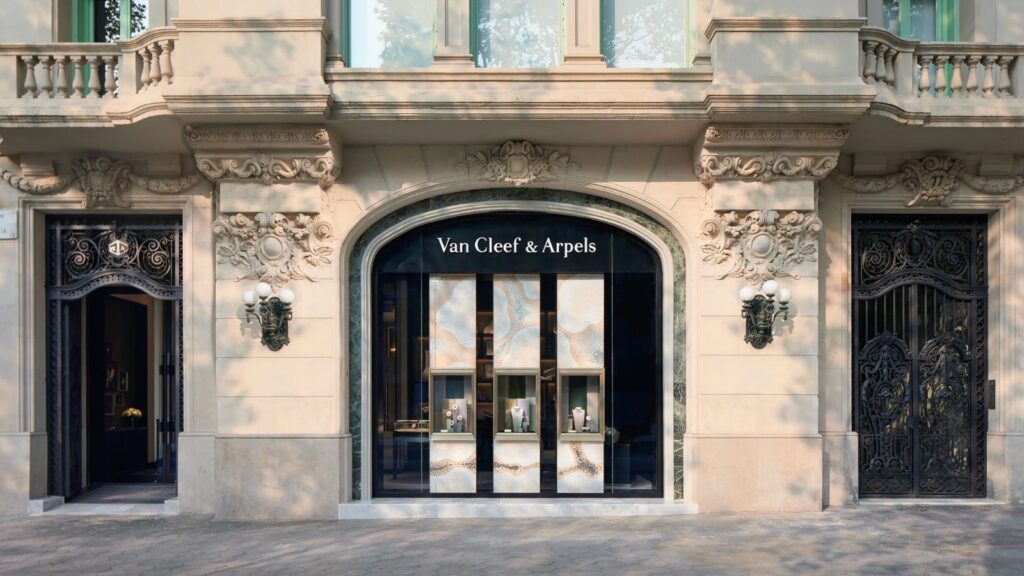
In the decades since its founding, Richemont has built an impressive brand portfolio, including renowned names such as Cartier, Van Cleef & Arpels, Montblanc, and Pandora.
In its 2026 financial year, Richemont reported an 11% increase in sales to €22.4 billion (R413.92 billion), higher than analyst estimates of 9.78%.
The group’s operating profit grew by a more modest 1% to €4.5 billion (R83.15 billion), resulting in a 20% operating margin.
Richemont’s growth was driven by its Jewellery Maisons, which saw sales up 8% and an operating margin of 30.5%.
Sales in Richemont’s Specialist Watchmakers segment dropped by 4%, while the operating margin was at 3.4%.
The group ended its 2026 financial year with a net cash position of €8.5 billion (R157.08 billion), up 2.89% from 2025.
Analyst opinion
Benguela Global Fund Managers CIO Zwelakhe Mnguni told BusinessDayTV that Richemont presents a strong defensive play in the context of brand hedges.
In the same interview, All Weather equity analyst Jarred Houston agreed that Richemont has held up well compared to its global peers in a depressed consumer environment.
“It’s really come out on top when looking at the luxury players as a whole. It’s a counter that’s also been able to do well in China, where some of its competitors have struggled.” Houston said.
He attributed this to Richemont’s portfolio leaning more towards hard luxury, such as jewellery, rather than soft luxury, such as clothing and bags.
This focus on hard luxury items has made Richemont more resilient in pricing and sales than its competitors.
However, Houston cautioned that sustaining this growth will require a recovery in discretionary spending and consumer sentiment.
“There’s clearly been weakness in pockets, particularly China, and that looks set to continue at this point,” he said.
“For us to see a sustained rate of improved growth, we probably need to see a little bit of a turn in discretionary spend.”
“This is a very high-quality business in terms of the quality of its brands, its ability to price, as well as cash on the balance sheet.”
For South African investors, Mnguni recommended holding the stock over a five-year investment horizon.
However, he also warned that shareholders may see “a bit of a wobble” in the stock over the next 12 to 18 months, due to the depressed consumer environment.
Login or register for unlimited free access.