End of petrol stations as you know them


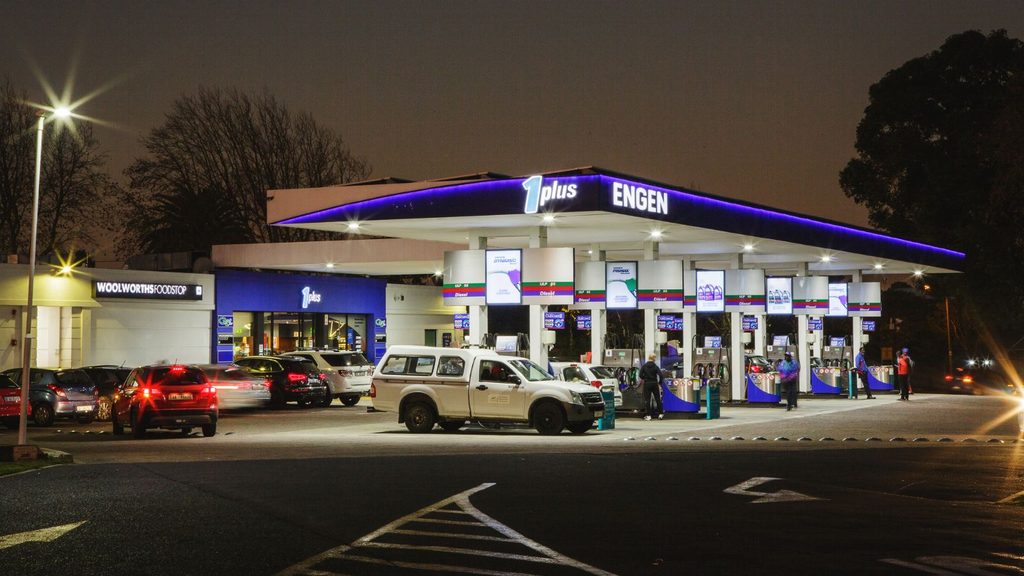
Petrol stations in South Africa are coming under immense pressure from rising fuel prices, which have seen sales decline and stock become harder to source.
This contrasts with the perception that petrol station forecourts benefit from rising fuel prices, with many assuming owners will see a windfall.
However, fuel prices are tightly regulated in South Africa, and owners’ profits are included in the fuel price calculation, so they do not rise with overall price increases.
FNB franchise specialist Morné Rossouw explained that the main challenge forecourt owners face is fuel price volatility.
While this has historically been an occasional disruption, it is now a structural operating challenge that threatens the business’s survival.
“Much of the discussion around oil and fuel centres on the price motorists pay at the pump. The retailer has to deal with the rising cost of securing the next fuel delivery,” Rossouw said.
“Contrary to widely-held misperception, when the fuel price increases sharply, the retailer does not earn more money on every litre sold.”
What changes is the price of their stock. A fuel delivery that cost R2 million a week ago could cost R100,000 more today.
“The retailer still has to accept delivery, keep the tanks full and continue trading. Running dry damages customer confidence and results in lost sales,” Rossouw said.
“This means that volatility is not only a consumer affordability issue. For retailers, it is an operational challenge.”
This challenge requires additional working capital, often leading retailers to take on debt during a period of rising prices and repay it when prices normalise.
This cycle creates significant swings in revenue and profit, which is hard for owners to stomach and requires financial buffers to survive.
South Africa’s fuel prices have risen sharply in 2026, with petrol and diesel set to hit record highs in October if current conditions hold.
Data from the Central Energy Fund shows that 95 octane petrol will reach R28.85 per litre, while diesel will hit R32.08 per litre.
Changing in front of everyone’s eyes

Rossouw explained that volatility has pushed petrol station forecourt owners to seek more stable alternative sources of income.
In particular, owners have looked to reduce their reliance on fuel volumes to lessen exposure to fluctuating petrol and diesel prices.
“For this reason, many of the more financially stable sites are increasingly those that generate income from a wider range of products and services,” Rossouw said.
“This includes convenience retail, food outlets, coffee shops, car washes, courier services, and value-added services.”
Combined with bank reward programmes, this is changing how people interact with forecourts and where they decide to fill up.
In many metropolitan areas, the pattern is shifting. Customers are starting to choose a site because it offers good coffee, groceries, prepared meals, or other useful services, and then fill up while they are there.
The pump is still important, but it is no longer always the main attraction.
Rossouw said this has significant implications for profitability, as fuel margins remain constrained.
Convenience retail can offer scope to increase profit and improve returns, but may result in lower overall revenue.
“A lower fuel volume site with a strong retail offering can, in some cases, be more profitable than a higher-volume forecourt that relies almost entirely on fuel,” he said.
Electric vehicles (EVs) are adding another dimension to this transition, with rising sales prompting fuel retailers to consider how their sites may need to evolve.
EV charging can be seen as an extension of the fuel forecourt rather than a threat to it, since charging a vehicle takes longer than refuelling.
This creates an opportunity for retailers to upsell customers by making it easy for them to eat, shop, work, or use other services while they wait.
Rossouw said not every filling station will become a large destination site. Rural locations, smaller towns, and high-volume transit routes have different customer needs and economics.
The right response will depend on location, ownership structure, available space, and the profile of the surrounding market.




Comments