Woolworths goes from hero to zero


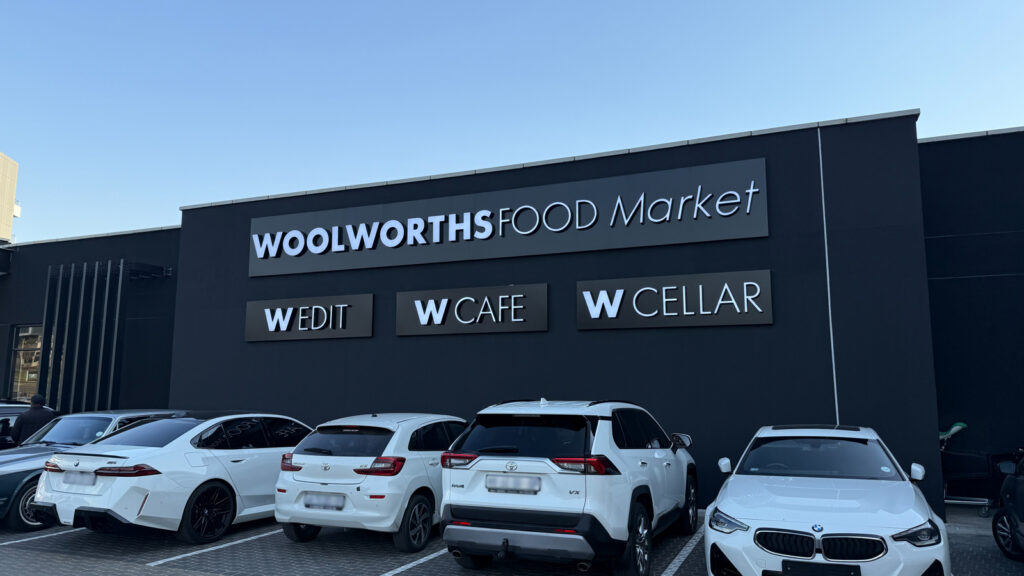
Woolworths’ share price increased by 1,000% between 2008 and 2015. However, since then, it has plummeted by 61%. Simply put, it went from hero to zero.
To understand the rise and fall of Woolworths’ share price, it is important to look back at its bull run between 2008 and 2015.
During this time, Woolworths Food successfully positioned itself as South Africa’s premier high-end food retailer.
It focused on premium quality and private-label innovation, executing this strategy so well that it created a monopoly among high-income consumers.
Woolworths also revamped its clothing and merchandise supply chains, resulting in improved inventory management and higher full-price sales.
These improvements helped to drive margin expansion in its non-food divisions, which filtered down to its income statement.
Woolworths’ operating profit expanded over this period and, along with dividend growth, it attracted institutional and international investors.
Investors viewed Woolworths as a defensive growth stock capable of outperforming domestic retail peers, and it became a darling on the JSE.
However, after peaking in late 2015, the Woolworths share price entered a multi-year downward trajectory. By 2026, it had lost 61% of its value.
This decline was driven by the failed international expansion, execution missteps in key domestic divisions, and macroeconomic headwinds.
The primary catalyst for Woolworths’ valuation loss was the 2014 acquisition of Australian department store chain David Jones for R21.4 billion.
It was a disaster, and nine years later, Woolworths sold David Jones to an Australian private equity firm for a fraction of what it paid.
While management focused on turning around David Jones, the South African fashion, beauty, and home division lost ground.
Woolworths’ other Australian venture, Country Road, continued to face headwinds, putting further pressure on the group.
These factors pushed the Woolworths stock down from R108.00 per share in November 2015 to the current R41.34.
Analyst opinion about Woolworths

Shane Watkins, an executive director and chief investment officer at All Weather Capital, explained Woolworths’ challenges.
He explained that Woolworths is essentially comprised of four businesses: Fashion, Beauty, and Home (FBH), Food, Financial Services, and Australia.
“Currently, only one business, Food, is doing great. Financial Services is doing okay. However, the other two are highly problematic,” he told Business Day TV.
“What’s disappointing is that when Roy Bagattini, the former CEO, joined six years ago, those were the exact two problem areas, and they remain unsolved today.”
Sam Ngumeni took over as Woolworths Group CEO on 1 June 2026, which Watkins is positive about, but he faces a mammoth task.
“Ngumeni will likely shake up the business and make a difference, but the truth is they’ve been spinning their wheels,” he said.
He said that the Woolworths management team has not solved problems that have been evident for nearly a decade.
“The share price was R108 roughly 11 years ago. It is now sitting at around R41. It has performed appallingly,” he said.
Grant Nader from Benguela Global Fund Managers said that Woolworths need to figure out how to integrate its clothing basics with its food offering.
“Food brings feet through the door, and they have a unique food product that competitors can’t easily replicate,” he said.
“You can’t just shut down the entire fashion business. You have to figure out a way to streamline, monetise, or fix it.”
He added that there is market speculation that Woolworths may sell the Country Road Group in Australia, which he described as a smart move.
“Exiting would free up significant management attention and capital, allowing them to focus on South Africa,” he said.
“I’m watching this eagerly from the sidelines for now, but if they execute correctly, there’s potential for a turnaround.”



Comments