Billionaire Christo Wiese reveals the truth about the Stellenbosch Mafia


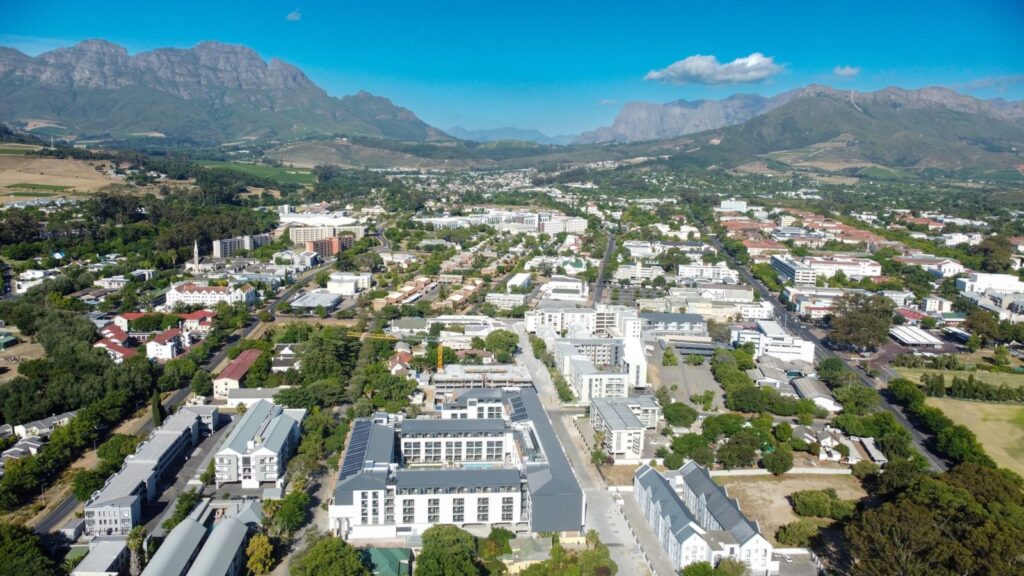
Billionaire Christo Wiese said members of the Stellenbosch Mafia may act like “mafiosi”, but they do not actually control anything in the country.
This is despite wide-ranging speculation that this mafia pulls the strings in South Africa and influences politics to benefit White Monopoly Capital (WMC).
The description of the group of ultra-wealthy, white, Afrikaans business leaders as a mafia came to prominence in the 2010s.
They were scapegoated for the government’s failure to improve the livelihoods of many South African citizens and were seen as a barrier to fundamental economic reform.
Its supposed members included Wiese, Johann Rupert, PSG’s Jannie Mouton, Koos Bekker, Whitey Basson, and the late Markus Jooste.
Rupert has famously quipped that he cannot be part of the mafia because he actually lives in Somerset West, not Stellenbosch.
This grouping of individuals is seen as the modern iteration of Afrikaner Capital, both economic and intellectual, that historically centred on Stellenbosch.
As the home of Stellenbosch University and the birthplace of the Ruperts’ Remgro, the small town plays an outsized role in Afrikaner culture and economic power.
The assumption was that this continued into democratic South Africa, with the current members exercising influence over politics and financial success.
This kicked into overdrive with the use of the term “Stellenbosch Mafia” to describe WMC and to attack the influence of big business on politics.
The group’s prominence was also boosted by the collapse of Steinhoff, which directly involved Jooste and Wiese.
This affected the perception of the group and of big business broadly as a force for good in society and a bastion of good governance.
The collapse also highlighted the pitfalls of the insular nature of some businesses in the town, which undermines the checks and balances offered by independent board directors, for example.
Wiese opens up
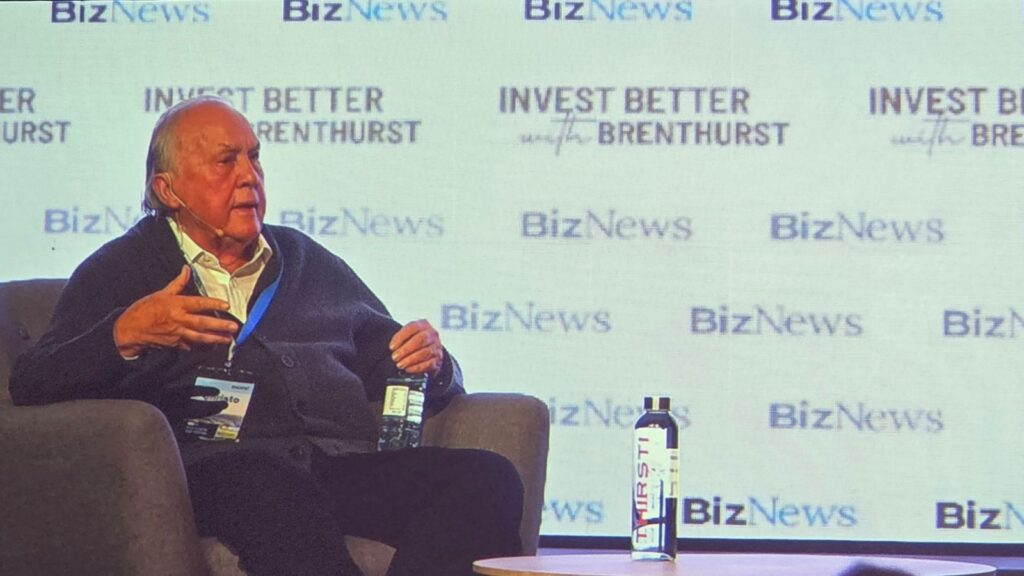
Speaking at the 9th BizNews Conference, Wiese said that, from his understanding, and supposedly being part of the mafia, it has nothing close to the control some assume.
Wiese recalled a story about being asked to advise President Jacob Zuma before one of his State of the Nation Addresses, which he ignored.
Other mafia members have also recalled that the government has periodically asked them for advice or help, only to be ignored.
Over time, the members have grown increasingly frustrated with South Africa’s economic decline and have publicly expressed their views on the country’s trajectory.
“What monopoly do we have individually or as a collective? I did economics at university and understood a monopoly to mean that you control the market,” Wiese said.
“Where do I see that in South Africa? Nowhere. I mean, certainly not the Stellenbosch Mafia. I know most of those guys. They might be mafiosi, but they do not control anything.”
Closely linked to the Stellenbosch Mafia is the concept of WMC, which relates to the historic control of white individuals over the economy.
Wisese said he does not understand the term at all, and that no clear explanation of what it means has been laid out in public by its proponents.
“I don’t know what it means. I know it is a political slogan, but what does it mean? Nobody had been able to explain it to me,” he said.
“Maybe I haven’t asked the right people, but I have put the question out there, and anybody can come to me and explain what it means.”
Journalist and author Pieter du Toit’s famous investigation into the Stellenbosch Mafia resulted in a similar conclusion – there is no organised control of South Africa’s economy by its supposed members.
There is no formal cartel or mafia that seeks to bend policy to favour their businesses or to maintain Afrikaner control of the local economy.
Rather, it is a shared social group with ties to the university, with everyone having attended Stellenbosch University at some point and many being friends from that time.
With the immense success they have all had, they are bound up in the same network of JSE-listed corporates and business interests.
Many also share philanthropic campaigns. For example, both Wiese and Rupert are heavily involved in the Khaya Lam project.





Comments