The two men who built South Africa’s biggest app as a passion project in one weekend



Dan Southwood-Wells and Herman Maritz started EskomSePush as a simple side project to help themselves and their friends navigate South Africa’s load-shedding schedules.
More than a decade later, their app has evolved into ESP, a platform that tracks electricity, water and internet disruptions across the country.
Southwood-Wells and Maritz first met while working at Entersekt, a mobile security company in Stellenbosch, Western Cape.
Southwood-Wells studied computer science at Rhodes University, where he obtained a master’s degree in 2009. Maritz earned a master’s degree in electronic engineering from Stellenbosch University.
Maritz joined Entersekt as a software engineer in 2010, while Southwood-Wells joined the company two years later as a systems and product architect.
The pair developed a strong “figure it out as you go” approach to technology. Maritz previously said that working at a start-up gave him valuable opportunities to learn.
When he wanted a Mac computer, he taught himself Objective-C so he could develop an iOS app and get access to the company’s only Mac Mini.
The idea for EskomSePush came in late 2014, when load-shedding became a growing problem in South Africa. “That ‘let’s figure it out’ attitude is still exactly what ESP is about,” Maritz said.
The pair wanted a simple way to know when the power would be switched off so they could plan their days and holidays around it.
They initially used PushBullet to send themselves notifications when load-shedding was scheduled. The idea quickly spread to friends and family, and the pair decided to build their own app.
They wrote the first version of EskomSePush over a weekend in December 2014. The app was designed to answer a simple question: when will the power go off, and how can people plan around it?
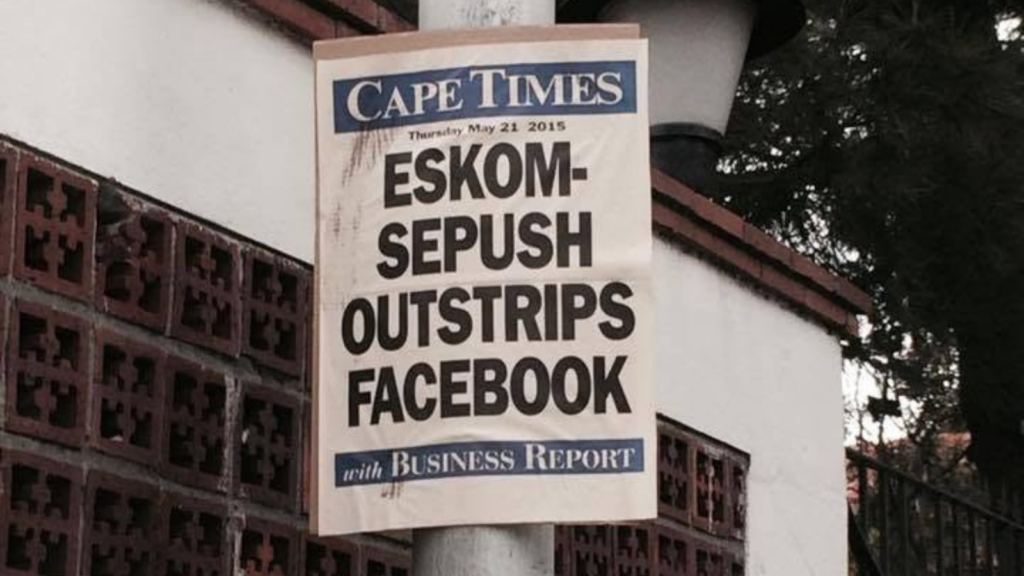
This question struck a chord with many people. Within six weeks of its public launch in early 2015, the app had more than 100,000 active users.
Its user base grew rapidly as load-shedding returned and intensified in South Africa. At its peak, the app had millions of people relying on it to keep track of power cuts.
Growing the ESP platform
Even though the app had taken off very quickly, the founders initially treated EskomSePush as a passion project rather than a business.
Both eventually left Entersekt and moved into other technology roles. Maritz joined OLX, while Southwood-Wells worked at Takealot and later became chief technology officer at Superbalist.
However, as load-shedding became increasingly severe in South Africa, the pair began dedicating more time to the app.
Maritz became ESP’s first full-time employee in 2021, followed by Southwood-Wells in 2022. By 2023, the app had passed 12 million downloads.
At this stage, daily active users exceeded 3.2 million during Stage 6 load-shedding. However, the founders did not want ESP’s future to depend on South Africa’s electricity crisis.
As load-shedding declined, the app expanded into other areas where South Africans needed reliable, real-time information.
Today, ESP monitors electricity, water, and internet disruptions and provides a platform for users to share information about local issues.
Speaking on The Money Show, Southwood-Wells explained that the platform is still trying to answer the same basic question that drove its original creation.
“At the end of the day, we’re trying to answer the question, as we did with load-shedding as well, is it down for everyone? Or is it just me?”
The new version of the ESP platform allows its users to report whether they have electricity, water or internet access.
The platform then combines these reports with information from other sources, including social media and official outage data where available.
This allows ESP to identify potential problems and provide users with a clearer picture of what is happening in their area.
Southwood-Wells said the platform now has around one million monthly users, with roughly 100,000 people using it on any given day.
These users have become an important source of real-time information about service delivery problems. “The raw data is coming from users.”
He explained that users often report problems before an official announcement is made by a ward councillor, municipality, electricity provider, or internet service provider.
ESP can then compile these reports and identify whether there are water, electricity, or internet issues at the suburb level.
A new era for the business

The platform has also moved away from the broader block-based approach used during the height of load-shedding.
Instead of simply identifying a large area affected by an outage, the platform can now identify problems in specific suburbs.
The platform’s public dashboard allows users to see where reports are increasing and drill down from a national level to provinces, municipalities and individual suburbs.
Southwood-Wells said this allows ESP to identify emerging outages within minutes. “It sort of blows my mind that we can see it like in a couple of minutes’ notice, we can see there’s an outage happening in a suburb.”
The data also reveals broader trends in South Africa’s service delivery challenges. He noted that Gauteng, including Ekurhuleni, Johannesburg and Tshwane, has been a consistent hotspot for reports.
Southwood-Wells said they have also noticed that water outages are becoming a bigger problem than electricity disruptions in some areas.
One example was Orlando West in Johannesburg, where residents reportedly went without water for around two days with limited information from local authorities.
Residents turned to the ESP community to find out what was happening and share information about where they could access water.
“It all comes down to that question for the users: Is it just me, or is it everyone?” Southwood-Wells said. “Let’s help each other get through this situation.”
ESP’s evolution also extends beyond its consumer app. The company also provides businesses with access to its data through an API.
This allows organisations to use information about outages in their own operations, helping them monitor disruptions, manage faults, and understand how service delivery problems affect their networks.
Southwood-Wells said the same data that helps an individual determine whether an outage is affecting their neighbourhood can also help businesses improve their efficiency.
The platform has also expanded into other community-focused categories, including recommendations, lost-and-found items, and local issues.
Its broader goal is to turn ESP into a real-time source of information about what is happening in South African communities.
 Loading ...





Comments