SARS clock is ticking for South African businesses


With the South African Revenue Service (SARS) moving to fully digital tax systems, South African businesses now need to modernise their processes to reduce risk, improve efficiency, and ensure smooth compliance.
South African businesses are entering a new era of tax compliance as SARS steadily modernises its tax ecosystem.
They will be compelled to work on upgraded eFiling and e@syFile platforms, use e-invoicing and e-reporting as their standard, and align with SARS’ modernisation of the VAT system.
These changes are not yet mandatory, and draft legislation points to a phased rollout to be completed around 2028. This may seem distant, but experts cautioned that preparation today can prevent operational headaches tomorrow.
Itec South Africa’s head of software pre-sales, Renaldo Muregess, said the sooner businesses understand the changes and align their systems, the smoother the transition will be.
“Companies that act early will gain clarity, reduce risk, and avoid last-minute crises,” Muregess explained.
Early preparation involves structuring invoice data, validating systems, and providing finance teams with real-time visibility across all transactions.
“The benefits go beyond compliance. Streamlining and digitising internal processes now will work to reduce errors, save time and free teams up to do more, and strengthen governance leading up to the implementation deadline,” he said.
SARS’ digital transformation aims to make reporting more standardised and transparent by moving companies onto a Peppol-style interoperability model.
This model enables them to exchange structured, machine-readable invoices through certified access points or service providers.
In doing so, the tax authority is encouraging businesses to think beyond spreadsheets and manual processes, and to focus instead on automated workflows that integrate seamlessly with Enterprise Resource Planning and accounting systems.
By starting to adapt now, Muregess said organisations can address technical requirements, test systems, and ensure their teams are prepared well ahead of mandatory deadlines.
Navigating the SARS digitisation process

Muregess explained that, instead of creating new risks, digitisation exposes weaknesses that have always existed – and helps to eliminate them.
“Dispersed spreadsheets, paper-based records, and siloed departmental data can increase errors and make audits stressful,” he said.
“Businesses that confront these vulnerabilities early can strengthen compliance and improve operational efficiency simultaneously. This approach turns a potentially daunting change into an opportunity for improvement and resilience.”
There are certain things businesses should do immediately. Muregess advised that they should check the following invoice fields –
- Supplier and recipient information
- VAT numbers
- Invoice numbers
- Dates and line items
- Quantities and pricing
- Exempted currency
For finance, compliance, and IT teams alike, this new, structured process will reduce the time spent reconciling invoices and manually tracking missing information.
The resulting centralised, validated data will make errors visible before they reach SARS. But choosing the right implementation partner is crucial, Muregess warned.
Experts can guide companies through technical setup, ensure that workflows are standardised, and train employees, creating a smoother, less stressful transition.
This, in turn, allows tax compliance to become routine rather than a crisis-driven task. “When your data is structured and visible, compliance becomes a by-product, not a burden,” Muregess said.
“Companies that partner with experts early will be in a stronger position to embrace SARS’ digital future with confidence, while also gaining efficiency, transparency, and greater control over their financial reporting.”
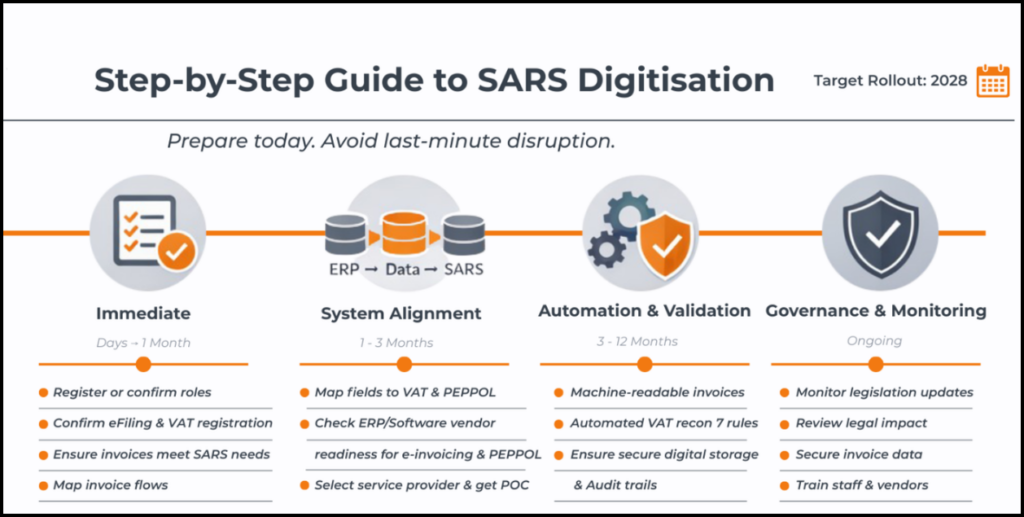
The image below provides a full timeline of what businesses should do over the next year and beyond to ensure they are ready for the 2028 SARS digitisation rollout, according to Itec South Africa.





Comments