End of an era for Absa


Absa’s new CEO, Kenny Fihla, aims to sharpen the bank’s focus on specific client segments to differentiate it from its competitors in those areas and expand its offering on the African continent to reduce its reliance on South Africa.
These two pillars will be coupled with accelerating the modernisation of Absa to reduce the cost to serve clients and enable the bank to allocate capital more efficiently.
Fihla also said the bank is looking for suitable acquisitions to further these strategic pillars and bulk up Absa’s presence in Africa.
This new strategy comes at a pivotal time for the bank, with it looking to reverse Absa’s steady decline relative to its larger peers in FirstRand and Standard Bank, as well as new competitors, particularly Capitec.
Fihla also steps into a hot seat at Absa, with him being the bank’s seventh CEO in seven years after Maria Ramos left the institution in 2019.
This stands in stark contrast to South Africa’s other Big Four banks – Nedbank, Standard Bank, and FirstRand – which have all enjoyed stability at the top.
Jason Quinn, Nedbank’s new CEO, replaced Mike Brown, who was at the helm for 14 years. Sim Tshabalala is set to retire as Standard Bank CEO at the end of 2027 after spending more than a decade in the top job.
FirstRand CEO Mary Vilakazi took over the reins at Africa’s most valuable bank in April 2024 from Alan Pullinger, who ran the institution for six years after being at the bank for 20 years prior to that.
Leadership instability at Absa has seen the bank cede ground to its competitors, despite it still having one of the largest balance sheets in the sector.
This instability has ensured the bank has been unable to execute on a cohesive strategy for seven years, while its peers have meticulously moved forward with theirs.
Fihla was poached from Standard Bank with the intention of ending this slide and reclaiming Absa’s position among the premier financial institutions in Africa.
Standard Bank is well known for producing top executives from within its ranks, with it only having one external hire as CEO in its history. That was the bank’s first-ever CEO in 1862.
Fihla resigned from his position as deputy CEO at Standard Bank in March 2025 to take over the reins as Absa CEO in June.
He joined the bank with a strong track record of creating value at Standard Bank, particularly within its prestigious corporate and investment banking (CIB) division.
Fihla joined Standard Bank in 2006 as an executive in the Financial Asset Services business of Corporate & Investment Banking (CIB).
He grew within the business and took up roles including Head of Transactional Products & Services, Head of Client Coverage and Deputy Chief Executive before being appointed as its Chief Executive in June 2017.
Under his leadership as Chief Executive from 2017 to 2024, Standard Bank’s CIB division doubled its headline earnings to R20.5 billion and achieved a compound annual growth rate of 8.6%.
Fihla’s Absa revival
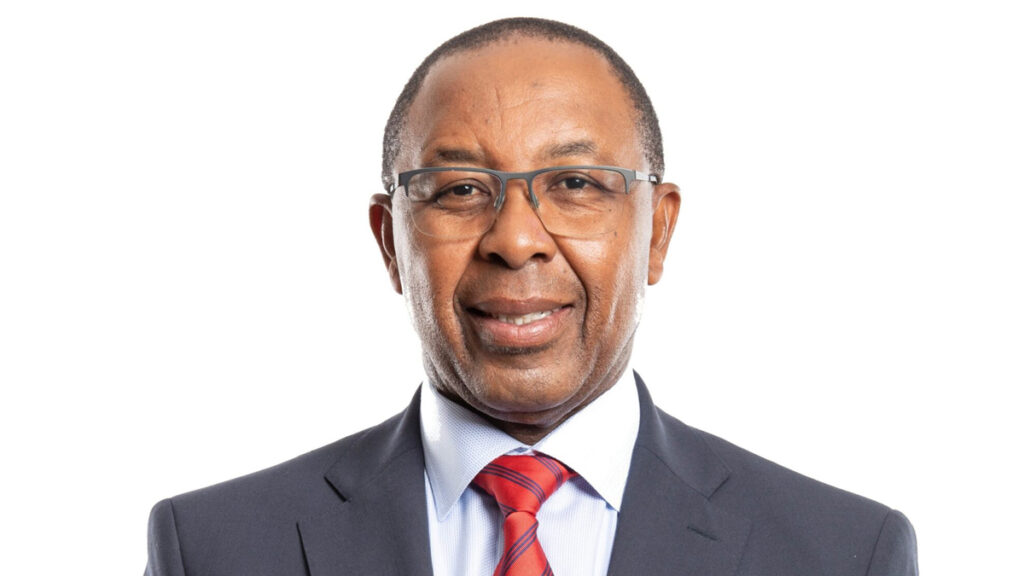
Fihla told a Bloomberg event that he has finalised his strategy for Absa going forward, with it focusing on four key areas.
The strategy indicates an attempt to win back market share in key segments in South Africa, while significantly expanding Absa’s African business.
It also points to an overhaul of Absa itself, modernising its systems to make it more efficient, and an eye for acquisitions to bulk up the bank.
This presents the first cohesive strategy at the bank since Ramos left in 2019, with Fihla having the time to implement it and create a new culture at the bank.
“In my engagements with clients, regulators, investors, including people within the organisation, I have been amazed at the strength and some of the competitiveness that Absa still has,” Fihla said.
“But what has effectively undermined the ability of the organisation to capitalise on that is leadership instability.”
“I think the first area is that you win or lose at the client interface. So we have to sharpen our focus on which client segments we can win in,” Fihla said.
“We have to make sure that we are able to create appropriate differentiation in the areas that we want to focus on. That is true for all of our businesses – retail, business banking, and CIB.”
Fihla also looks set to shift Absa’s focus on growing outside of its home market of South Africa, to capture value from faster-growing economies in the rest of the continent.
“The second element of our strategy is about strengthening the diverse nature of our business. We are still overly concentrated on South Africa, but there are massive opportunities in the rest of the continent,” Fihla said.
These two pillars will be complimented by an overhaul of Absa, with Fihla looking to modernise the bank and make it more efficient.
“The third pillar of our strategy is about accelerating the pace of modernisation so that we can drive efficiency within our business, reduce the cost to serve clients, while improving client experience,” Fihla said.
This, over time, will enable to the bank to allocate capital more efficiently and improve its return on equity.
“Fourthly, it will take too long for us to transform and modernise everything on our own. So, we will be looking at other opportunities for bulking up as and when the opportunities present themselves,” Fihla said.






Comments