South Africa’s billionaire university


Four of South Africa’s seven dollar billionaires attended the same university – Stellenbosch University in the Western Cape.
One of South Africa’s oldest and most prestigious schools, Stellenbosch University traces its origins to the establishment of the Theological Seminary in 1859 and the founding of the Stellenbosch Gymnasium in 1866.
These institutions laid the foundations for higher education in the town. By the 1870s and 1880s, the Gymnasium had evolved into a tertiary institution, becoming Stellenbosch College and later Victoria College, which gained a reputation as a leading academic centre.
In 1916, Victoria College underwent a major change when it transitioned to university status through the 1916 Stellenbosch University Act.
On 2 April 1918, Stellenbosch University officially opened with 503 students, 40 lecturing staff, and four faculties – Arts, Science, Education and Agriculture.
It soon established its own leadership, graduation ceremonies, and growing academic structures. Over the decades, the university expanded rapidly.
New faculties such as Theology (1920), Commerce (1925), Engineering (1942), Medicine (1956) and Military Science (1961) were added.
Key research bodies like the Bureau for Economic Research emerged in 1944, and landmark buildings, including the Carnegie Library, the Conservatory, and the Danie Craven Stadium, were constructed.
Stellenbosch University also became known for significant cultural, social and scientific milestones, such as launching Africa’s first microsatellite, Sunsat, in 1999, and developing the continent’s first test-tube baby in 1984.
Its campuses expanded to Tygerberg and Bellville Park, while student life was enriched through initiatives such as Die Matie, the Neelsie, community outreach programmes, and the Woordfees.
In the democratic era, Stellenbosch University welcomed historic visits from figures such as Margaret Thatcher and Nelson Mandela.
Today, the university is home to 10 faculties, over 35,000 students and 3,600 members of staff. It has also produced some of South Africa’s most successful business leaders, including several dollar billionaires, which are listed below.
According to Forbes’ real-time tracking of billionaires, South Africa currently has seven dollar billionaires.
| Global Ranking | Name | Net worth | Source | Industry |
|---|---|---|---|---|
| 165 | Johann Rupert & family | $14 billion | Luxury goods | Fashion & Retail |
| 258 | Nicky Oppenheimer & family | $10.4 billion | Diamonds | Metals & Mining |
| 1072 | Koos Bekker | $3.4 billion | Media, investments | Media & Entertainment |
| 1219 | Patrice Motsepe | $3 billion | Mining | Metals & Mining |
| 1626 | Michiel Le Roux | $2.2 billion | Banking | Finance & Investments |
| 2233 | Jannie Mouton & family | $1.5 billion | financial services | Finance & Investments |
| 2233 | Christoffel Wiese | $1.5 billion | Retail | Fashion & Retail |
Johann Rupert

Johann Rupert, the richest man in South Africa, was born into the Rembrandt business empire founded by his father, Dr Anton Rupert.
Anton had built his wealth by expanding the family’s interests and creating some of South Africa’s most influential companies.
After attending Paul Roos Gymnasium, the young Rupert went on to study commerce and company law at Stellenbosch University.
However, when he had nearly completed his studies, the university insisted that he retake two subjects despite being admitted to write both examinations. Rupert opted to drop out of university instead.
At the time, he knew he did not want to work for his father. So, when family friend David Rockefeller suggested he go to New York to work on his business acumen, he packed his bags and headed towards the Big Apple.
There, he worked for Chase Manhattan for two years and for Lazard Freres for three years. Upon his return home, he founded Rand Merchant Bank in 1979, later helping facilitate the merger that gave rise to FirstRand.
He formally joined Rembrandt in 1984, restructuring its global assets and creating the Swiss luxury holding company Richemont, which now owns brands like Cartier and Montblanc and remains the cornerstone of his wealth.
Under his leadership, Rembrandt evolved into the investment giant Remgro, while he also founded the investment company Reinet and oversaw major deals.
This includes overseeing Rembrandt’s stake in British American Tobacco and Venfin’s role in founding Vodacom.
Today, Rupert chairs Remgro, Richemont, and Reinet, and has become South Africa’s wealthiest individual, with his fortune largely rooted in these three companies.
Michiel le Roux
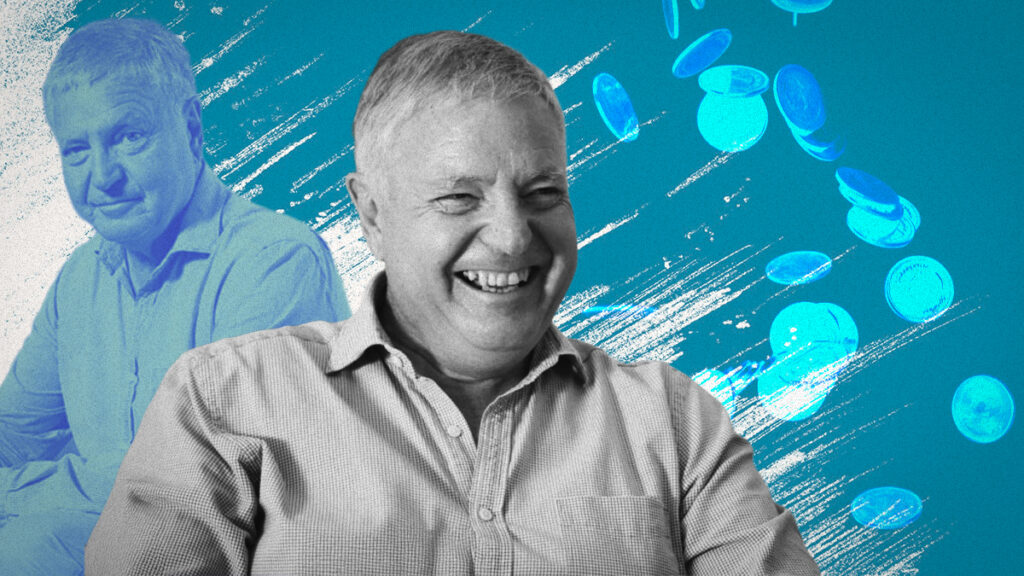
Billionaire banker Michiel le Roux studied at Stellenbosch University , where he graduated with a BCom Law and LLB degree.
He resided in Eendrag at the university, where he and the Chair of the Law Faculty Trust, Chris Otto, shared a room in his first year.
After graduating, Le Roux began his career in the liquor industry. In 1994, he joined Boland Bank, a small regional bank in Cape Town’s hinterland. Christo Wiese, the company’s chair, appointed him as managing director of the bank.
Four years later, he resigned from this position, despite Wiese’s attempts to prevent him from leaving, which included making him a beneficiary in a share option scheme.
His resignation, which came after a falling out about the future direction of the bank, cost him millions and led to a lawsuit between himself and Wiese, which dragged on for almost a year.
In 2001, he co-founded Capitec with Riaan Stassen, focusing on serving the previously unbanked emerging middle class.
He drew on his experiences at Boland Bank, where he identified inefficiencies in traditional banking, to build this new business.
Under his leadership, Capitec grew into one of South Africa’s largest and most innovative banks, now with over 25 million clients, hundreds of branches, and a strong digital platform.
Jannie Mouton

Jannie Mouton followed in his father’s footsteps by attending Stellenbosch University, where he completed a BCom Honours degree.
He went on to help start the stockbroking firm Senekal, Mouton & Kitshoff, where he served as managing director. However, on 5 August, 1995, his life changed when his partners kicked him out of the firm.
Mouton later founded the PSG Group using a series of bold, value-creating investments that transformed the company into one of South Africa’s most successful investment groups.
He began by acquiring 51% of PSG for R3.5 million, which he sold for R107 million two years later.
He then expanded PSG through strategic acquisitions and early-stage investments in high-growth businesses, including Capitec, Curro, PSG Konsult, and MiWay.
His stake in Capitec, which grew from under R1 per share to over R3,000 per share, became one of his biggest wealth drivers.
Through a long-term investment vision, opportunistic deal-making, and building a portfolio of successful companies in financial services, banking, education, agriculture, and insurance, Mouton transformed PSG into a powerhouse.
Throughout the years, it has generated extraordinary shareholder returns and cemented his reputation as one of South Africa’s most successful entrepreneurs.
Christo Wiese

Christo Wiese is one of South Africa’s most prominent businessmen, best known for transforming Shoprite from a small Cape Town supermarket chain into Africa’s largest food retailer and building Pepkor into a retail powerhouse.
He attended the University of Cape Town, but his academic performance was not successful. He left without completing his course and started a radiator repair business in Upington.
Later, he resumed his studies at Stellenbosch University. In 1965, while Wiese was still studying, his parents co-founded Pep Stores and were its second-largest shareholders.
After graduating with a BA and LLB degree, he returned to the family business for a while, handling administrative duties and driving around the country with the major shareholder, looking for locations to open new shops.
His early career was spent working in law and the family’s business, where Wiese went on to become an executive director at Pepkor in the 1970s.
In this role, he drove major acquisitions, including Shoprite, Ackermans, Checkers and OK Bazaars, which cemented his reputation for bold, strategic deal-making.
He also expanded into banking and diversified into multiple sectors through savvy investments. This includes buying a stake in the financial services counter, PSG.
However, his fortune was severely hit by the 2017 Steinhoff accounting scandal, which caused a 90% crash in the company’s share price while he was chairman, wiping out billions of his wealth.
Following a lengthy settlement, Wiese rebuilt much of his fortune and remains a major shareholder in Shoprite and other companies.
He holds these investments through companies such as Brait, Collins Property Group and Invicta Holdings, securing his place again among South Africa’s richest individuals.


Comments