Cape Town’s new international airport one step closer


The Cape Winelands Airport has been given environmental authorisation from the Western Cape Department of Environmental Affairs and Development Planning.
This enables the airport to develop detailed plans and implementation measures required to minimise environmental impact before construction can begin.
The process is still subject to appeal, but it marks a significant milestone for the airport in its aim to begin handling travellers in 2028.
“The granting of environmental authorisation is an important validation of the extensive work and consultation that has gone into ensuring this project meets the highest environmental and community standards,” managing director of Cape Winelands Airport, Deon Cloete, said.
There have long been ideas for a second international airport near Cape Town International to help service the growing number of flights to and from the city.
International airlines have increased their flights to the Mother City post-pandemic as tourist demand has skyrocketed.
One of the headaches for these airlines is the lack of a secondary airport near Cape Town, forcing them to carry additional fuel in the case of an emergency to make it to another airport.
This is not so much of a problem in Johannesburg, where international flights can land at either OR Tambo International or Lanseria.
Located just outside of Durbanville, the Cape Winelands Airport aims to serve this need and help ease the burden on Cape Town International.
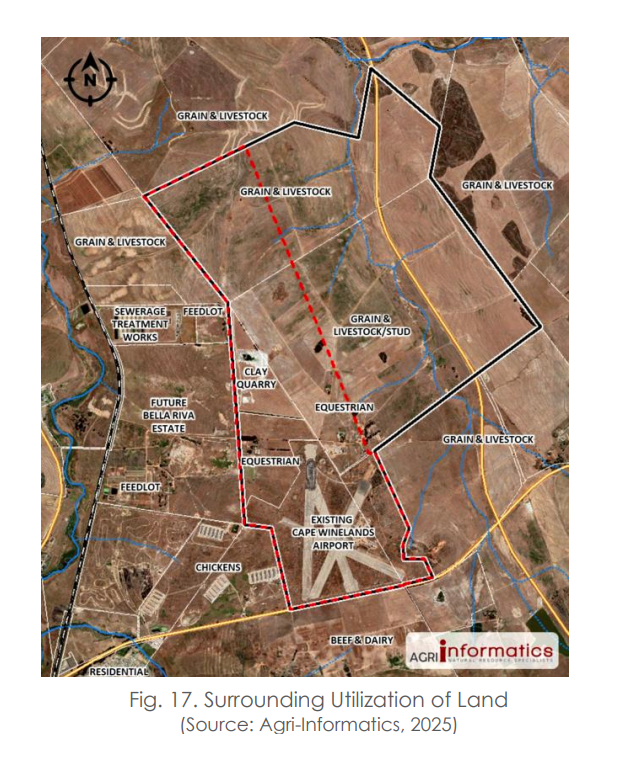
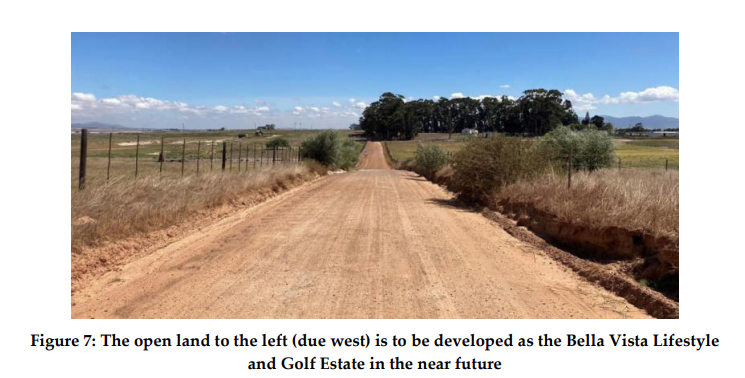
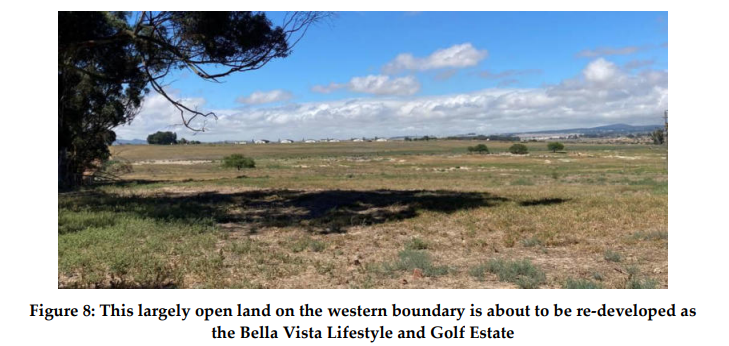
Significant redevelopment of the Fisantekraal Airfield, which formerly belonged to the South African Air Force, is needed to make it fit for international air travel.
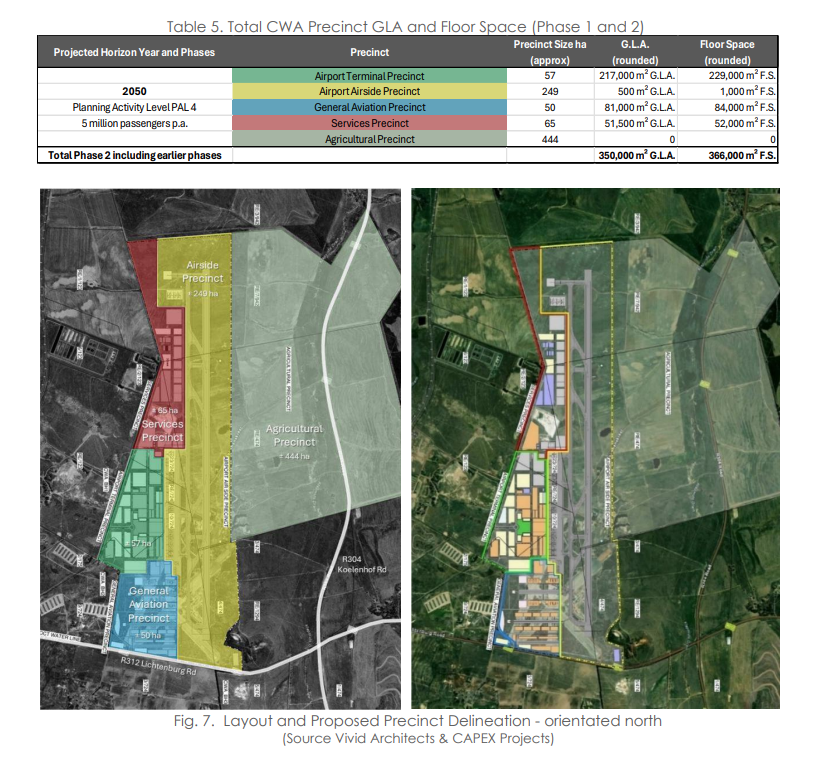
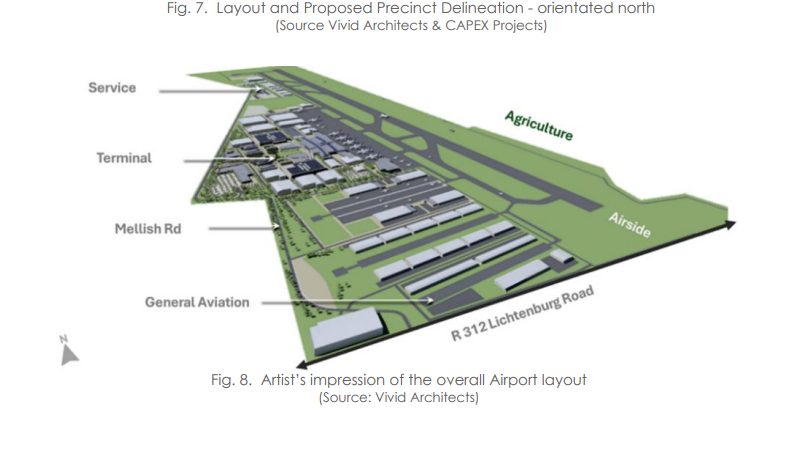
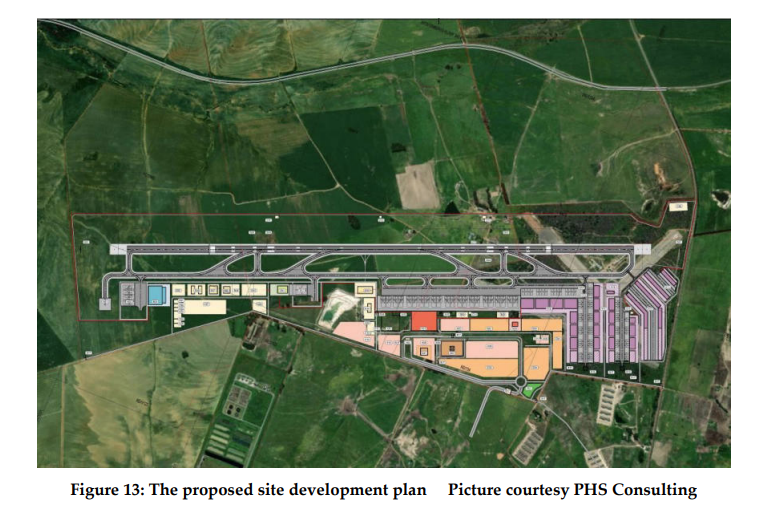
The plan is to convert the existing airfield into a commercial airport by expanding and realigning the primary runway to a length of 3,500 m. It currently has four runways, with two inactive and the other 700 m and 900 m long.
This new runway will be coupled with extensive supporting infrastructure, including taxiways, aircraft parking stands, refuelling systems, and cargo facilities.
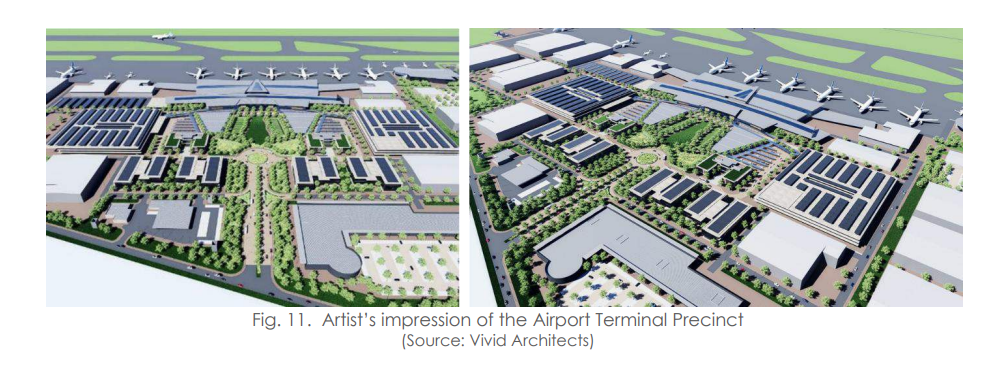
A new passenger terminal will also have to be built, with plans showing that it will be able to accommodate 5.2 million annual passengers.
Other developments on the site include cargo terminals, aircraft hangars, a hotel, a heliport, warehousing, and logistics facilities.
South Africa’s biggest landlord jumps in

South Africa’s biggest landlord, Growthpoint, recently threw its weight behind the Cape Winelands Airport and the plans to make it the Western Cape’s next-generation aviation, hospitality, and industrial hub.
Growthpoint sealed a deal in early October to invest in the project to the tune of R8 billion, to deliver the airport’s terminal buildings, runway, and developable estate.
The real estate developer owns property assets worth over R155.8 billion across South Africa and overseas, with its crown jewel being a 50% ownership stake in the V&A Waterfront.
On Thursday, 16 October, the REIT announced that it has made an initial investment with the right to co-invest and develop the new Cape Winelands Airport precinct.
Growthpoint said this marks the start of a strategic partnership to deliver “the Western Cape’s next-generation aviation, hospitality and industrial hub”.
“The privately-owned airport, set to be developed on the site of the airfield previously known as Fisantekraal, is designed to strengthen the region’s logistics, trade and tourism infrastructure,” it said.
“The property group’s initial investment is one of several pillars in a long-term partnership for the design, development, delivery and management of the properties within the Cape Winelands Airport precinct.”
Growthpoint said it would assume long-term property and asset management responsibilities, with the potential to invest in future property developments around the airport.
Thus, the Cape Winelands Airport team will lead the aviation strategy and master planning of the aviation hub, with Growthpoint contributing institutional capital and expertise.
Growthpoint estimated that the airport will create and sustain around 35,000 direct and indirect jobs, with around 100,000 being created during its first 20 years of operation and development.
The development will proceed in phases, starting with runway and safety infrastructure, followed by the terminal, cargo and industrial precincts.
On this timeline, the airport is targeted for commissioning by 2028 with capacity for more than five million passengers annually by 2050.
The full rollout will unfold over more than two decades, in step with the region’s evolving growth and infrastructure needs.
Images of Cape Winelands Airport






Comments