South African pharma giant posts a R1 billion loss


Aspen Pharmacare has swung to a loss in its 2025 financial year, as significant impairments weighed on its earnings.
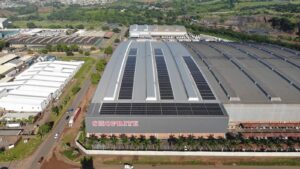
Aspen is Africa’s largest pharmaceutical manufacturer and is valued at just under R47 billion on the JSE. It owns and operates facilities in Gqeberha and France, where it manufactures finished dose products for third parties.
On Wednesday, 3 September, Aspen released its results for the year ended 30 June 2025, which revealed a disappointing performance.
The company’s revenue grew by a meagre 1% to R43.36 billion, while its operating profit declined by 77% to R1.44 billion.
The company made a loss of R1.08 billion for the year, compared to a R4.4 billion profit in its 2024 financial year.
This is despite a strong performance from the group’s core pharma business, Commercial Pharmaceuticals, which comprises more than 70% of the group’s revenue.
This business delivered revenue and normalised EBITDA growth of 10% in constant exchange rate, underpinned by organic revenue growth in the injectables, OTC and prescription divisions.
A new product in South Africa, Mounjaro, and Aspen’s portfolio of medicines in Latin America also contributed. However, this was partially offset by a stronger rand.
During the period, Aspen also merged its China operations with its acquired Sandoz business, which led to R0.8 billion in total write-offs and restructuring costs, which hurt profit margins.
One of the biggest blows to Aspen’s operations in 2025 was its ongoing contract dispute related to a manufacturing and technology agreement with a contract manufacturing customer for mRNA products.
This dispute led to Aspen earning far less from its manufacturing business over the period compared to 2024.
Another hit came from new minimum tax rules implemented in South Africa and Mauritius in the period, which increased Aspen’s tax rate and boosted impairments by R1.7 billion.
Aspen saw significant impairments over the 2025 financial year, a total of R4.1 billion, which includes the tax impact, the mRNA dispute and some underperforming regions.
Positively, Aspen generated more cash than expected over the period, with an operating cash conversion rate of 147%.
However, the company warned that its debt remains high and grew to R31.2 billion over the last six months of its 2025 financial year.
In addition, despite interest rate cuts across the group’s operating regions, Aspen’s finance costs rose year over year, influenced by higher debt and increased forex losses.
Aspen declared a final dividend of 211 cents per share, down from the 359 cents it declared in 2024.





Comments