Billionaire Koos Bekker kissed R3.62 billion goodbye


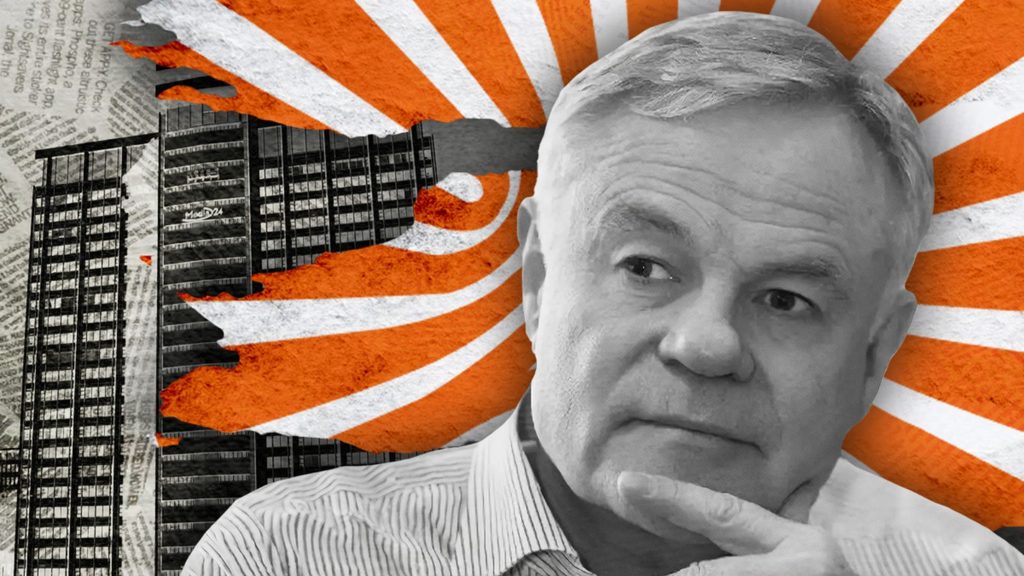
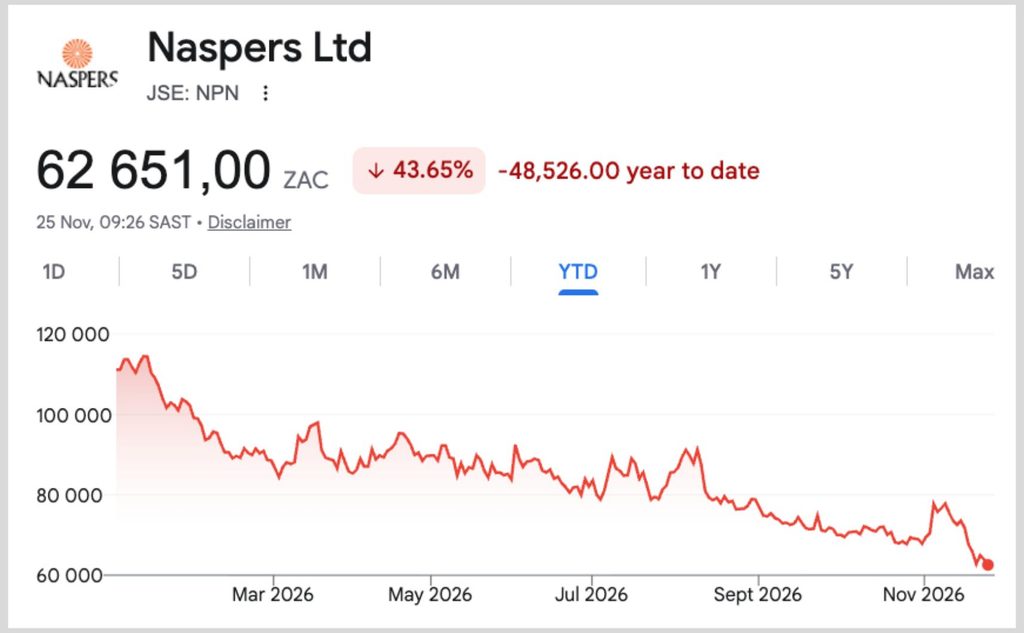
Naspers’ share price decline in 2026 to date has seen billionaire businessman Koos Bekker’s shareholding lose substantial value.
Bekker, primarily through his family trust, holds 7.65 million Naspers shares. This stake was worth R8.50 billion at the start of January 2026.
However, Naspers’ share price has fallen by 42.35% since then, meaning Bekker’s stake is now worth R4.89 billion. This signifies a loss of value of R3.62 billion.
Notably, this does not include his shareholding in Naspers’ international arm, Prosus, which has seen an equally large share price drop and in which Bekker also holds a substantial stake.
Naspers’ and Prosus’ share price drops have largely been attributed to investors’ concerns about how Tencent will compete in an artificial-intelligence-driven technology market.
Tencent is the largest and most defining asset in Naspers’ portfolio, with the relationship between the two companies dating back to when Bekker was still CEO of Naspers.
Bekker, who is now the company’s chair, became Naspers CEO in 1997, when the group was still a traditional media and print conglomerate based in South Africa.
Bekker wanted the company to diversify beyond traditional media and sent his executives out to find investments that would bring Naspers into the digital era.
The company soon came across Tencent, a Chinese internet startup founded in 1998. While Tencent was still obscure, Naspers saw the potential and acquired a 46.5% stake.
This investment paid off in spades, and to this day, Tencent remains a cornerstone of Naspers’ portfolio.
While Naspers’ stake in Tencent has since shrunk to 22.5%, it remains a major contributor to the company’s earnings and bottom line.
However, according to some analysts, Tencent is also the reason Naspers has seen such a significant share price drop year to date.
Tencent has been investing heavily to compete in a more AI-driven market, but investors have yet to see enough evidence that these investments will pay off.
In addition, since Tencent is a Chinese company, some investors have raised concerns about the United States’ tightening controls on advanced AI semiconductors.
This uncertainty about Tencent’s ability to compete in a more AI-driven market, along with other factors, has seen Naspers’ share price drop by 42.35% in 2026 to date.
Naspers can still turn it around
FNB Wealth and Investments’ Head of Investment Research, Chantal Marx, told BusinessDayTV that Tencent remains a strong value driver for Naspers and Prosus.
She noted that the companies are trading at a discount to their underlying assets and will need to achieve sustainable positive free cash flow within the food delivery strategy to narrow this gap.
In the same interview, Merchant West Investments portfolio manager Izak van Niekerk said the companies have indicated increased spending on their food-delivery strategy.
This risks widening the discount further, and Van Niekerk said investors will need to see concrete evidence of returns on this increased investment.
Specifically, Marx said investors would like to see these investments translate into successful market defence and improved order volumes.
“At the moment, the markets are seeing the increasing spending and saying that the rump is maybe not as profitable as they expected,” Van Niekerk said.
“So when they do deliver on profitability execution and profitability of the rump, we should see the discount narrowing again.”
Naspers released its results for the first half of the 2027 financial year on Wednesday, 25 November, which revealed a mixed performance.
The group’s revenue grew by 55% to R104.3 billion, driven by the acquisitions of Just Eat Takeaway and Despegar, as well as organic expansion of its existing businesses.
However, this growth did not translate into Naspers’ bottom line, with the group’s profit from continuing operations dropping 27% to R66.5 billion.
Its adjusted EBITDA declined by 6% to R6.6 billion, yet adjusted earnings and headline earnings rose by 6% and 28%, respectively.
Naspers reported free cash flow of R16.4 billion, which includes R22.97 billion in cash dividends received from Tencent.
Excluding Tencent’s dividend, Naspers saw net free cash outflow of R6.2 billion, which reflects its food delivery subsidy investment.
Note that all rand figures from Naspers’ results were converted from US dollars using the average foreign exchange rate Naspers provided, at R16.39 per US dollar.
Login or register for unlimited free access.