Cape Town International Airport gets R11.4 billion investment as a new competitor is built around the corner


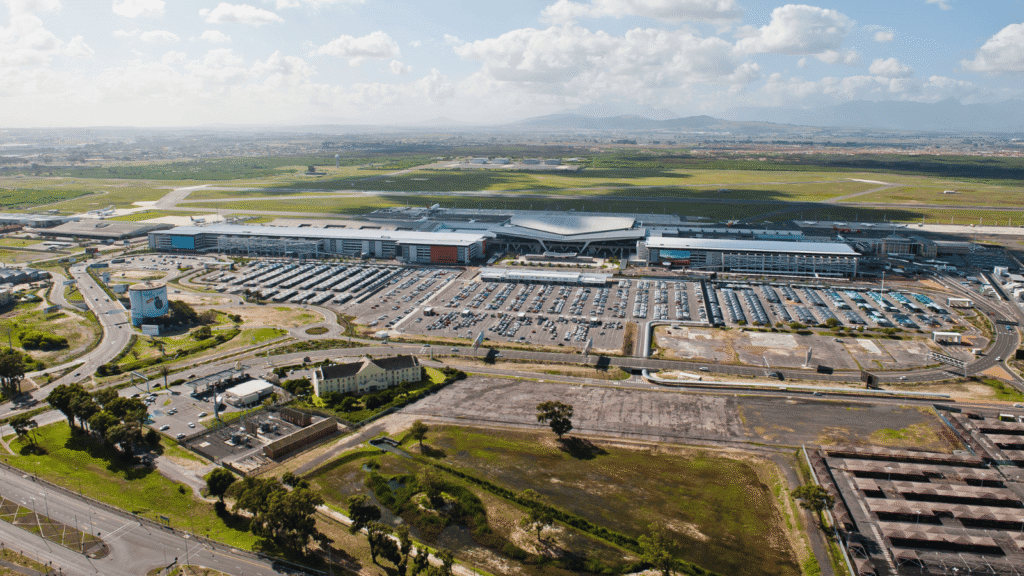
Cape Town International Airport is set for a major overhaul, with more than R10 billion in planned infrastructure projects to increase capacity and improve passenger facilities.
The investment comes as the airport experiences growing passenger numbers and increasing pressure during peak periods.
A new international airport is also planned for the Cape Winelands, 13km northeast of Durbanville, which could provide Cape Town with another option for commercial air travel.
The upgrades form part of Airports Company South Africa’s (ACSA) broader R21.7 billion infrastructure investment programme across its airport network. ACSA outlined the Cape Town projects in a statement issued on 20 February 2026.
The largest project is a new realigned main runway, estimated to cost R6.39 billion. ACSA plans to appoint a contractor in December 2026.
The runway will measure 3,500m by 60m and be shifted 11.5 degrees eastward. The realignment is intended to improve air traffic efficiency and free up space within the airport for terminal expansion.
The project will also include rapid exit taxiways and a partial parallel taxiway. These are expected to reduce the time aircraft spend occupying the runway and improve turnaround times.
The new runway will meet Code F requirements, allowing it to accommodate larger next-generation aircraft.
ACSA also plans to expand the domestic terminal, with construction expected to begin in April 2027, subject to regulatory approvals and procurement.
The domestic arrivals terminal is estimated to cost R2.39 billion, while the domestic departures extension is expected to cost R500 million.
The work will increase passenger-processing capacity and improve movement through the terminals. It will also provide additional domestic contact gates and airbridges, as well as more apron space for aircraft parking.
The international terminal will receive a phased upgrade estimated at R863 million. This will include additional apron stands, improved immigration facilities, upgraded bussing gates and expanded retail and lounge areas.
Other planned improvements include additional security screening capacity, better baggage reclaim facilities, upgraded bathrooms and more family and prayer spaces.
ACSA said the projects will be phased to limit disruption to passengers and airlines during construction.
Cape Town airport is facing growing capacity pressure
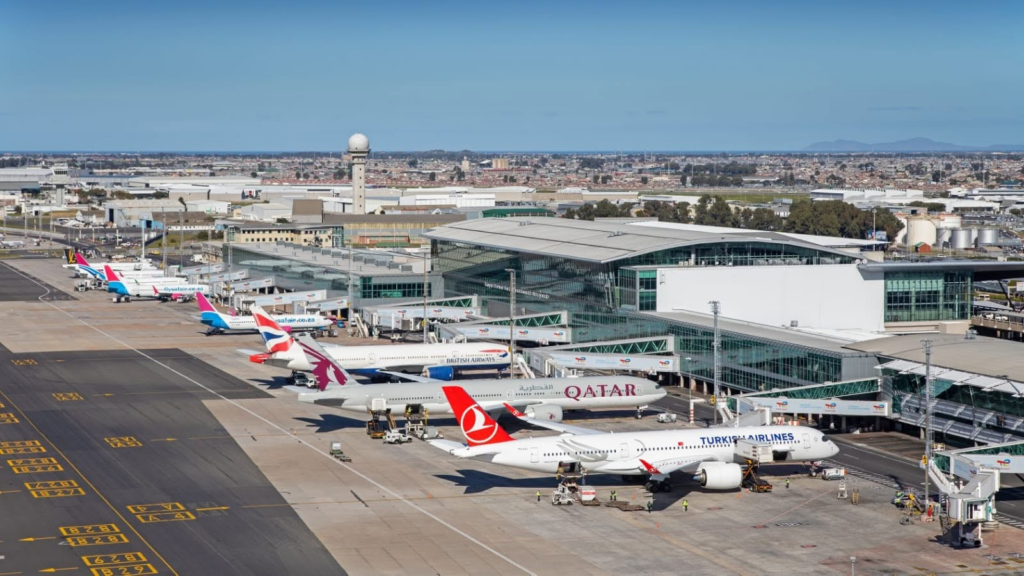
The investment comes as Cape Town International experiences some of the most visible capacity constraints across ACSA’s airport network.
According to ACSA’s 2025/2026 integrated annual report, the airport accounts for 27.6% of passenger traffic across its network.
The airport is now facing increasing congestion in the terminal during peak periods and growing pressure on available flight slots.
This is partly linked to the recovery in international tourism and the expansion of air routes to Cape Town. South Africa’s international tourist arrivals have now recovered beyond pre-pandemic levels.
Cape Town has also benefited from the Cape Town Air Access partnership, which works with tourism, trade and government organisations to attract new routes and encourage airlines to increase capacity.
The initiative has helped accelerate passenger growth at the airport. Cape Town has also overtaken Johannesburg in several long-haul international source markets.
However, growing demand puts additional pressure on existing infrastructure. Limited flight slots and terminal congestion can make it harder for the airport to accommodate further growth.
The planned upgrades are meant to aid the Western Cape’s tourism industry and wider economy.
Better airport capacity and more reliable operations could help attract additional international routes and support the movement of visitors and business travellers.
ACSA has also identified ageing infrastructure, deferred maintenance and capacity constraints as risks across its airport network.
The company is also expanding cargo facilities at Cape Town International. It has awarded the first three cargo warehouse sites through a public tender.
The airport is also earmarked for longer-term aerotropolis development, integrating transport, commercial and property developments within and around the airport precinct.
A new on-site airport hotel is another approved project, which is progressing through a design, build and operate framework.
The Cape Winelands Airport

While ACSA invests in expanding Cape Town International, a separate airport development is planned nearby.
The Cape Winelands Airport, formerly known as Fisantekraal Airfield, is being developed into an international commercial airport by its owner and operator, RSA.Aero.
The site is 13km northeast of Durbanville and currently operates as a general aviation facility, including flight training.
The planned redevelopment involves a multi-billion-rand investment, with the project previously valued at around R10 billion.
The first major step is to extend and realign the main runway to 3,500m. The plans also include a new passenger terminal, cargo facilities, additional aircraft hangars and upgraded fuelling infrastructure.
The development is expected to include hotel accommodation, a heliport, warehousing and logistics facilities.
The airport’s developers want it to serve as an additional gateway to the Western Cape, supporting tourism, business travel and regional economic activity.
Cape Winelands Airport director Mark Wilkinson has said that a second airport could help ease congestion at Cape Town International and reduce carbon emissions.
The project is still progressing through its planning and preparation stages. These include airport design, engineering, environmental work, road connectivity and commercial planning.
Wilkinson has said the developers hope to begin construction soon, with the first phase of operations targeted for 2028.
If completed, the airport could provide airlines and passengers with an alternative to Cape Town International. It could also compete with ACSA for some of the region’s passenger and cargo traffic.
However, the two developments are at different stages. ACSA has outlined specific projects and estimated costs for Cape Town International, while Cape Winelands Airport is still preparing for its next development phase.
The extent to which the new airport will divert traffic from Cape Town International will depend on its eventual capacity, airline interest, and the routes it attracts.
Renders of the Cape Town International Airport upgrade



Login or register for unlimited free access.