South Africa’s richest woman accused of using a get-rich-quick scheme at her own company


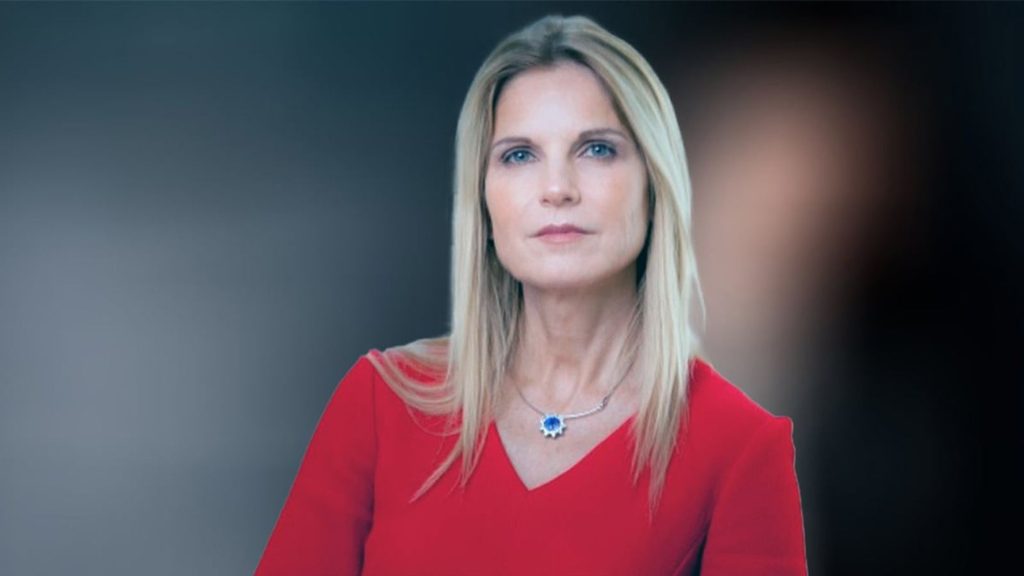
Disgruntled Sygnia shareholder André Crawford-Brunt has renewed allegations that the company’s expansion of its employee share rewards plan is a “get-rich-quick scheme” for its executives.
In particular, Crawford-Brunt claimed that the scheme will benefit Sygnia founder and CEO Magda Wierzycka, who is South Africa’s richest self-made woman.
Prior to the scheme’s approval, Wierzycka denied similar claims made by dissenting shareholders, saying the scheme was necessary to attract and retain talent at Sygnia.
The third amendment to the Sygnia Employee Share Option Scheme “B” was approved by shareholders in October 2026, with 87% voting in favour.
This amendment will increase the scheme size from 15 million shares to 25 million. Currently, 6,999,500 shares have been issued.
These shares can be granted by the board to Sygnia employees, including Wierzycka, to reward them for past performance and incentivise them in the future.
Wierzycka and the company have said the expansion is necessary to attract and retain top talent, as it was previously too small to meaningfully reward employees.
With the amendment coming into effect, it appears that Wierzycka got her way and received significant support from institutional shareholders and retail investors.
Wierzycka holds 43% of Sygnia’s shares in her own name and indirectly through a trust. Her former husband, Simon Peile, owns 17% of the company and supported the amendment.
Her shareholding in Sygnia makes up most of Wierzycka’s wealth, which is estimated to be $250 million (R4.1 billion).
Wierzycka founded Sygnia in 2006 and has transformed it into one of South Africa’s biggest asset managers and largest international exchange-traded fund provider.
The company has R460.8 billion in assets under management, with this number growing by 12% per annum for the past decade.
Prior to the vote, Wierzycka said the expansion of the share option scheme was vital for retaining current talent and attracting high-quality executives.
“Our objective is to really try and reward them for what they have built and retain them at the company,” Wierzycka said.
Wierzycka outlined the company’s efforts to attract a new CFO under the scheme, which has been unsuccessful.
“We have been looking for a CFO for the better part of six months. You look at the share option scheme which we have to buy them out from, and we are looking at R10 million before we can even hire somebody,” Wierzycka said.
“The current scheme cannot support that. It really is a commercial decision, and there should be nothing controversial about it.”
‘Get-rich-quick scheme’ allegations

Some shareholders, including Crawford-Brunt, opposed the deal from the outset and claimed it was a get-rich-quick scheme for Wierzycka and executives.
While other opponents have died down, Crawford-Brunt has gone public with his critique of the share scheme amendment.
Speaking to BizNews, Crawford-Brunt claimed that voting for the scheme as a shareholder was like “a turkey voting for Christmas”.
“What this looked like to me, wearing my shareholder cap, was a get-rich-quick scheme where shares would be issued at 1 cent,” Crawford-Brunt said.
The amendment to the share option scheme allows the board to issue up to 5 million shares to an employee without specific performance conditions and changes the strike price to 1 cent.
“The board decided there were 8 million options still to be issued, and they decided to issue another 10 million. The math is simple: that is dilutive if you are a shareholder,” Crawford-Brunt said.
“The board tells you this is in the interests of all shareholders to create alignment, but they don’t tell you any KPIs. To me, this looked egregious.”
Crawford-Brunt alleged that the amendment was not for the benefit of ordinary employees or for shareholders.
“Increasing the limit of allocation of options from 1 million to 7.5 million is both dilutive and obviously intended for the enrichment or incentive of senior management,” Crawford-Brunt claimed.
Crawford-Brunt also took issue with the fact that 5 million shares could be issued without any explanation from the board.
Wierzycka had threatened before the vote that she would walk away from the company if the amendment was not approved.
“We’ve never had a share option scheme, you know, in terms of structure for a CEO,” she said.
“So, let’s assume I get run over by a bus tomorrow. We don’t have a share option scheme that would attract or reward a new CEO.”
Sygnia’s CEO dismissed claims of greed, saying that 57% of her time is technically spent working for other shareholders.
“I have an issue with that. When you own 43% of a company and, with your ex-husband, own 60% of the company, you are effectively the most incentivised. You are already incentivised,” Crawford-Brunt said.
Daily Investor reached out to Sygnia and Wierzycka for comment but did not receive a response by the time of publication. Once a response is received, it will be added to this article.
Login or register for unlimited free access.






Conversation
1 commentsThe “richest woman in south africa” is just another 304 that has been milking men for all she can get. If squirrel was a blond with blue eyes , he would be in exactly the same category.