The South African property fund that has beaten its benchmark and inflation for 26 years


Futuregrowth’s Community Property Fund has outperformed its benchmark, which is linked to CPI inflation, since 2000.
The asset manager attributes this outperformance to a long-term view, patience, reinvestment discipline, and a willingness to forgo shortcuts.
These characteristics, according to the fund’s portfolio manager, Smital Rambhai, have made Futuregrowth’s Community Property Fund one of the best-performing property funds in the country.
Started in 1996, the Futuregrowth Community Property Fund is a flagship fund among Futuregrowth Asset Management’s suite of developmental investments.
Today, the fund boasts R9.9 billion worth of properties under management and a combined gross lettable area of 438,000 m².
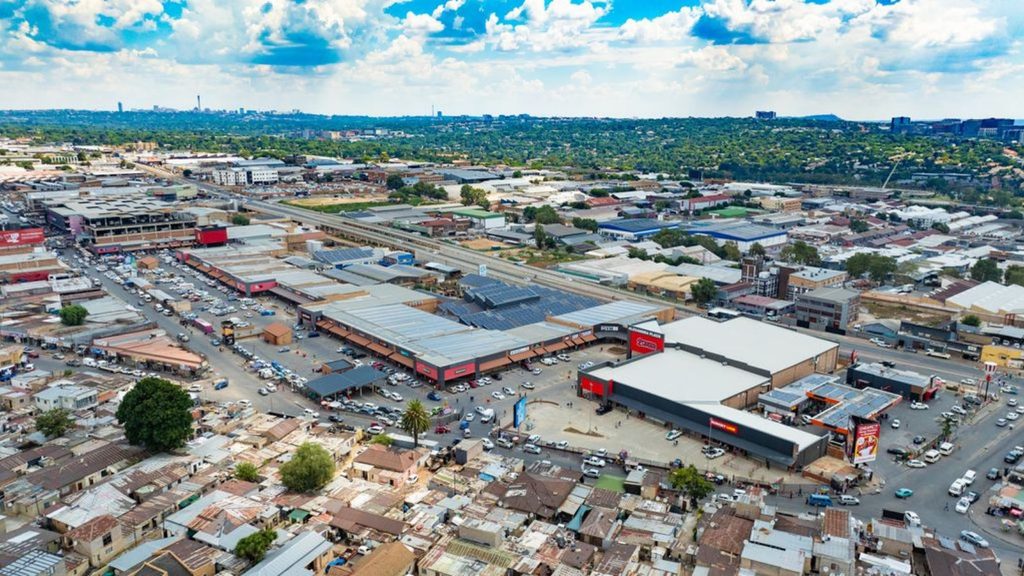
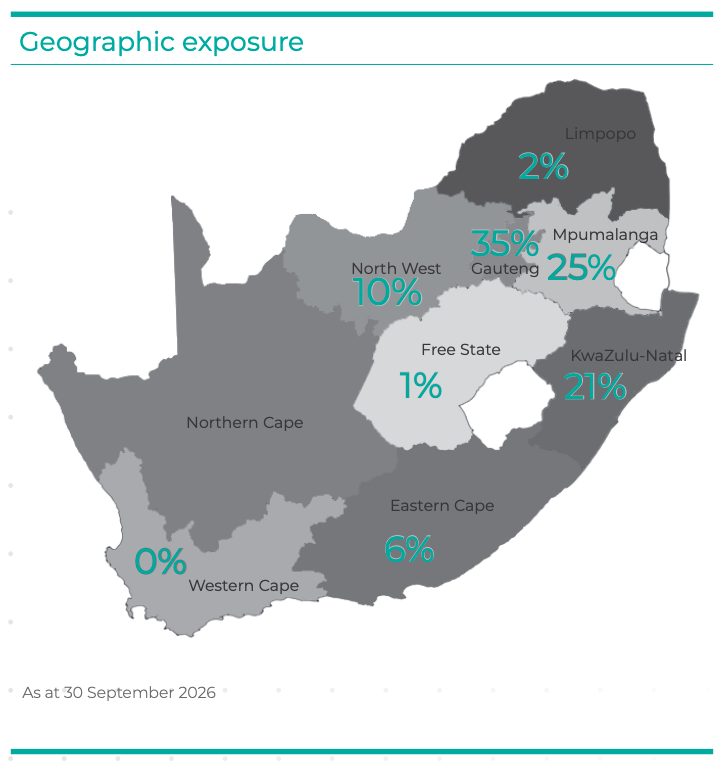
The fund owns 25 properties across eight provinces, including shopping centres in prime locations in townships and rural areas nationwide.
Some of the properties in the fund include Alexandra Plaza, Bridge City Shopping Centre, KG Mall, Heidelberg Mall, Sam Ntuli Mall, and Gateway Mall.
Rambhai recently explained that the fund was founded at a time of transformation and uncertainty, as South Africa was navigating its shift to democracy.
During this time, there was a realisation that there had been years of underinvestment in township and rural areas.
While these locations were home to millions of South Africans, they were far from reliable access to essential goods and services.
This was the problem Futuregrowth’s Community Property Fund was created to address: bringing essential infrastructure closer to where people live.
However, Rambhai emphasised that the fund was never established as a charity initiative prioritising social interests over commercial returns.
“Our responsibility to pension funds is that we always put commercial returns at the forefront,” Rambhai said.
“That’s our first assessment. Does the property generate sufficient income, is the yield sustainable, and will it deliver returns over the next 20 years?”
Futuregrowth’s Community Property Fund performance
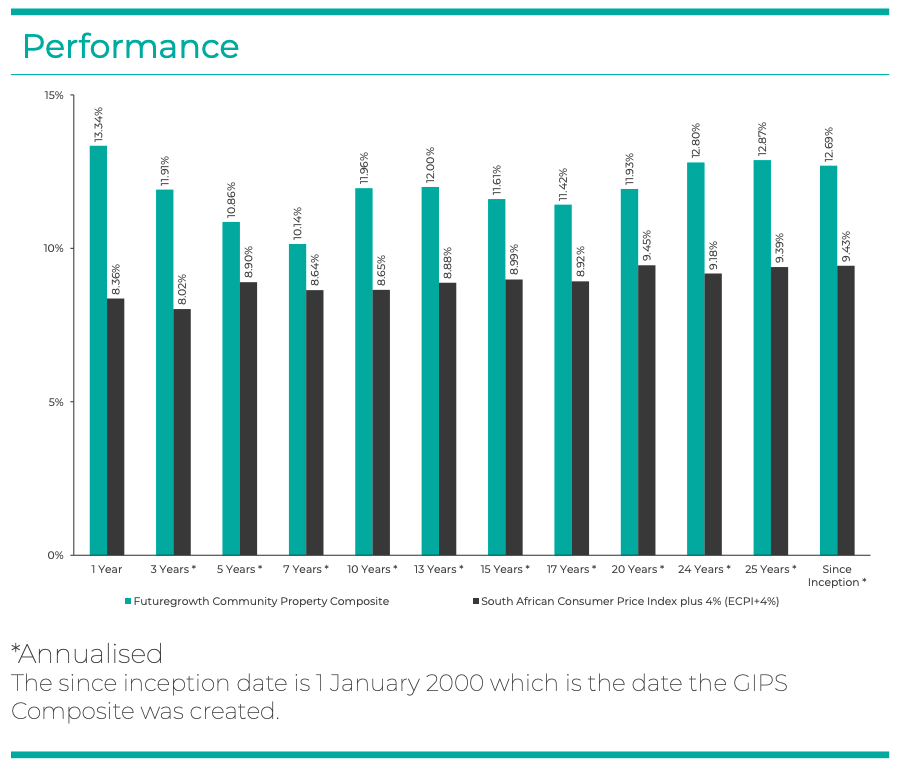
The Futuregrowth Community Property Fund’s latest available fact sheet, dated September 2026, showed that the fund has outperformed its benchmark since 2000.
The fund’s benchmark is CPI+4%, meaning that it aims to outpace inflation and return 4% or more on top of that.
It has succeeded in reaching this goal since 2000, when the GIBS Composite was created, and across 25-, 20-, 15-, 10-, 5-, and 1-year periods.
Since 2000, Futuregrowth’s fund has returned 12.69%, compared to the benchmark’s 9.43%.
The fund’s fact sheet states that it aims to provide investors with a low-cost, high-value property investment focused on growth in emerging-market retail property in underserviced rural communities and high-density urban centres.
In September 2026, the fund owned 25 properties and had funded 38 to date. These centres are located in eight provinces, providing retail services and products to a primary target market of 10 million people.
“I don’t know of any fund in the direct property space that’s been around this long – and delivered a total return of 12.8% per annum for nearly three decades,” Rambhai said,
He attributed this to the fund’s commitment to patience, reinvestment discipline, and a willingness to forgo shortcuts.
“We’ve seen other funds run as closed-ended vehicles where they take a seven- or 10-year view and then have to sell the assets,” Rambhai said.
“That drives short-term optimisation and a reliance on the market cycle being in your favour. We reinvest into the properties continuously, because the whole point is long-term sustainability.”
While the fund has a social impact aim, Rambhai said it is a misconception that these social goals must come at the expense of commercial returns,
“Job creation is a prime example. Construction creates immediate employment, but once a centre opens, retailers, service providers and centre management also employ long-term staff,” he said.
Job creation fueled by the fund’s property investments has been one of Rambhai’s goals since he took over the portfolio in 2013.
“When I took over the fund 13 years ago, only about 50% of staff in our centres came from the local community,” Rambhai said.
“The result was weekly shutdowns by residents who didn’t feel represented. That obviously affects rentals and operations.”
Today, 84% of staff employed in Futuregrowth Community Property Fund centres come from the immediate community.
“If you support the local community, they support the shopping centre,” Rambhai explained.
Log in or register for free access to all articles.