Billionaire Johann Rupert kissed R65.82 billion goodbye in one day


Richemont’s share price ended Friday, 13 November, down 3.14% following the release of its results for the six months through September 2026.
This share price drop shaved R65.82 billion off Richemont’s market capitalisation, which now stands at R1.84 trillion.
This is despite the luxury holding company reporting a 17% increase in sales and a 39% rise in its profit for the six-month period.
Richemont is a luxury goods conglomerate based in Geneva, Switzerland, and forms part of the Rupert family’s empire.
It was formed when Rembrandt, the Ruperts’ historic investment vehicle, was restructured into three companies: Richemont, Reinet, and Remgro.
In this restructuring, Richemont retained the Ruperts’ luxury assets, including stakes in brands such as Cartier. The company is still chaired by billionaire Johann Rupert today.
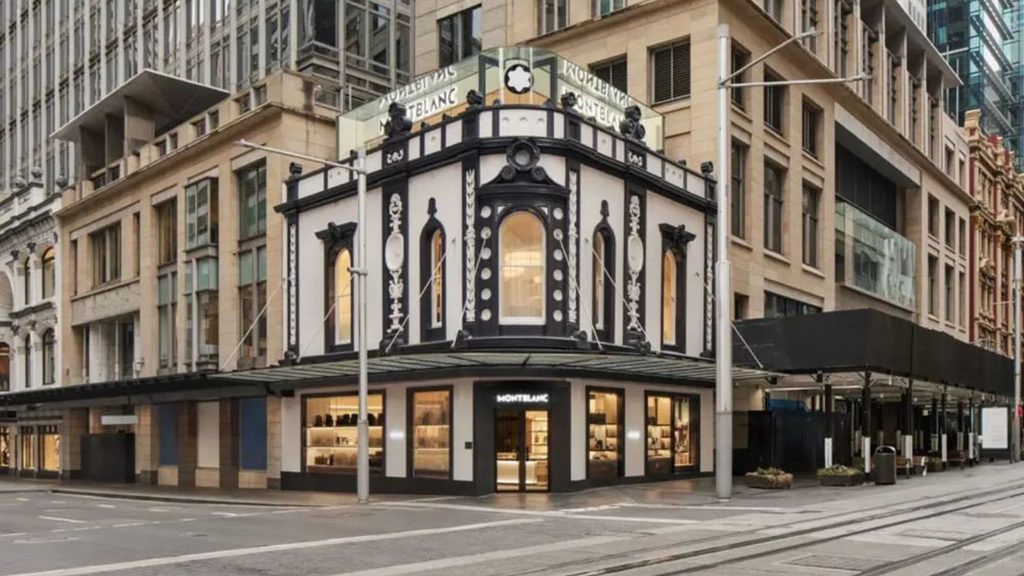
In the years since, Richemont has acquired a strong portfolio of well-known luxury goods brands, including Van Cleef & Arpels, Montblanc, Chloe, and Dunhill.
Richemont released the results for the first half of its 2027 financial year on Friday, 13 November, which revealed a strong performance.
The group’s sales grew by 17% in constant currency terms to €12.28 billion (R229.49 billion), which Richemont attributed to strong growth in Japan, the Americas, and Asia Pacific.
This strong sales growth led to a 33% rise in Richemont’s operating profit to €3.13 billion (R58.48 billion).
Its net profit for the six-month period shot up by 39% to €2.53 billion (R47.27 billion).
Richemont also remained highly cash-generative, with its cash flow from operating activities rising by €646 million (R12.07 billion), or 34.84%, to €2.5 billion (R46.73 billion).
The luxury goods giant ended the six-month period at a net cash position of €7.73 billion (R144.48 billion).
Richemont said these strong results were driven by contributions from all of its segments, led by its Jewellery Maisons, which grew sales by 19%.
The group’s Specialist Watchmakers segment saw sales up by 10%, while its Other division saw sales grow by 9%.
Notably, these results came despite a volatile geopolitical and macroeconomic environment.
“These results reflect the strength of our long-term strategy and demonstrate the enduring attractiveness and relevance of our Maisons’ positioning,” Richemont said in its results.
Analyst opinion
Despite posting what appeared to be strong results, Richemont’s share price slid by as much as 10.41% on Friday.
It ended trading on Friday down 3.14%, extending its year-to-date loss to 4.55%. This means Richemont’s market capitalisation declined by R65.82 billion on Friday.
Southern Cross Capital portfolio manager Cobus Potgieter told BusinessDayTV that the market has been wanting to punish Richemont for a while.
“Just given how tough an environment it has been for these luxury stocks. Its peers have been absolutely decimated this year,” Potgieter said.
He pointed out that, in this tough environment, jewellery maisons have outperformed the broader market and acted as a hedge.
High exposure to the jewellery sector is something Richemont has, but many of its competitors lack, and it has cushioned the Swiss giant in 2026 to cash.
“To the extent that it’s by far the largest portion of the business, and despite being at a top-line level overall relative to expectations, Cartier missed,” Potgieter said.
“I think it’s more about trend than anything else. The market is really trying to anticipate that slowing down we have been seeing more broadly.”
In the same interview, Merchant West Investments’ Josh Viljoen said he was surprised by the share price reaction to Richemont’s results.
“As mentioned, market expectations going into this result were extremely high, and even though jewellery missed ever so slightly, I still think this is a very strong result,” he said.
“Richemont was still able to push out decent margin expansion on this result despite the impact of higher input costs from gold and precious metals that go into jewellery and watches.”
“If you look at how Richemont has performed relative to the likes of LVMH or Kering, it has been extremely strong and resilient in a very weak luxury sector.”
Login or register for unlimited free access.