CEO of major independent power producer resigns after 17 years


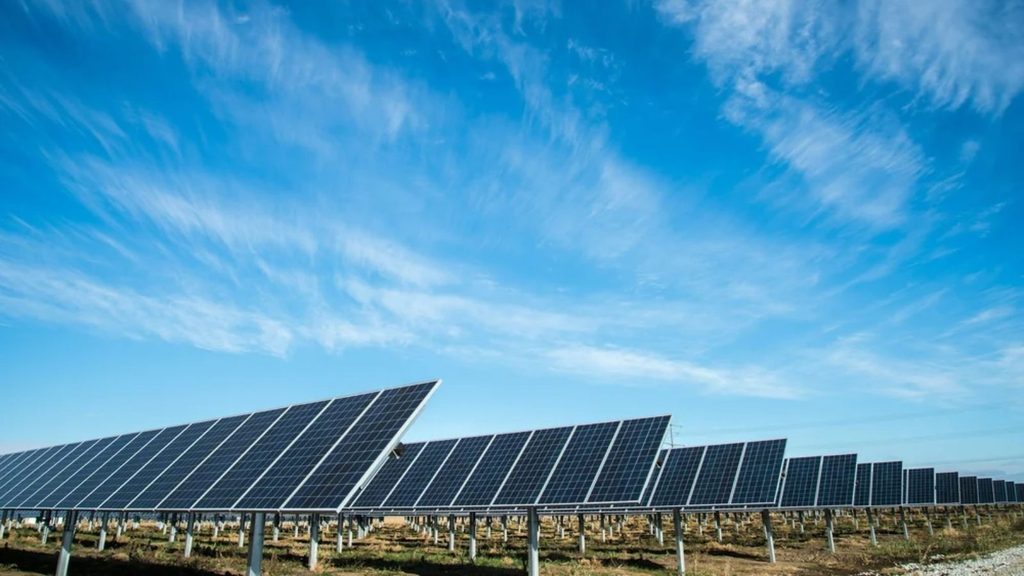
A governance crisis at Pele Energy Group has brought into focus an important question about how a renewable energy business should balance agility and oversight.
The question surrounds how a rapidly growing, founder-led South African renewable energy business should balance entrepreneurial agility with the independent oversight required by institutional finance.
EE Business Intelligence (EEBI) approached Pele Green Energy on 31 October 2026 after a governance-related matter was identified at the institution.
Following this engagement, Pele issued a written statement on 3 November acknowledging that its board initiated an independent investigation by an external legal firm, but declined to disclose the details or findings.
It added that the board would consider appropriate action in response to concerns and recommendations.
The statement did not answer specific questions about executive responsibilities, changes in board leadership, or the financial or other circumstances underlying the inquiry.
However, information obtained by EEBI indicated that group CEO Gqi Raoleka and CFO Matt Wainwright stepped aside from their executive duties in August 2026 while the matter was under review, with interim executive appointments made.
EEBI has also established that independent board chairperson Brenda Martin, appointed in March 2025, resigned in the week commencing 26 October 2026.
Pele has not publicly set out the circumstances of her departure or announced a successor.
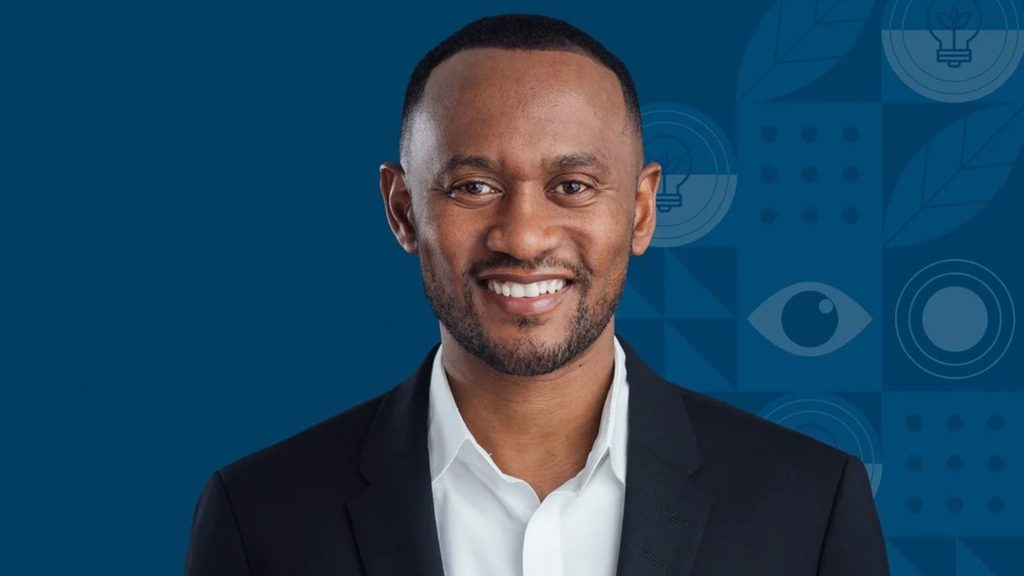
EEBI has further established that, after 17 years, Gqi Raoleka resigned as CEO last week, while remaining a director and shareholder of Pele.
Fumani Mthembi and Obakeng Moloabi, both co-founders and shareholders, have been appointed acting CEO and acting deputy CEO respectively, and an interim CFO has also been appointed.
These developments raise significant governance questions, but the available information does not justify any conclusions about criminality, contractual default, individual culpability or misconduct by the executives concerned.
Their present formal status has not been confirmed in a public company statement.
A public-interest issue
Pele is not listed on the JSE. It therefore does not face the same ongoing market disclosure obligations as a listed company.
But absence from the stock exchange does not remove its public significance or the expectations reasonably attached to projects financed by banks, development finance institutions, and long-term electricity purchasers.
Founded in 2009 by five young South African entrepreneurs, Pele has grown from an early participant in the public Renewable Energy IPP Procurement Programme (REIPPPP).
Today, it is a notable developer, investor, owner and operator of renewable energy assets.
Its business spans project finance, power purchase contracts, grid access, local employment, and community development.
Through Knowledge Pele, the wider group also pursues social and economic development initiatives.
On 23 December 2024, Pele Green Energy secured participation as the B-BBEE partner of Infinity Power Holding SA.
Pele would participate in six of the eight solar PV projects that were awarded preferred-bidder status under REIPPPP Bid Window 7.
This represented 1,280 MW of the 1,760 MW of generation capacity awarded in the initial announcement, making Pele a particularly significant participant.
In March 2025, Norfund said Pele’s platform had 980 MW in operation, 670 MW under construction, and a development pipeline exceeding 5 GW.
The wider public has a legitimate interest in the reliability of electricity infrastructure, the security of long-term financing, the use of capital subject to contractual restrictions, and the credibility of South Africa’s transformation objectives.
None of this requires confidential commercial information to be published indiscriminately.
It requires a defensible explanation of the governance process and assurance that the company’s projects and obligations are appropriately managed.
In this regard, Pele has confirmed to EEBI that all its institutional investors and financiers have been notified of the issues arising in the governance inquiry, as well as the leadership changes and pending changes.
A capital-intensive business under unusual pressure

The immediate context is one of mounting pressure on renewable energy independent power producers (IPPs).
In 2026, instructions by the System Operator to curtail wind and solar output rose sharply as electricity supply, demand and network constraints became harder to reconcile.
Curtailment is a legitimate system-operation measure, not inherently a sign of poor management by a generator.
Under relevant REIPPPP power-purchase agreements, qualifying producers are compensated for energy they were ready to generate but were instructed not to supply.
Yet reimbursement is not always immediate. The National Transmission Company South Africa (NTCSA) acknowledged a significant backlog of claims earlier in 2026.
Industry association SAPVIA said the claims under verification had fallen from about R2 billion in June to R1.5 billion in July, while pointing to a disproportionate cash-flow burden on BEE participants.
In September, NTCSA said that it had cleared the exceptional April and May 2026 processing backlog and restored claims handling to normal operating levels. This improvement should be recognised.
But it does not mean every project was unaffected by earlier delays or that forecasting future curtailment and revenue streams is straightforward when curtailment events are expected to increase further.
When project debt service, maintenance costs, and operating expenses are largely fixed, even temporary revenue uncertainty can have a disproportionate effect on cash available for operations, dividends, development work, and shareholder obligations.
The changing macroeconomic environment and new project delays between bid award and financial close create separate pressures.
These pressures include uncertainty in grid connections and shifts in CPI, interest rates, exchange rates, equipment prices, delivery times, and transportation costs.
These are sector-wide risks, not an explanation proven to account for Pele’s governance matter.
The company’s specific financial exposure, any relationship between curtailment and the inquiry, and the effects on particular projects remain unverified.
Financial adversity may explain why difficult decisions arise; it cannot determine whether any decision complied with the applicable financing rules.
From founder control to institutional discipline
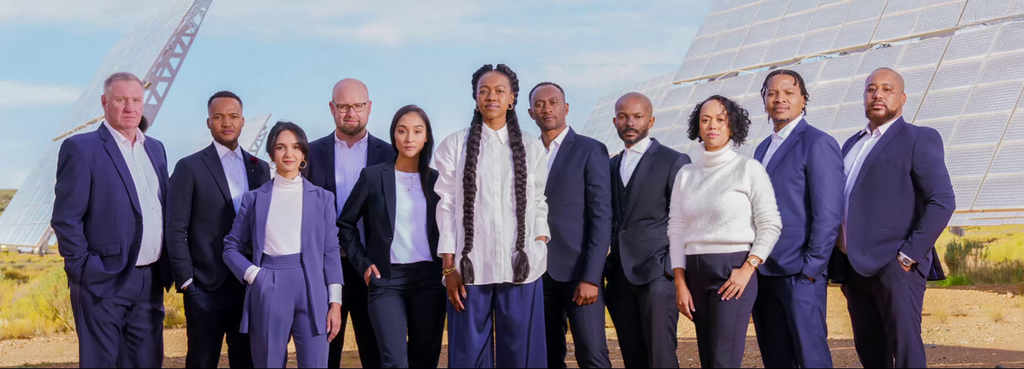
Pele’s growth has depended on a combination of South African entrepreneurship and outside finance.
In 2023, Nedbank, Norfund and the Industrial Development Corporation backed a R2.5 billion funding platform.
In 2025, Nedbank and the Norwegian Climate Investment Fund, managed by Norfund, supported a further R575 million capital raise.
The legal location of each investment, the rights attached to different instruments, and the relationship between the lender and the shareholder should not be conflated.
As an enterprise expands, its board faces an increasingly demanding task.
Approval limits, related-party transactions, capital allocation, internal audit, conflict management and the distinction between group resources and ring-fenced project finance and project vehicles must all become more formal.
Financing arrangements can allow properly authorised fees or payments to affiliates, but the permissions depend on the underlying agreements.
Without those documents, no inference of a covenant breach should be drawn.
Founder knowledge and commitment can be formidable strengths, particularly in industries where local companies have to overcome barriers to access and capital.
Institutional investors, however, typically require independent oversight, consistent reporting and enforceable decision-making arrangements.
The challenge is not to declare one model virtuous and the other defective, but to align authority, accountability, and funding with the company’s scale.
Different ownership paths in South African renewables
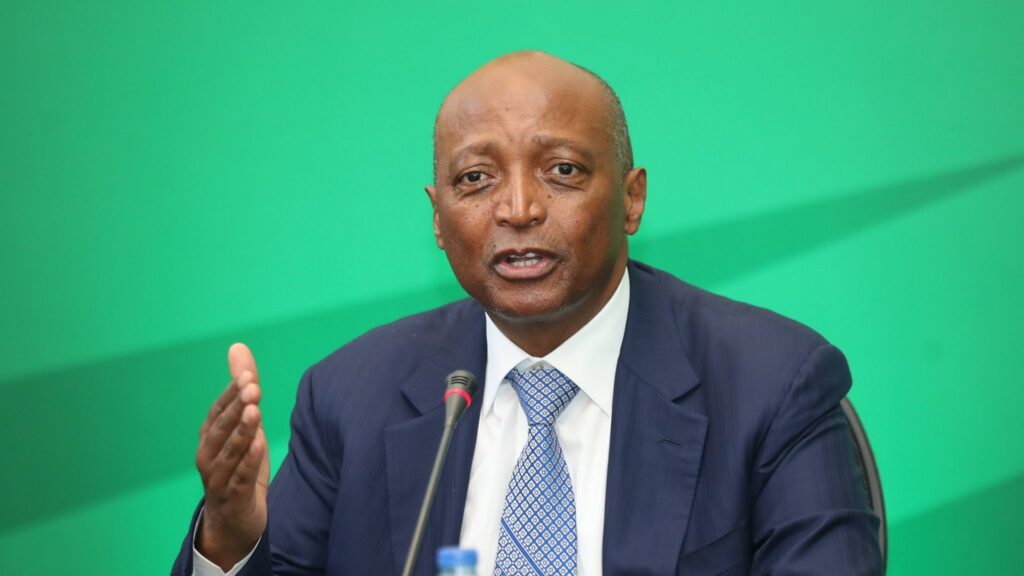
Pele is not alone in founder-led renewable energy companies facing hard choices about future growth, ownership and control.
Three major renewable energy asset owners, developers and IPPs, namely Pele Energy Group, SOLA Group, and Mulilo Energy, were founded and led by South African entrepreneurs.
All three have become significant players in renewable energy but stand as examples of the different pathways being followed as they grew and evolved into more formal corporate entities with institutional financiers and shareholders.
SOLA was founded by three South African entrepreneurs who subsequently sold the majority of the company’s shares to African Rainbow Energy, a local holding company ultimately controlled by Dr Patrice Motsepe.
Mulilo was founded by two South African entrepreneurs, who subsequently sold a majority stake to the foreign-owned Copenhagen Infrastructure Partners.
Pele was founded by five young black South African entrepreneurs who to this day retain majority control of the company. Pele remains at the crossroads.
Are the emerging governance issues a symptom of the need for Pele to evolve beyond the initial founder-controlled structure towards a more formalised, institution-controlled corporate structure with independent board oversight?
And if it follows this route, will Pele become yet another foreign-owned or controlled renewable energy asset owner, developer, IPP and EPC?
Or, will Pele relinquish control to financial interests in South Africa, and if so, who could fill this role?
The examples cited are not direct analogues of Pele’s circumstances, and institutional ownership is no guarantee against governance failures.
They demonstrate, rather, that there is no single route from successful local start-up to mature power company.
A business may seek additional capital through equity, preference instruments, structured finance or strategic partnerships, each with different implications for voting rights and control.
For Pele, the stakes include preserving meaningful black South African participation while building a balance sheet that can support large renewable projects.
These tensions cannot be resolved by slogans about local ownership, white monopoly capital or foreign neocolonialism.
It requires transparent governance arrangements and a commercial model that can continue attracting credible investors with deep pockets.
Pele at the crossroads in a changing market, including Eskom Green
The landscape is evolving further. On 9 October 2026, Eskom announced a request for qualification to select strategic partners for an initial Eskom Green programme of up to 6 GW of renewable energy and storage projects.
Eskom envisages co-development and co-investment arrangements with private partners, potentially adding a new pathway for local renewable energy developers.
Whether Pele, SOLA, Mulilo or other companies eventually participate will depend on separate procurement and investment decisions.
There is no basis to suggest that any agreement involving Pele has resulted from the Eskom Green process.
The significance is broader: developers face new opportunities, new competitors and new requirements for capital and institutional credibility.
South Africa needs indigenous companies capable of developing and owning assets, retaining expertise and directing a share of the economic gains into local communities.
It also needs investors and lenders to trust that management decisions are subject to genuine independent scrutiny.
Both goals become harder to achieve if governance questions are left unresolved or treated as matters for private reassurance alone.
The real test is the response
A measured resolution at Pele would begin with clarity on the status of the independent inquiry, the process by which the board considers any recommendations and the current executive and chairperson arrangements.
It would also explain, as far as legal and commercial constraints permit, whether financiers have been informed and whether any changes to controls, reporting or oversight are required.
There is a difference between demanding accountability and assuming guilt.
People named in a governance investigation deserve procedural fairness, and a company’s reluctance to disclose confidential evidence immediately is not itself proof of wrongdoing.
At the same time, long-term confidence is built through verified facts, timely decisions and credible communication – not indefinite uncertainty.
Pele’s experience could therefore serve as a broader lesson in the maturation of South Africa’s renewable energy industry.
The question is not whether a founder-led business can encounter a difficult governance moment.
It is about whether the board, founders, and financiers can navigate that moment in a way that strengthens an important South African enterprise and the sector it helps build.
This is an opinion piece by EE Business Intelligence managing director Chris Yelland.
Login or register for unlimited free access.