Good news for anyone with a driver’s licence card in South Africa


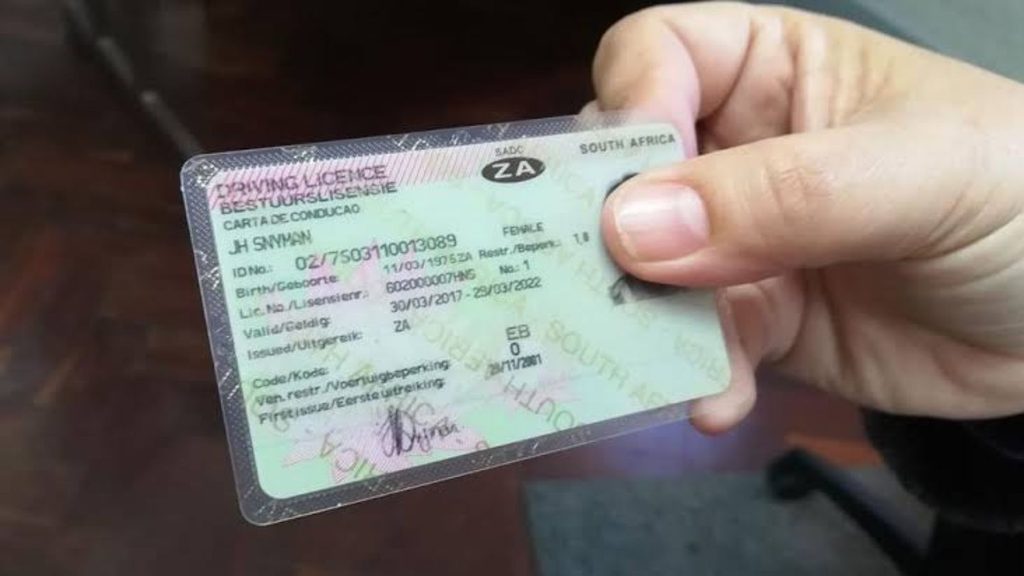
The validity of driver’s licences in South Africa is set to be extended from the current five years to ten years.
However, this will only apply to light motor vehicles, with heavy commercial and public transport vehicles remaining subject to a five-year renewal cycle.
The validity extension is also not immediate, with the amendments to the National Road Traffic Act being published for public comment in August 2026.
These amendments are unlikely to meet stiff opposition as civil society organisations have been calling for the change for the past few years.
The changes will be the most significant change to driver’s licence cards since the system was first introduced in 1998.
Prior to 1998, driver’s licences were documents stamped inside identity booklets and carried no expiry date.
This means that they never expired and required no renewals. Thus, they were valid for life, unless the driver was suspended or the licence revoked.
The five-year renewal period came into effect with the new laminated cards in March 1998 to improve driver safety and bring South Africa in line with international standards.
Now, the country is changing once again to match international standards by extending the validity period to 10 years.
“The change was informed by a study undertaken by the RTMC, which recommended that the extension of the validity period would align with international best practice,” the Transport Department said.
“It will enhance administrative efficiency, reduce the frequency of renewals for motorists and ease service demand pressures within the licensing system.”
The department made it clear that approval from Cabinet and the publication of the amendments for public comment does not mean the extended validity period is in effect.
This means motorists must continue to renew expired driver’s licences until the new law takes effect.
The Organisation Undoing Tax Abuse (OUTA) has said the amendments are long overdue, having called for 10-year licences since 2020.
“This decision is almost six years overdue, but it is a victory for motorists and for common sense,” OUTA CEO Wayne Duvenage said.
“Government has finally accepted that forcing motorists through an inefficient renewal system every five years wastes time and money without making our roads safer.”
OUTA first called for the validity period to be extended in September 2020, when pandemic restrictions severely disrupted licensing services and contributed to a growing backlog of expired driving licence cards.
“Government took far too long to act, despite having the evidence and the power to address this unnecessary administrative burden. We are nevertheless pleased that it has arrived at the right decision,” Duvenage said.
The real crisis

The creation of a 10-year validity period has been presented as a move to bring South Africa in line with its global peers.
However, it is also about reducing the burden on a system that has effectively collapsed in South Africa by reducing the frequency of renewals.
This system depends on a 27-year-old printing machine that regularly breaks down, and the government has failed to procure a replacement.
In these past 27 years, the printer has broken down 159 times, which equates to nearly 6 times a year.
This creates significant backlogs in the processing of licence card renewals, putting more pressure on the Transport Department’s printing works and the printer.
The department knew the printer was outdated in 2009, when it first planned to replace it.
Former Transport Minister Sindisiwe Chikunga described the printer as “obsolete and prone to constant breakdown” in 2023.
Fikile Mbalula, when Transport Minister in 2022, said the modernising of the printing machine was the solution to driver’s licence backlogs.
However, the department has yet to procure a new machine, and the 10-year validity period will bring temporary relief but not a permanent solution.
South Africa has come close to getting a new machine, with the Cabinet approving a plan in August 2022 to buy one.
This machine would produce a new type of licence card with enhanced security features and would be rolled out from 2023 to 2026.
However, the machine was never procured, and the new licence cards have not been produced.
The department has justified having one printing machine by saying it is a way to prevent fraud and corruption, as it is easier to prevent the misuse of one printer than many.
OUTA has consistently argued that this argument does not hold water, with one printing machine not being enough for a country with six million licensed drivers.
“One machine is not enough. You need backup machines, and you need maintenance programs in place. You need to really do this professionally,” Duvenage said.
Duvenage explained that the existing machine should have been replaced over six years ago, with political interference preventing the procurement of a replacement.