The historic South African building that imploded and is still a dilapidated mess 7 years later


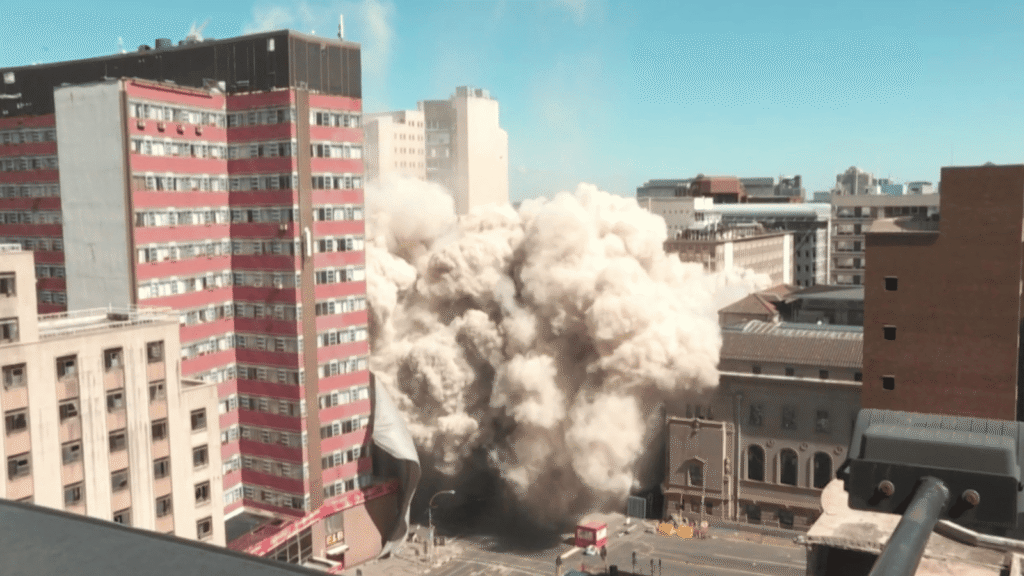
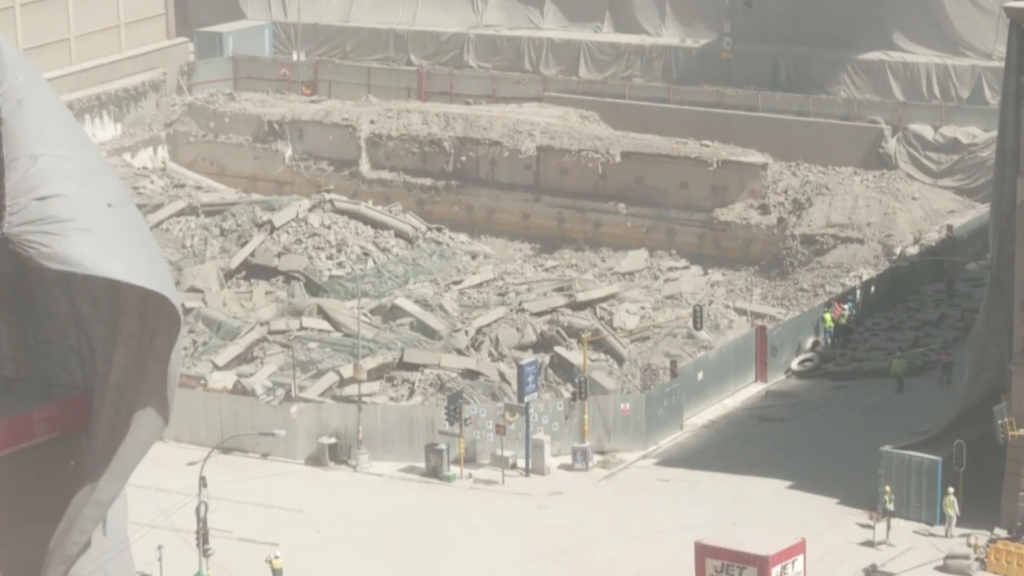
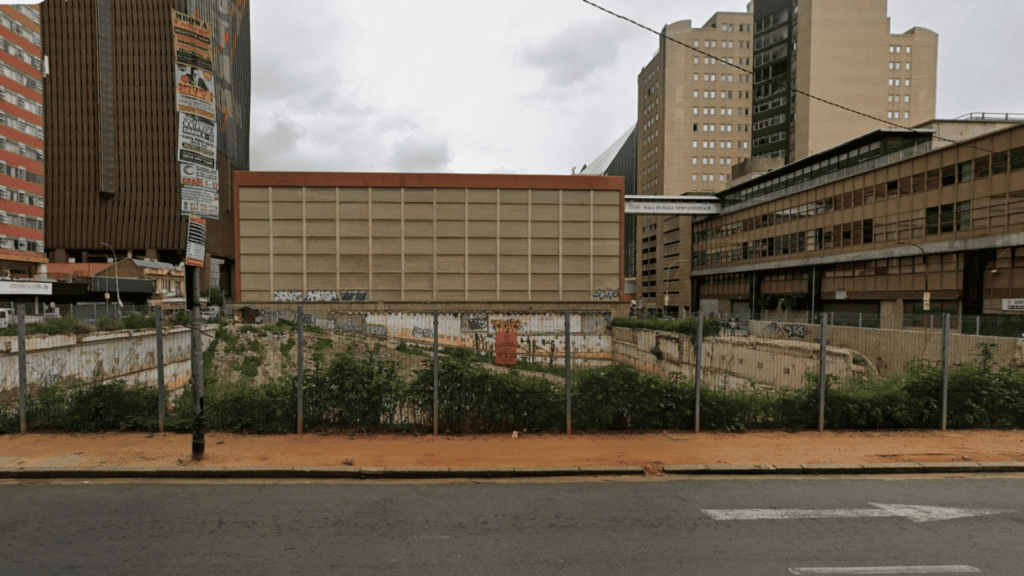
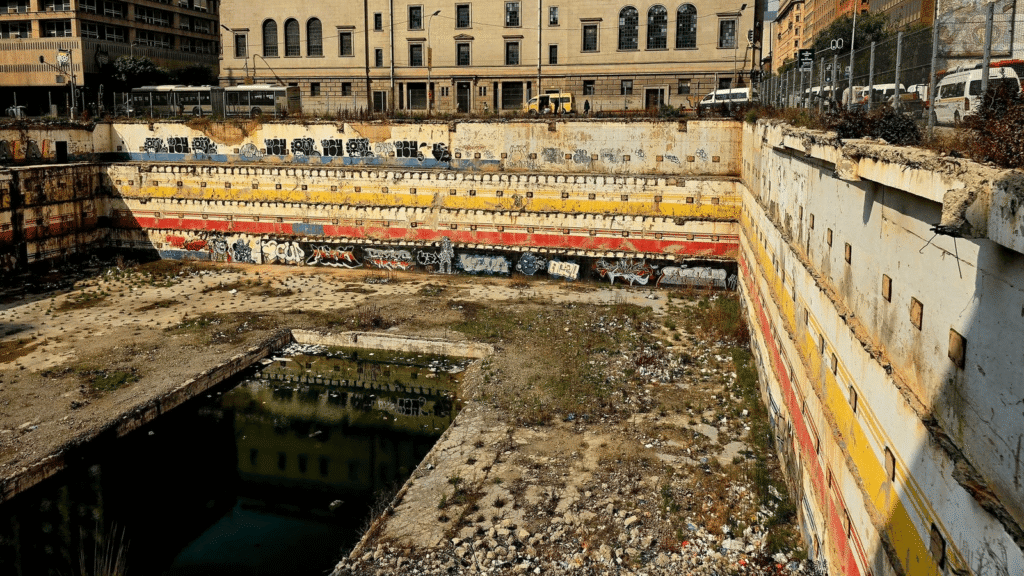
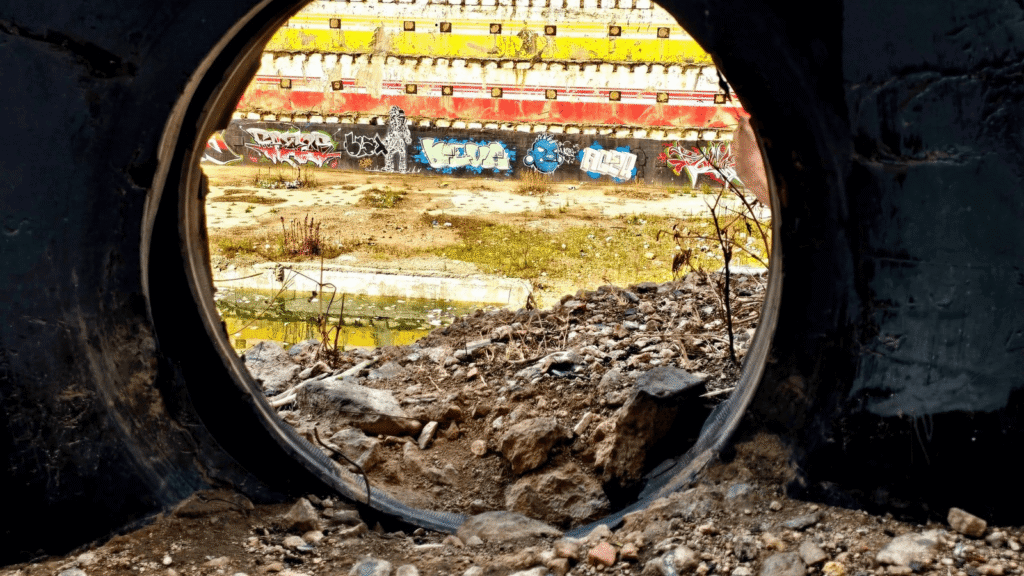
Since being destroyed seven years ago, the former Bank of Lisbon building has remained undeveloped, and the large excavation left by its 2019 demolition has since become a dumping ground.
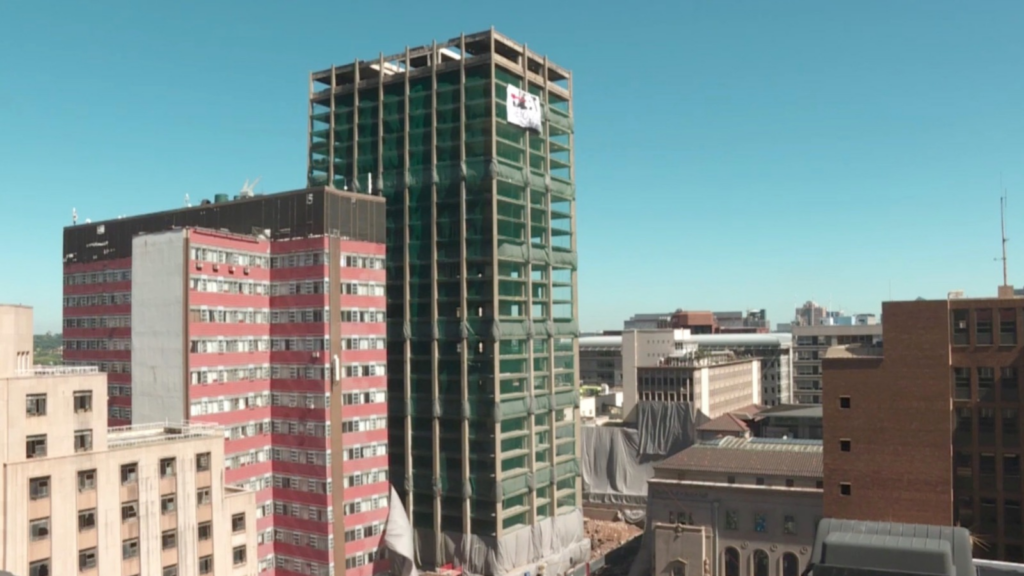
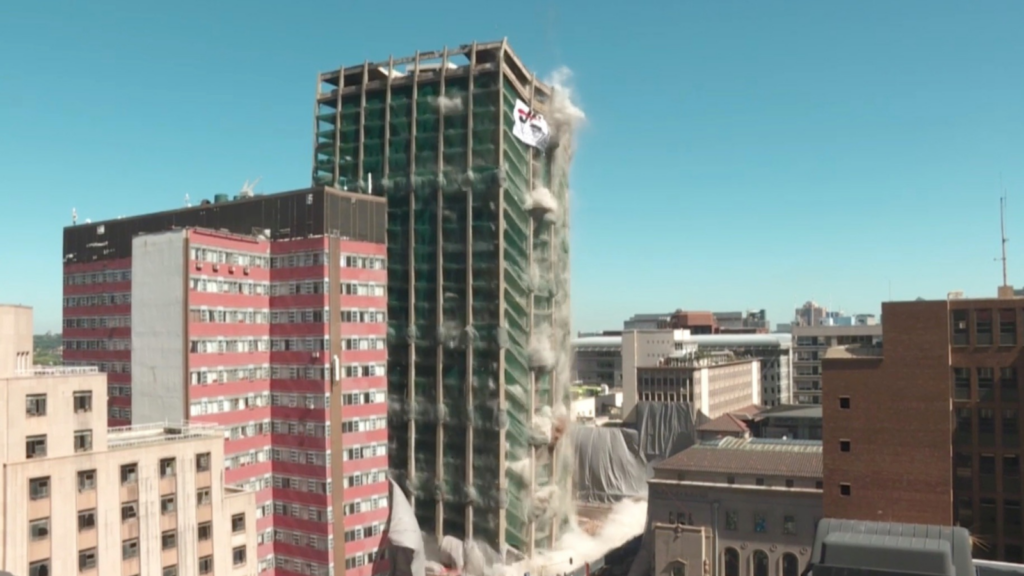
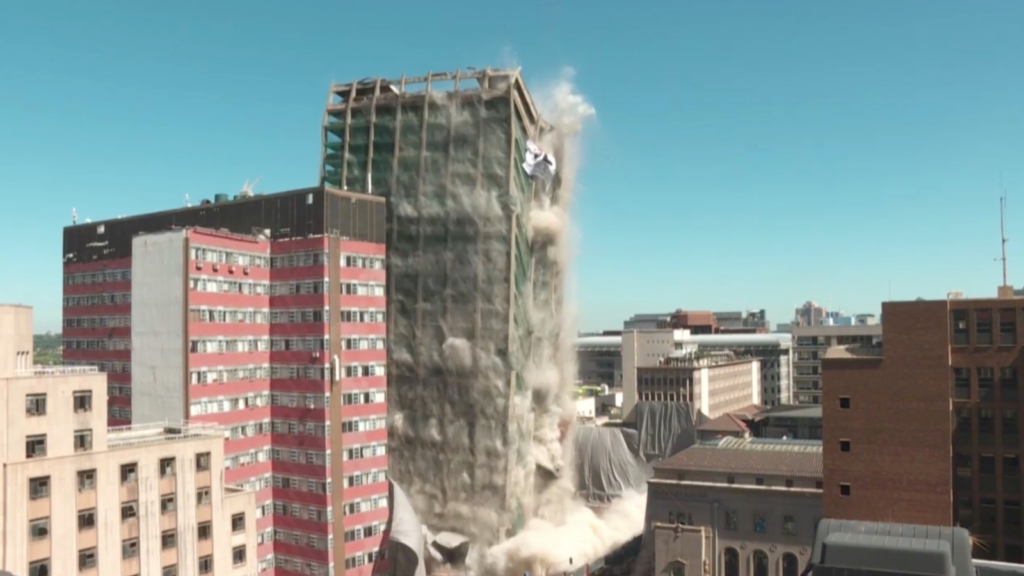
The 31-storey building at 37 Pixley Ka Isaka Seme Street was imploded on 24 November 2019, more than a year after a fire killed three firefighters and left the structure severely damaged.
The Gauteng provincial government had initially planned to clear the site and replace the building with new government accommodation as part of the Kopanong Precinct Project.
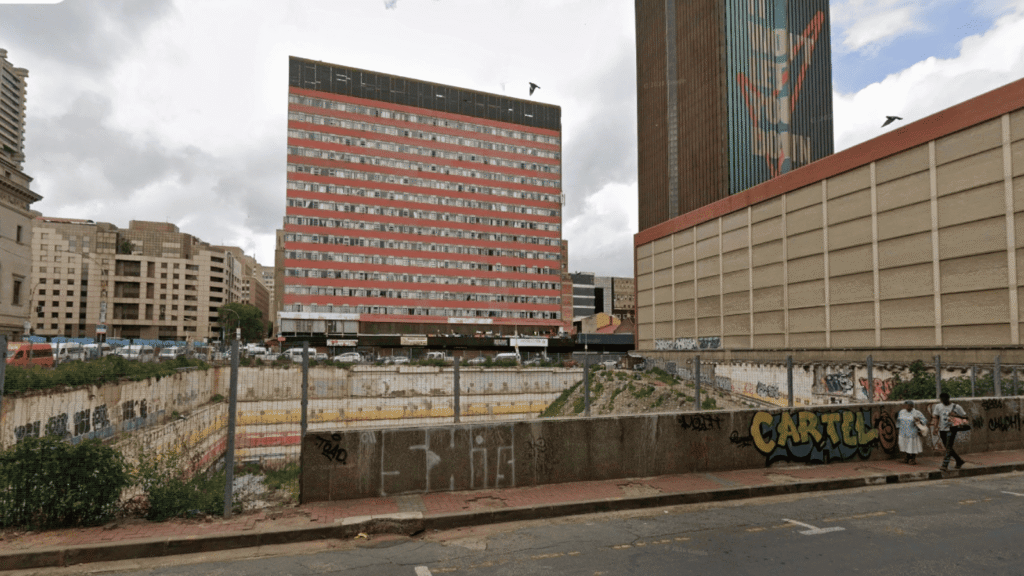
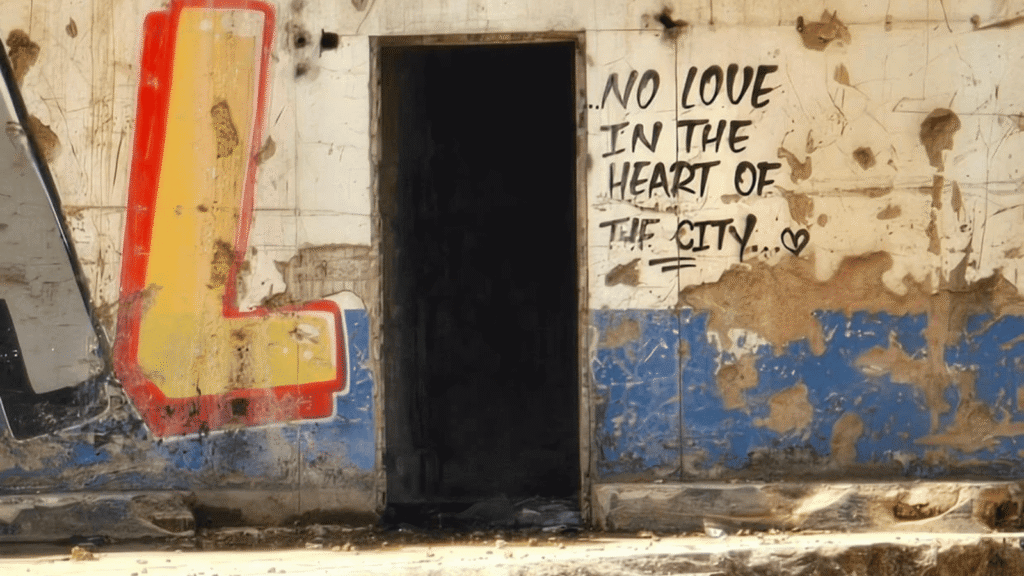
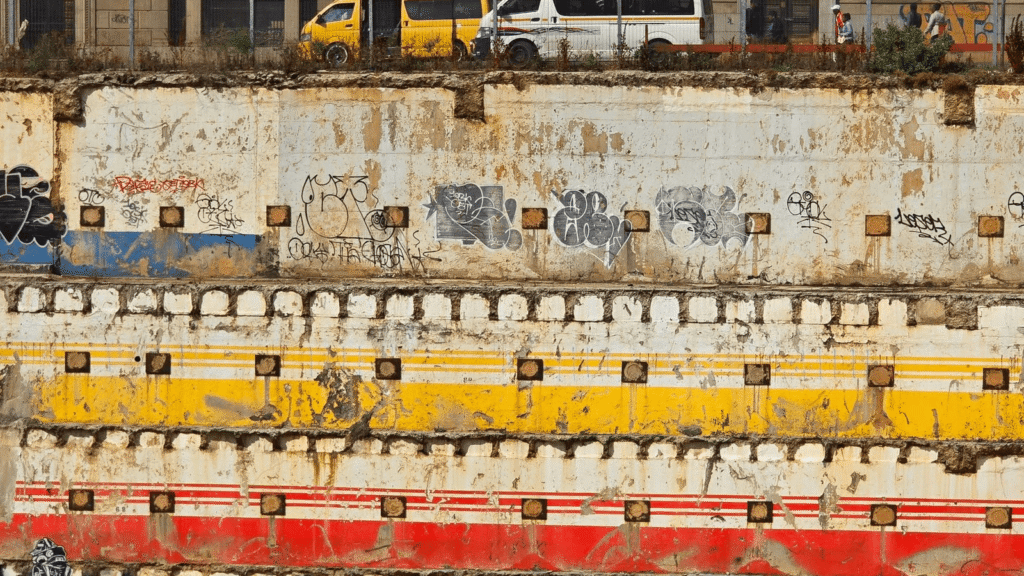
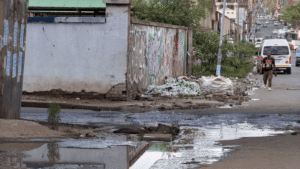
However, reports from the years following the demolition described a large, water-filled hole surrounded by rubbish, plastic bags and graffiti.
The site was fenced off, but had become an informal dumping area, with tyres and other waste visible inside the excavation.
The building had housed three provincial departments – Health, Human Settlements, and Cooperative Governance and Traditional Affairs.
The fire broke out on 5 September 2018 and started on the building’s 23rd floor, which was occupied by the Gauteng Department of Health.
It spread through the structure and burned for three days before being extinguished. Three firefighters died while responding to the incident: Simphiwe Morapane, Mduduzi Ndlovu and Khathutshelo Muedi.
The tragedy prompted investigations by the South African Police Service, the City of Johannesburg, the Gauteng provincial government and the Department of Labour.
Following structural assessments, the provincial government declared the building uninhabitable and decided to demolish it.
The controlled implosion took place on 24 November 2019, and 1,828 people were scheduled for evacuation from the surrounding area. The demolition required the evacuation of nearby buildings.
Jet Demolition carried out the operation, using 894kg of explosives to bring down the 108-metre structure.
At the time, Gauteng Infrastructure Development and Property Management MEC Tasneem Motara described it as one of the most difficult demolitions the company’s experts had undertaken.
The demolition cost was also substantial. The provincial department had spent R90 million of its R114 million budget on the operation.
Failures upon failures
After the demolition, Motara said the cleared site would be used for another government building as part of the Kopanong Precinct Project.
The provincial government also said it would consult the families of the three firefighters who died before deciding how to recognise their loss.
The demolition was presented as the first step towards replacing an unsafe government building and developing the surrounding precinct.
However, reports published in the years that followed described a site that had not progressed beyond the demolition and clearance stage.
By 2022, the excavation had reportedly become a dumping ground, with standing water and rubbish accumulating inside the fenced-off area.
The site still remains empty, with graffiti filling the interior walls and garbage left in the centre.
Not using the former Bank of Lisbon land was not the only failure that followed after the demolition. The investigations into the fatal fire also took several years to produce final reports.
In December 2021, then Gauteng Premier David Makhura said the consolidated findings were still outstanding, despite earlier indications that they would be released.
The final reports were eventually presented to the Gauteng Legislature in 2023, five years after the fire.
The Department of Employment and Labour found several failures involving the provincial departments occupying the building.
Its investigation found that the tenant departments had not installed a fire suppression system in their offices.
They had also failed to conduct risk assessments, regularly inspect electrical installations and appliances, or ensure that firefighting equipment was properly serviced and maintained.
The report identified the fire’s point of origin as an electrical machinery outlet on the 23rd floor, occupied by the Department of Health. It also found that wooden furniture helped the fire spread through the building.
The report said an automatic fire suppression system could have activated as the fire spread, potentially limiting its impact.
Failures were also identified in the emergency response. Emergency services personnel had not conducted a task-based risk assessment before entering the building.
This meant they had not properly considered water supply limitations or escape routes for firefighters.
Fire engines also lacked radios for communication with the control room and crews inside the building.
The report also raised concerns about the experience and knowledge of platoon commanders responding to an incident of that scale.
A separate forensic investigation by TFS Africa found that flammable materials near a heater, including files and toilet paper, probably contributed to the fire starting and spreading.
The reports recommended annual fire-safety audits at government buildings and more frequent fire drills.
Harris Nupen Molebatsi Attorneys also said there could be a prima facie case of negligence against an employee who allegedly left a bar heater running unsupervised near flammable materials.
The police investigation was still ongoing at the time of the report.
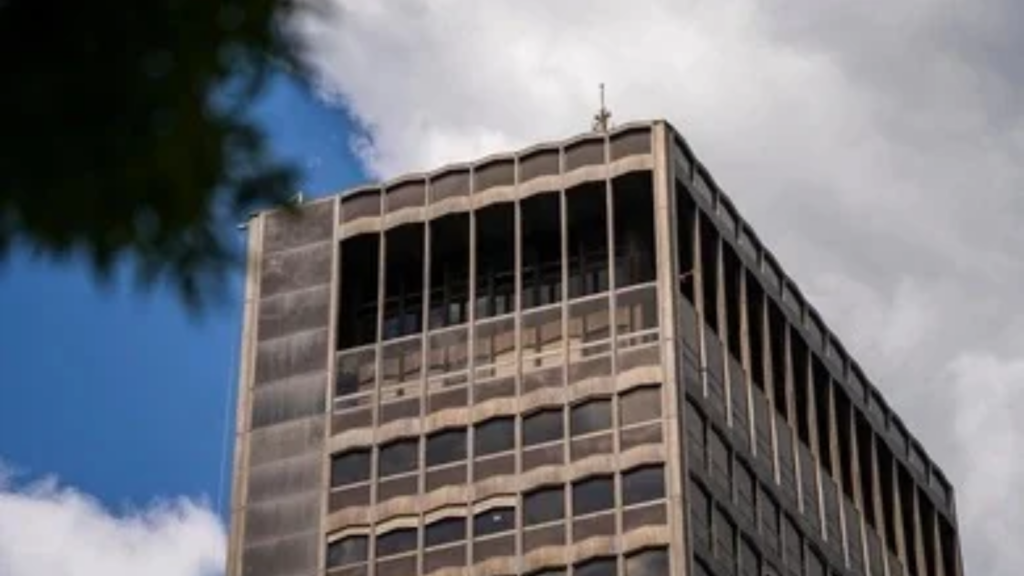
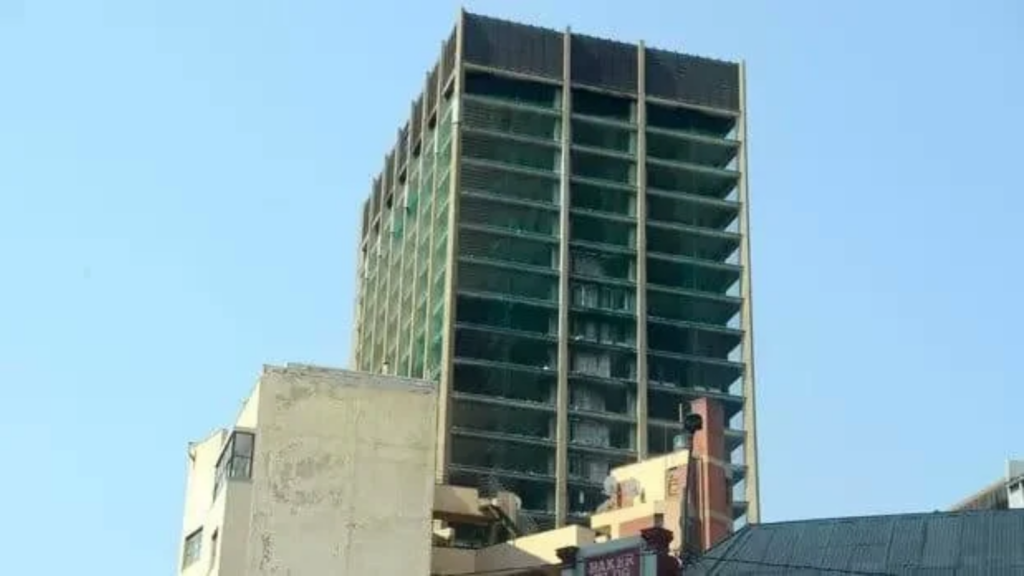
Photos of the Bank of Lisbon





Conversation
3 commentsThose involved in the demolition to take responsibility and accountability & sort the mess out.