Critical state-owned company goes from hero to zero to hero


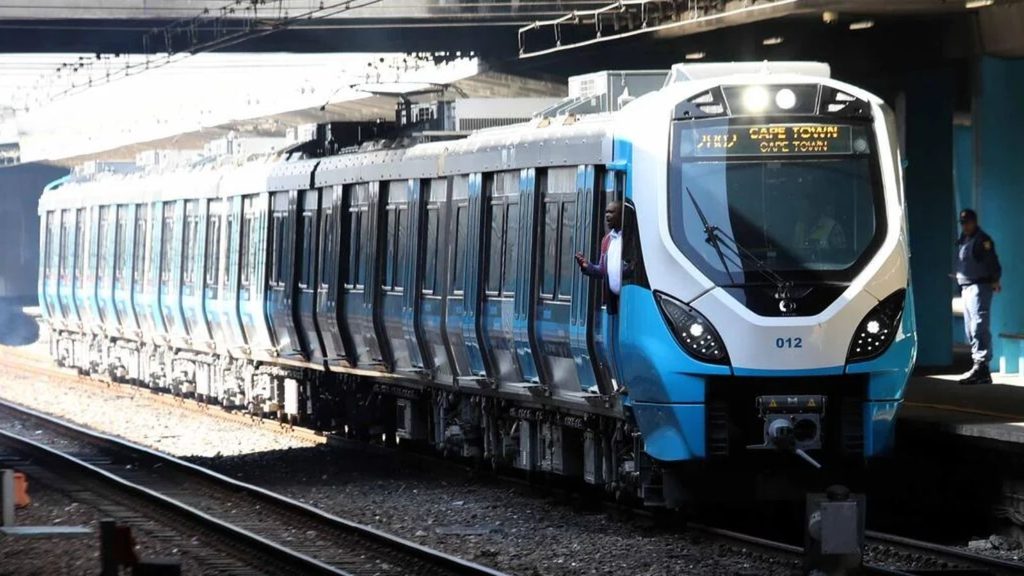
The Passenger Rail Agency of South Africa’s (PRASA) turnaround is gaining momentum, with its passenger journeys increasing by 158.98% in the past two financial years.
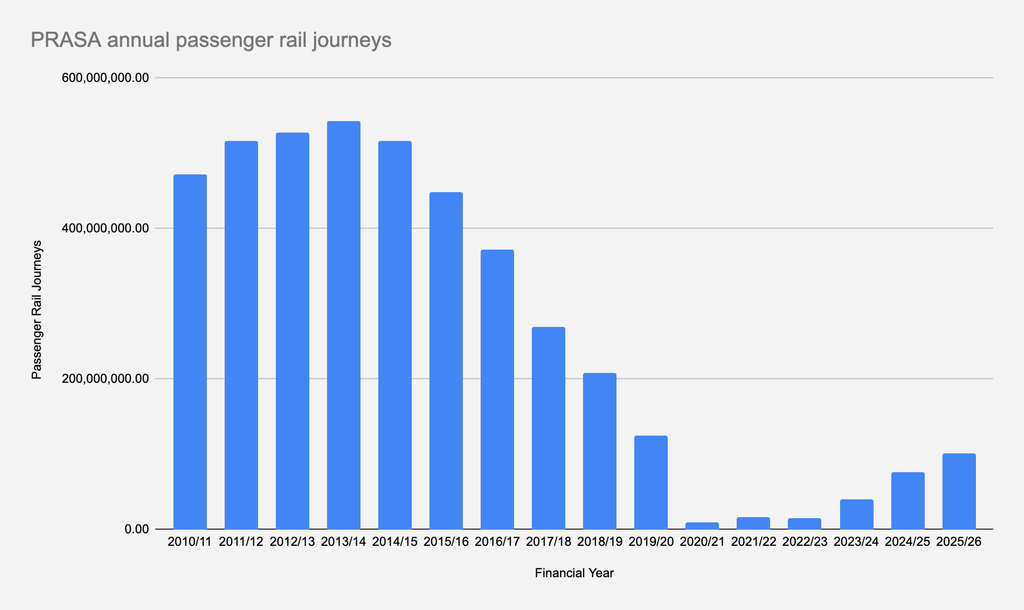
This marked the first time since 2019 that the number of passenger rail journeys completed by PRASA crossed the 100 million mark.
The recovery of PRASA has gone under the radar compared with the much larger turnarounds underway at Eskom and Transnet.
However, its recovery is equally important, given the service it provides and its ability to significantly reduce transport costs for the average South African.
Transport costs consume the lion’s share of the average South Africans budget, eating up a significant share of household income.
Reducing this cost through more efficient transport will increase households’ disposable income for other things, such as groceries, savings, and investments.
Return trips on PRASA’s network cost between R20 and R30, depending on their distance, making it a significantly cheaper alternative to driving or using a minibus taxi. A weekly pass costs between R60 and R110.
PRASA’s turnaround is gradually being recognised by analysts and the government, given its role in helping South Africans access work, and it being a key state-owned enterprise (SOE).
In his Medium-Term Budget Policy Statement (MTBPS), Finance Minister Enoch Godongwana praised PRASA’s turnaround.
Godongwana said the agency is an example of the government’s structural reforms bearing fruit and driving better outcomes for citizens.
The MTBPS noted that passenger rail journeys increased from 39 million in 2023/24 to 101 million in 2025/26.
Godongwana attributed this increase to the modernisation of infrastructure and the replacement of failing equipment and machinery.
PRASA’s monthly passenger journeys crossed the 10 million mark in the past financial year, showing a remarkable recovery from close to zero in 2020.
This is still a far cry from PRASA’s peak of 55 million monthly passenger journeys in 2009, reached before a decade of mismanagement brought about its collapse.
PRASA’s lost decade
PRASA was exceptionally well-run from 1994 to 2010, and was one of the best-performing SOEs during that period.
Monthly passenger rail journeys showed steady increases year-on-year, and the cost of a ticket on its network increased at well below the average inflation rate.
However, this masked an underlying lack of investment in its rail network and train sets that came back to haunt it in the 2010s.
“PRASA inherited a service that was chronically underinvested in and on the verge of collapse,” the SOE said in its 2014 annual report.
“This was under the weight of old rolling stock, outdated technology, and a system that was in dire need of an overall upgrade.”
Instead of putting money aside for investment and hiking fares, PRASA preferred to keep prices artificially low and increase staff salaries.
This put it between a rock and a hard place. PRASA had to try to modernise a rail system that was obsolete in the 21st century, while completing 55 million passenger journeys a month.
“Running an old and obsolete rail system whilst trying to modernise has its own challenges in delivering train services to citizens that are reliable and predictable,” it said.
“The costs associated with the operations and maintenance of this system are still disproportionately high, making it difficult to deliver quality services.”
PRASA’s obsolete network was compounded by escalating theft, vandalism, and destruction of key infrastructure, such as electrical equipment, tracks, and signalling systems.
These factors combined to erode train availability and network capacity, resulting in fewer passenger journeys being completed and, thus, declining income for PRASA.
This kicked off a downward spiral where declining capacity resulted in falling income and, thus, less investment in the rail network, which further decreased capacity.
PRASA also had to contend with its state subsidy rising only at the rate of inflation, while its operating costs rose significantly faster, creating a widening deficit.
These rising costs were caused by PRASA’s headcount rising from 12,000 to 17,000 in a decade. Staff costs accounted for 52% of the company’s income in the late 2010s.
All of this was exacerbated by South Africa’s stagnant economy, which led to high fare evasion, declining passenger numbers, and damage from service-delivery protests.
The onset of the Covid-19 pandemic was seen to be the final nail in PRASA’s coffin. However, it turned out to be a critical inflection point for the company.
From zero to hero
PRASA’s annual passenger journeys plunged to 10 million in 2020, meaning that the institution, which was once completing 55 million journeys a month, was down to a few hundred thousand.
This was the company’s low point, and its collapse led to the creation of a Rebuild and Recovery Programme.
The first element of this turnaround plan was to accelerate the reopening of key lines across PRASA’s network.
This had two effects: greatly increased infrastructure investment and a reduction in vandalism and destruction, as the best way to prevent such activity is to have trains running continuously.
PRASA moved from basic emergency repairs to a systematic rebuild of vandalised tracks, overhead lines, and signalling equipment.
As rebuilds were completed, service lines were reopened. This grew from 10 high-priority lines in 2021 to 18 in 2023, 31 in 2024, and 35 in 2025.
This was coupled with investment from PRASA in its new electric trains that are locally manufactured. It now has 134 of these new units operating across its network.
These train units are safer, faster, and more comfortable for customers to use, which PRASA says has resulted in bringing passengers back from road transport.
A major initiative has been the beefing up of security at PRASA stations and along its network, with the agency insourcing its security personnel.
The agency has deployed visible guards on trains and at key stations in a similar fashion to the Gautrain. This has been coupled with concrete walls alongside high-risk corridors.
This has resulted in a decline in vandalism and increased customer trust, enabling PRASA to invest money in rebuilding vandalised infrastructure and upgrading its stations.
311 of its stations are now fully operational, with it going at an annual run rate of 50 stations.
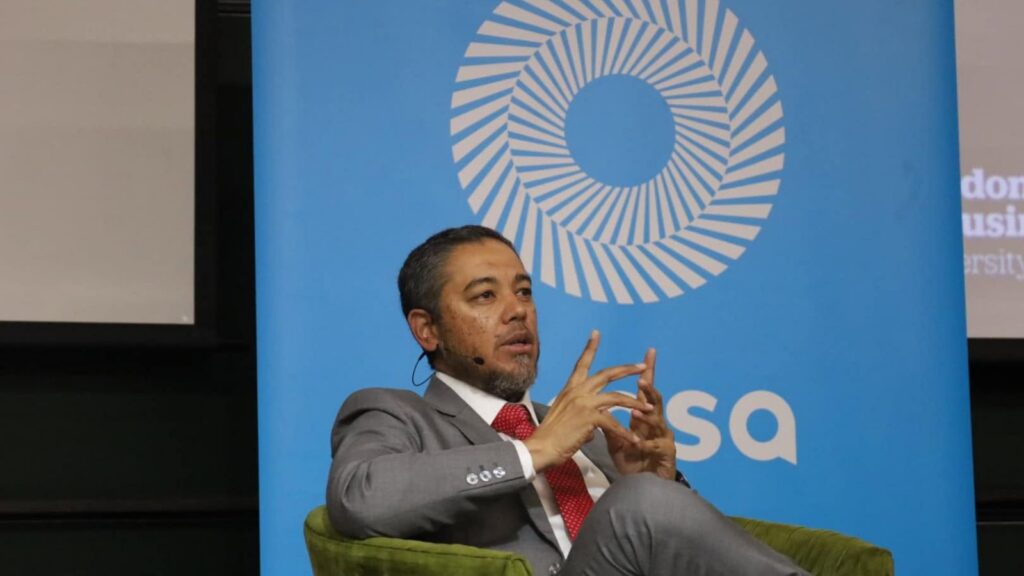
All of this has been led by a new management team with CEO Hishaam Emeran at the top. The executive team holds weekly war rooms to resolve bottlenecks and monitor performance.



Conversation
1 commentsR120bn damage was done to PRASA under oversight of Mbalula.
Over his period of strangulation, millions of commuters were forced to take taxi at roughly 6 times cost of train travel.
That’s more than 250m rail journeys diverted to expensive taxi transport, for more than 10 years.
Well done cadres. Truly exceptional looting effort.
PS: Left out the part explaining why refurbished PRASA trains have sat unused, in rail sidings all over SA, whilst we build new ones at premium cost?