Sun City-owner wants to ban one group of gamblers



Sun International has announced its intention to prevent South Africans from using social grants and student funding while engaging with its gambling services.
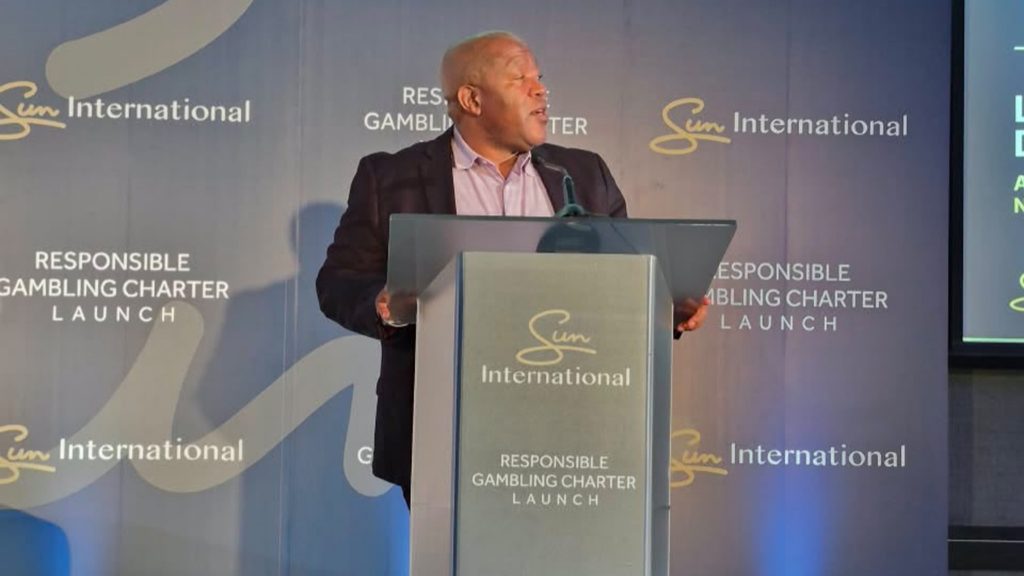
This forms part of the company’s new Responsible Gambling Charter, which it launched on 13 October 2026 to promote stronger regulation in South Africa’s gambling industry.
The Charter sets out a number of key commitments which Sun International will adhere to in order to promote better protection for both gamblers and non-gamblers alike.
As part of this, Sun International said it would add selectable options for SASSA grants and NSFAS funding under the “Source of income” field on the registration form of its online platform.
“Sun International will not activate an online account if a customer declares they receive a SASSA social grant or NSFAS,” the company said.
“The company cannot access social grant or student funding records, so this depends on customers declaring their source of income correctly.”
Some of Sun International’s other commitments include an advertising watershed, with the company restricting advertising between 06:00 to 08:00 and 12:00 to 18:00.
This, the company said, would significantly reduce the exposure of minors to gambling advertising during school-runs and after-school hours.
Sun International will also use 10% of its gaming advertising content to promote responsible gambling messages, and will provide stricter player education and staff training.
In addition, Sun International said that from 2027 it would make use of AI-assisted monitoring for early detection and flagging of potential players at risk.
Sun International CEO Ulrik Bengtsson said these protections would only apply to players entering its venues or using its online platforms, and would not be available on unlicensed offshore sites.
“Responsible gambling is a shared responsibility,” Bengtsson said. “We cannot control every player’s behaviour, but we can make it easier for people to stay in control.”
“On our online platform, limits, cooling-off periods, and self-exclusion are available in one click from the home page. These tools can protect players, but only if they use them.”
More South Africans gambling on grants
The launch of the Charter comes as South Africa is experiencing a growing problem gambling crisis, potentially putting thousands of households under greater financial strain.
According to the National Gambling Board (NGB), problem gambling in South Africa grew from 6% in 2017 to 31% in 2023, prompting urgent intervention.
The NGB recently flagged a growing usage of SASSA grants and NSFAS student funding in gambling activities, exposing vulnerable groups to harmful gambling activities.
Speaking at the launch of the Sun International Responsible Gambling Charter, NGB acting chief executive Lungile Dukwana said it stood behind the Charter.
“We are supporting the work that Sun International is doing in terms of the Gambling Charter that they have adopted,” Dukwana said.
“Responsible gambling entails safeguarding vulnerable groups and protecting them from practices that expose them to financial and social harm.”
The NGB and NSFAS announced stronger collaboration in addressing student gambling, raising awareness around responsible financial decision making.
The organisations said they would roll out nationwide education programmes, campus workshops, and awareness campaigns to help students and protect student allowances.
Dukwana said the trend of gamblers using social grants and student funding was not new, with regulators having identified such cases previously.
He also said that the gambling landscape in South Africa continued to change at a rapid pace, making the promotion of responsible practices more important than ever.
Betting now accounts for the largest share of South Africa’s Gross Gambling Revenue at R84.5 billion, with 60% of betting activity taking place online.
Gambling participation is estimated at 65% of South Africa’s population, while 95% of betters across major African markets, including South Africa, place bets using mobile devices.
“Gambling is no longer confined to a particular place or time,” Dukwana said. “It is available in the palm of one’s hand twenty-four hours a day.”
“Responsible gambling can no longer solely rely on information provided at the point of sale. Protection must be embedded throughout the entire customer journey.”






Comments