South Africa playing a dangerous game with the United States


The United States’ targeted visa restrictions are only the first in a long list of escalatory measures that Washington can take against South Africa.
While the more extreme of these measures currently appear unlikely, the risk of consequences like asset seizure, the withdrawal of US companies, and a ban on US bank lending is rising.
These measures, if implemented, could have a severe impact on South Africa’s economy, particularly at a time when geopolitical shocks are causing volatility in the country’s growth.
Investec chief economist Annabel Bishop said the United States has shown a willingness to impose economic sanctions on what it deems to be “enemy countries”.
She added that US President Donald Trump has said South Africa needs to demonstrate that it is non-aligned with American enemies such as Iran.
This formed part of the so-called ‘five asks’ of the United States to South Africa, with other asks related to local policies such as Black Economic Empowerment and Expropriation without Compensation.
South Africa’s failure to engage with these five asks to date is what prompted Washington’s latest “punishment” for the country: targeted visa restrictions.
On 15 September, US Secretary of State Marco Rubio announced a new visa restriction policy targeting South African law and decision-makers.
Rubio said the restrictions apply to foreign nationals who enact policies that promote race-based discrimination, incite violence, or enable Expropriation without Compensation.
The US Ambassador to South Africa, Leon Brent Bozell III, said this move was a direct response to Pretoria’s unwillingness to engage with Washington’s five asks.
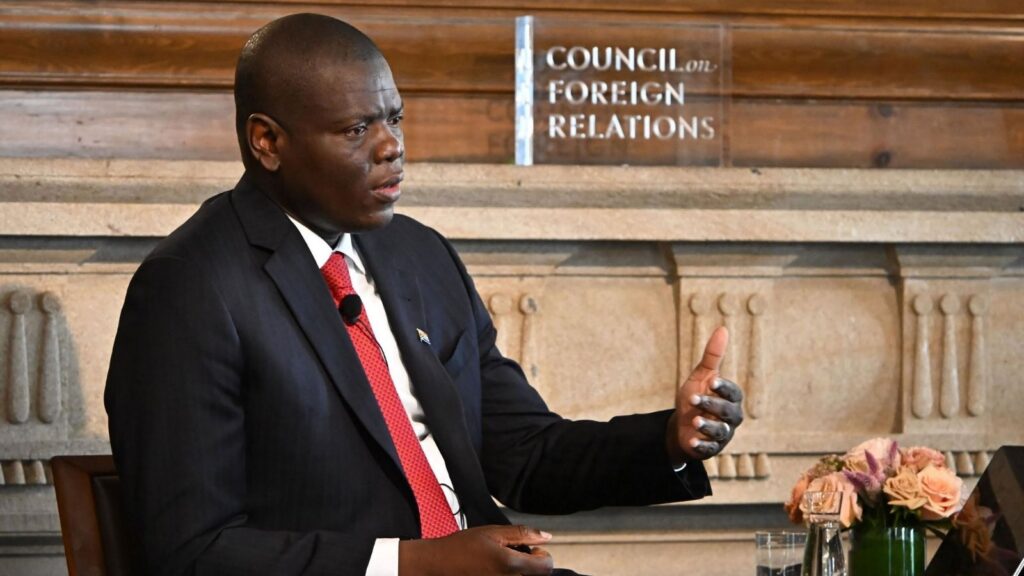
In response to the visa restriction policy, International Relations Minister Ronald Lamola said it is South Africa’s sovereign right to put in place laws that address the nation’s concern over centuries of racial injustice.
“South Africa respects that the United States may hold different views regarding particular measures and their implementation,” he said.
“However, we remain committed to addressing these challenges through our constitutional institutions, democratic processes and the rule of law, with the objective of building a more equal and inclusive society for all South Africans.”
“We maintain that challenges in our bilateral relations with the USA can only be resolved by constructive engagement through state actors on both sides of the diplomatic channel, not unilateral acts.”
Bozell said the visa restriction policy is the first step in a series of escalatory measures that the United States is willing to take to show its “firm resolve in this matter”.
Bishop referred to this as a “first-step measure” for South African government officials and politicians, following a long warning period.
“The United States warns of escalatory measures against South Africa,” Bishop said.
“The extreme (not currently likely) includes asset seizure, withdrawal of US companies from SA, a ban on US bank lending to SA and a collapse in portfolio investment, although the risk is rising.”
Unlike the visa restriction policy, which was targeted at specific individuals, some of these more extreme measures would affect the country as a whole.
South Africa’s delicate trade balance
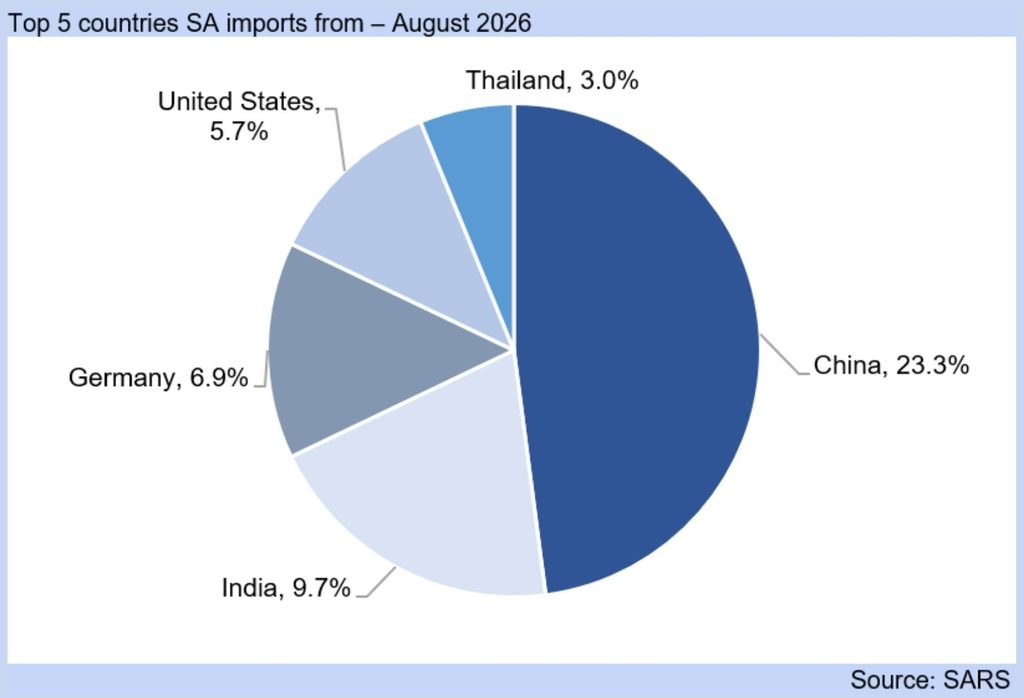
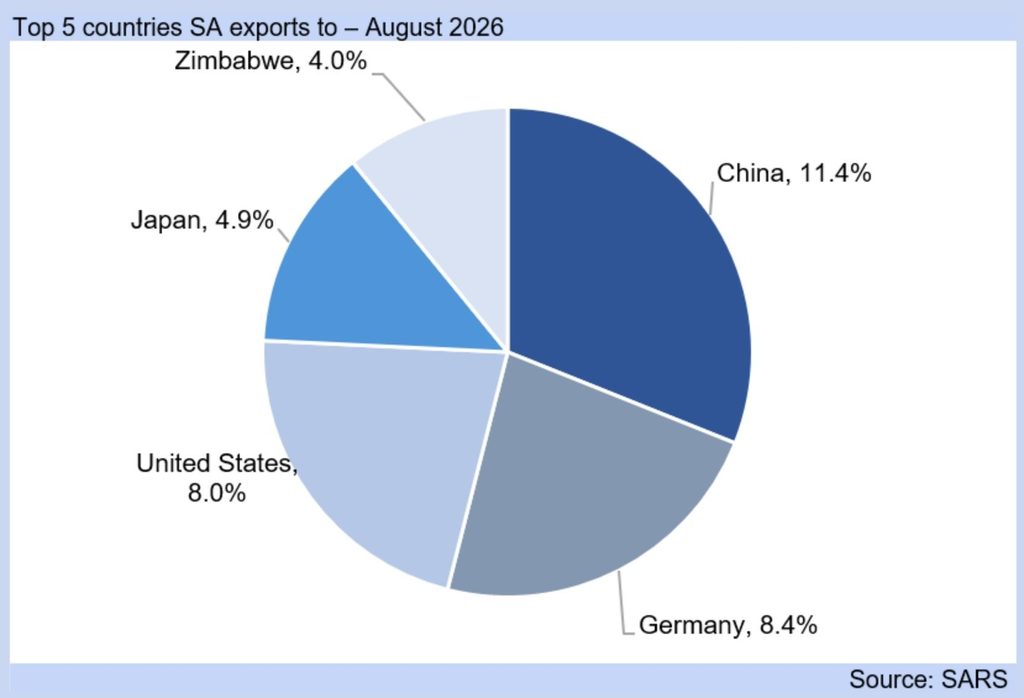
The United States’ threats of escalation come as South Africa has run a trade surplus to date in 2026.
As of August 2026, South Africa’s trade surplus stood at R149.2 billion, compared to R101.7 billion for the same period a year ago.
Bishop explained that this was despite markedly higher import prices for oil and petroleum products in 2026, as exports have risen over the period.
“South Africa’s exports are R107.4 billion higher over the same eight-month period as last year, while imports are only up R59.9 billion in comparison,” she said.
Bishop attributed this to higher gold and platinum prices, which substantially supported the value of South Africa’s export goods in 2026.
However, she warned that the flare-up in the Middle East war later in September and in October so far has caused energy prices to rise sharply.
This will weaken South Africa’s trade balance in the third quarter of the year, suppressing economic growth.
Bishop pointed out that South Africa’s exports to the United States currently account for 8.0% of its total exports.
“The US has imposed economic sanctions on enemy countries, and President Trump has said SA needs to demonstrate it is non-aligned with US enemies, such as Iran,” she said.
Bishop added that the volatility of the war in the Middle East has had a significant impact on South Africa’s macroeconomic variables, with GDP contracting in the second quarter of 2026.
Now, the economy is at risk of doing the same in the fourth quarter, with Brent crude oil nearing $105 per barrel.



Comments