One South African province mines 50% of the world’s platinum, yet 7 out of 10 residents cannot find a job


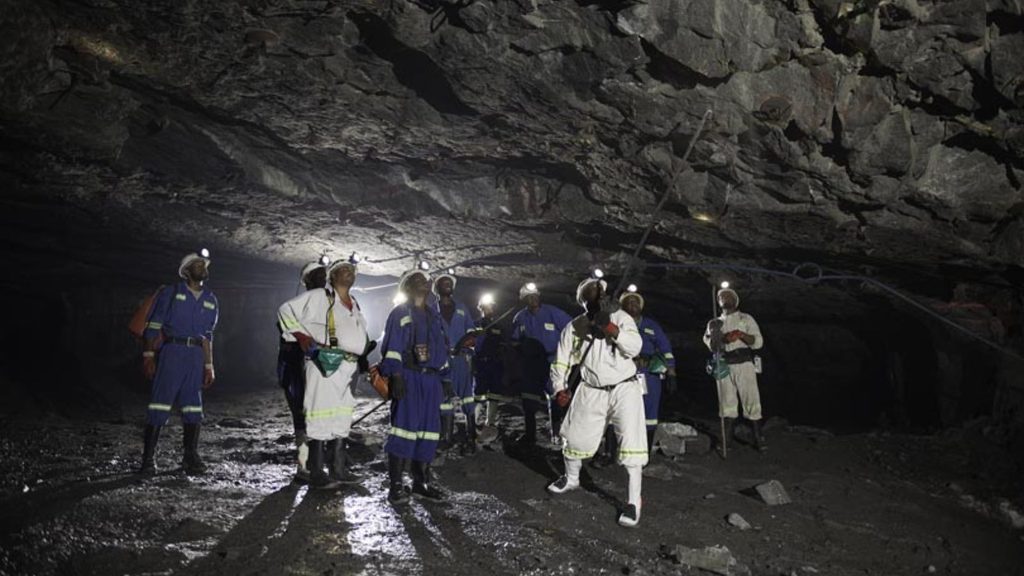
Seven out of ten residents in the North-West cannot find a job, despite the province producing 50% of the world’s platinum.
This is emblematic of South Africa’s growing skills crisis, with thousands of graduates leaving university with skills that are not demanded by the economy.
It also points to growing mechanisation that threatens South Africa’s historic employment powerhouses of mining and manufacturing.
These two sectors have been able to rapidly absorb millions of unskilled and semi-skilled workers when conditions enabled them to grow.
Now, with the local economy stagnating at 1% annual GDP growth and structural constraints such as collapsing infrastructure, these sectors are no longer growing.
This means they do not employ more people, despite South Africa’s working-age population continuing to expand, leaving many individuals without work.
Importantly, due to the lack of growth, companies in these sectors have invested heavily to make their operations more efficient.
This translates into increased mechanisation, reducing the need for labour in mines and on the factory floor.
Labour Minister Nomakhosazana Meth explained these dynamics in a response to questions in Parliament about the North-West’s unemployment rate.
“The province’s mineral wealth, including its platinum resources, does not automatically create enough employment for its working-age population,” Meth said.
The North-West is a platinum mining powerhouse, producing around 50% of the world’s total output annually.
This is largely due to the western limb of the Bushveld Igneous Complex being located in the province. This complex contains the densest concentration of platinum-bearing reefs.
Mining centres around Rustenburg, Marikana, and Brits. Companies such as Sibanye-Stillwater, Impala Platinum, Valterra Platinum, and Northam have significant operations in the province.
As such, the sector accounted for half of the province’s GDP, with the remainder made up of agriculture, hospitality, and services.
Why so many cannot find jobs
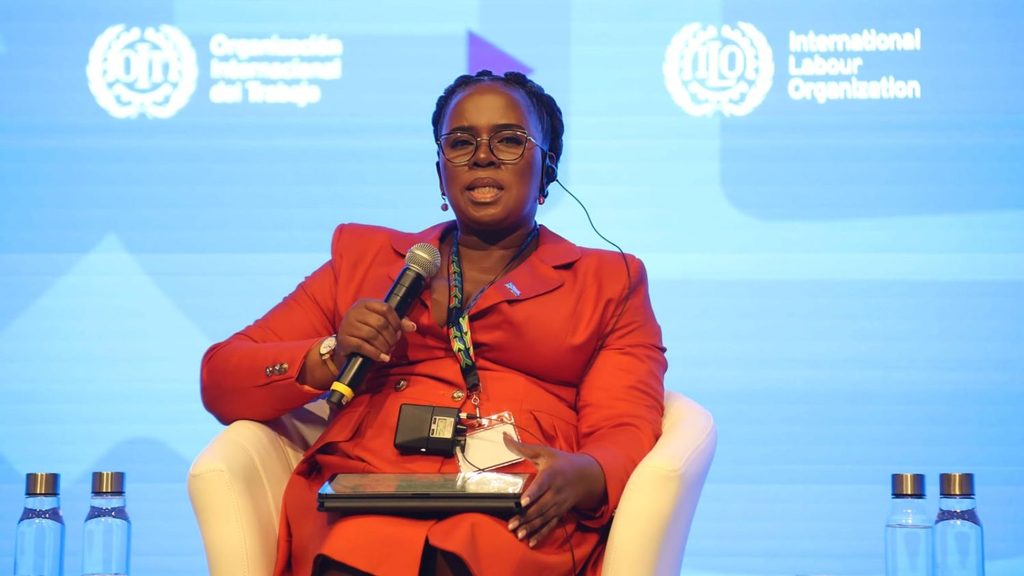
Meth explained why the province struggles with unemployment despite its rich mineral endowment, which many believe should spur job creation.
“The low labour absorption rate reflects both the number of jobs available and the ability of work-seekers to access those jobs,” Meth said.
“Mining is important to the North-West economy, but it is capital-intensive and cannot, by itself, employ all unemployed people in the province.”
Mining currently accounts for 20% to 25% of provincial employment but has struggled to create new jobs in recent years.
Meth explained that modern mining increasingly relies on mechanisation, automation, technology, and specialised skills.
This means it does not create as many jobs as it used to, and the jobs it does create are highly skilled, preventing the absorption of unskilled labour.
Thus, while platinum production has increased and mines have expanded, this has not been accompanied by a corresponding increase in jobs.
“Employment is also affected by global platinum-group metal prices, production costs, electricity and logistics disruptions, and safety requirements,” Meth said.
“These conditions may constrain expansion and make employers cautious about recruitment or lead to the restructuring of operations.”
However, an underlying trend is the growing mismatch between the skills demanded by the economy and those produced by universities and other institutions.
This is common across all provinces and most industries. While South Africa produces 220,000 graduates every year, many of them lack the skills required for employment.
“Employers may require technical qualifications, safety competencies, licences, and prior workplace experience,” Meth said.
“At the same time, the number of young people seeking work exceeds formal vacancies in mining and other sectors.”
Meth also noted that access to work in the North-West Province is limited due to high transport costs resulting from the long distances between residents and job opportunities.
This can only be solved by people moving closer to job-creation sites or to other sectors in the province that are less tied to mining.






Comments