R100,000 fee warning for South Africans who register their solar panels with Eskom


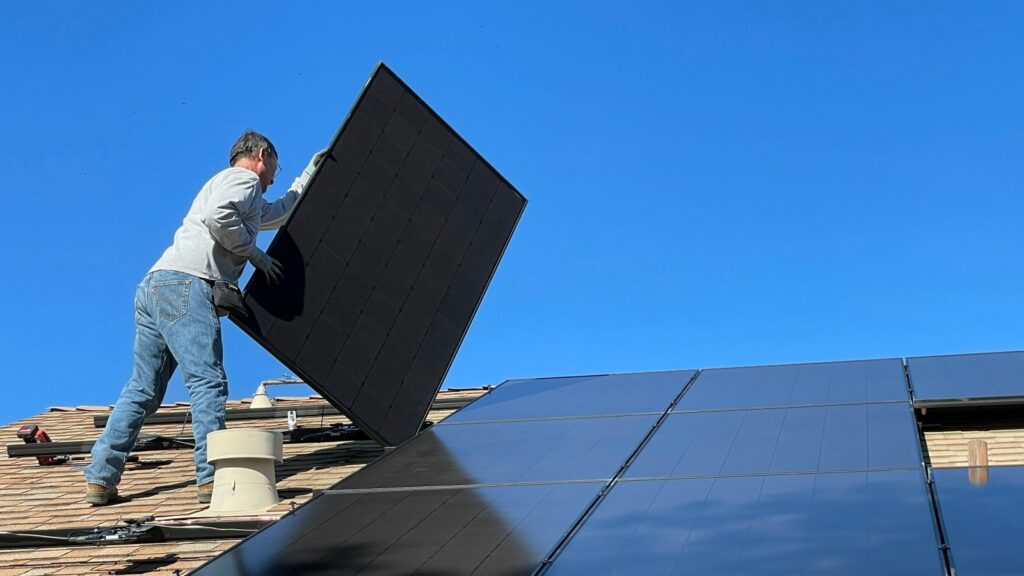
South Africans who choose to register their solar PV systems with Eskom may face several hidden costs, despite Eskom’s promises to waive fees.
The power utility recently announced that it had extended its waiver of registration-related charges for eligible systems up to 50 kVA past the 30 September deadline.
The waiver has been extended indefinitely, with no set end date, but it is only available to customers connected directly to Eskom’s distribution network.
But while the promise of having the registration fees waived may appeal to South Africans looking to register, energy expert Chris Yelland said it comes with multiple additional costs.
Yelland explained in an interview with OUTA that people who decide to register their solar PV systems with Eskom may be forced onto a more expensive electricity tariff as a result.
“There are three tariffs for residential customers,” Yelland explained. “The first one is called the Homelight tariff, and this is for people on prepaid meters. This is an energy-only tariff.”
“Then there is the Homepower tariff. These are postpaid meters with an energy component and a fixed monthly component. Now Eskom has introduced a third tariff option called the Homeflex tariff.”
The Homeflex tariff is more complex than the other tariffs, as it involves both a fixed monthly cost and a variable energy cost dependent on the time of day and the season.
Introduced last year, the Homeflex tariff is an option for all non-solar users, allowing them to save on energy costs if they can shift their demand to off-peak periods.
According to Yelland, however, the Homeflex tariff is not optional for South Africans who choose to register their solar PV systems with Eskom. It is mandatory.
Because a majority of Eskom’s direct customers have prepaid meters on the Homelight tariff, they pay only energy usage charges and do not incur any fixed monthly costs.
If these customers decide to install a solar PV system and register it with Eskom, they are automatically converted to the Homeflex tariff and will have to pay its fixed monthly costs.
Even more hidden costs
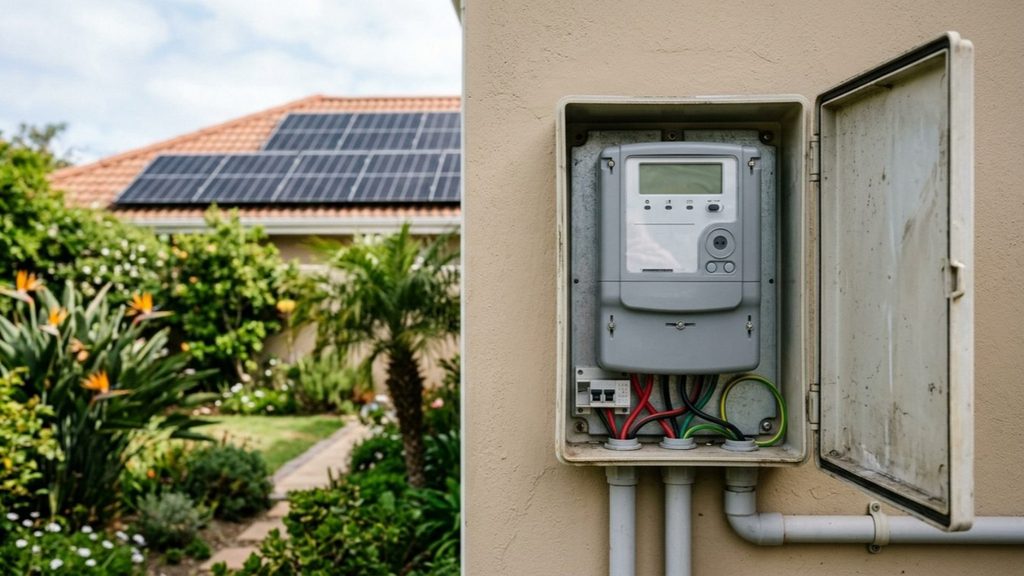
Aside from being forcibly migrated onto a more expensive electricity tariff, Yelland said that registering a solar PV system with Eskom had further imposed costs.
“You have to get a quote from Eskom, and there’s a cost to get a quote,” Yelland said. “There is the cost of the meter itself. It’s a sophisticated and expensive meter.”
“If you’ve got a prepaid meter in your house, you now have to have a smart meter at your gate accessible to the utility in a meter box, and there are some costs involved.”
Additional costs for cabling, installation, and reconnection may also be charged by Eskom, potentially forcing thousands of rands in extra fees onto Eskom’s customers.
One more hidden cost, which Yelland said is often overlooked, is the electricity usage deposit, which is paid when one purchases a house.
These deposits are calculated at the cost of three months of electricity usage, based on the current electricity rates in effect when the deposit is paid.
“If you’ve got a house and you’ve been a customer for 20 years, you would have paid a deposit when you signed your contract 20 years ago,” Yelland said.
“The price of electricity 20 years ago was a tiny fraction of what it is today. The moment you register a solar PV system and go onto the Homeflex tariff, you have to sign a new Eskom supply agreement.”
Upon signing the new supply agreement, customers will be required to pay a new 3-month deposit at the current electricity prices.
Yelland said this could range anywhere from R10,000 to R20,000 for residential customers, and potentially over R100,000 for farmers.
Additionally, he said these costs only become known to the customer after they have already been migrated to the new tariff, by which point they have no choice but to pay them.
“What this is really doing is completely disincentivising poorer people from installing solar PV,” Yelland said. “It’s restricting this for the rich.”
“They’re killing the market for lower- and middle-income consumers. They are basically cutting them out of the picture for renewable energy.”





Comments