Perfect storm for petrol and diesel prices in South Africa


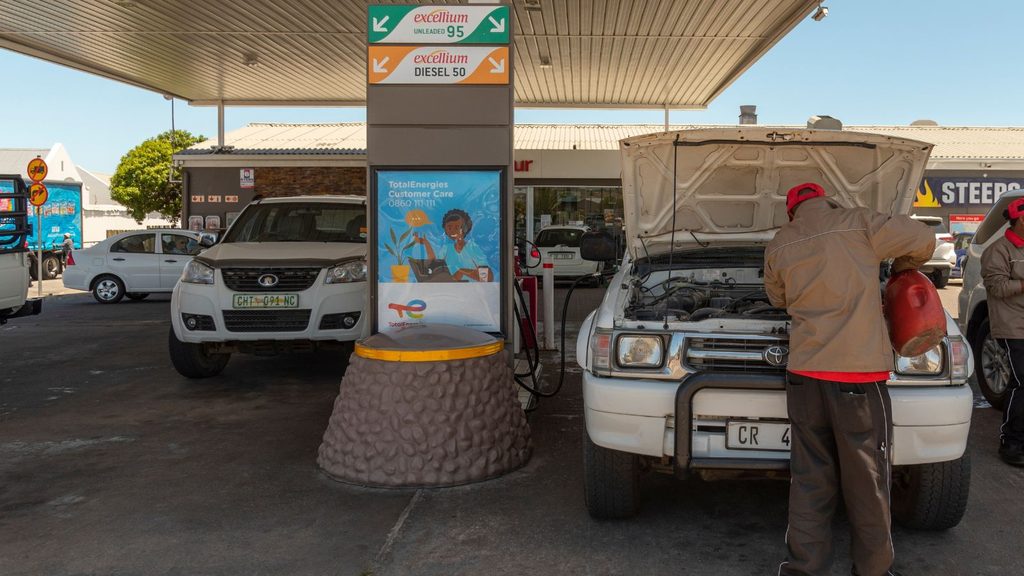
Surging oil prices and a weaker rand are set to push petrol and diesel up by R3 at the pumps in October.
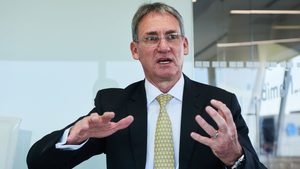
This will push inflation significantly higher in South Africa, with Stanlib chief economist Kevin Lings expecting it to rise beyond 5%.
As a result, higher petrol and diesel prices will have a cascading effect across the economy, hitting consumer spending hard.
This will be compounded by a forecasted interest rate hike from the Reserve Bank in November, making debt more expensive.
Lings explained that the end result will be strain on household budgets as a greater share of disposable income is eaten by fuel and interest payments.
Oil prices have risen sharply over the past month, with no end in sight to the conflict in the Middle East.
The conflict has also widened to include another chokepoint, the Bab al-Mandeb Strait between Africa and Arabia.
This affects a key alternative route for Saudi Arabia to export its oil to international markets, as it has relied on pumping oil from the Persian Gulf to the Red Sea.
It would then load tankers at its Red Sea ports and deliver oil to international markets through the Bab al-Mandeb Strait.
Disruptions to this alternative route, with tankers being attacked from Yemen, have pushed oil higher. All the while, no oil is flowing from Iran to international markets.
While these disruptions have come under control in the past week, oil traders are concerned about further escalation and are pricing in higher futures prices.
This has been driven by the deployment of another US aircraft carrier to the region, along with 10,000 Marines, to give US President Donald Trump more options to strike Iran.
Rising oil prices have been coupled with a weaker rand, creating a perfect storm for South African fuel prices.
Lings said the latest data points to R3 increases across the board, taking petrol prices to a record high in South Africa, above R30 per litre.
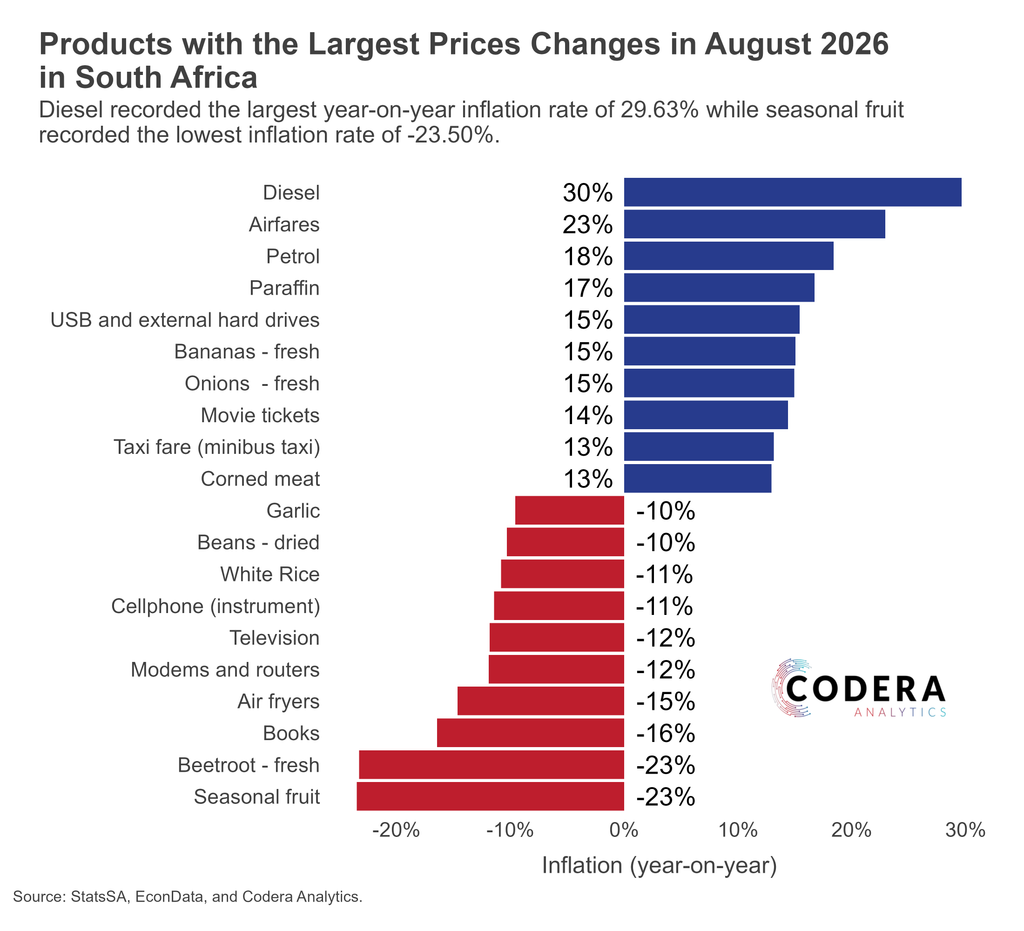
Before this increase comes into effect, higher prices have already hit South Africa hard. Data from Codera shows diesel prices are the largest driver of inflation.
Diesel prices are 30% higher than they were a year ago, with petrol up 18%. These are two of the biggest drivers of inflation in South Africa.
They are also having ripple effects across the economy, with airfares up 23% year-on-year and tax fares up 13% year-on-year.
Perfect storm
Lings explained that economists were forecasting a reduction in fuel prices at this point in the year when the conflict first broke out.
The belief was that it would be short-lived and that a normal oil supply would resume quickly, leaving the price shock brief and not severe.
This could be seen in the approach of central banks around the world, which were hesitant to raise rates until there was evidence of wider price increases.
Lings believes that central banks have played it too cautiously and were overly hopeful that the conflict would be resolved quickly.
Now, the war in Iran is into its eighth month, and oil prices are rising instead of falling. This will have significant consequences for households and economic growth.
“The Reserve Bank revised up its inflation forecast for this year. It is clear that they have become a bit more anxious about second-round effects,” Lings said.
“They think they need to hike interest rates to try and control the potential pass on or the second-round effects.”
The Reserve Bank has made it clear that they are not comfortable with inflation at 4.4%, with Lings believing it will go above 5%.
“They are absolutely determined to get inflation much closer to 3% and anchor it down there. They want to break the psychology of the 3% to 6% range,” Lings said.
The upshot is that household spending will be eaten up by higher fuel costs and interest payments on debt, thereby hitting retail sales and investment.
This will translate into slower economic growth, with the Reserve Bank now forecasting GDP growth of 1.2% for 2026 and 1.7% for 2027.
“There is criticism of the Reserve Bank that says that by hiking interest rates, they are really hurting South Africa’s economic growth,” Lings said.
“That is a fair comment, but from a growth perspective, it is clear that the main hindrance to economic growth is not the level of interest rates. It is the structural constraints on the economy.”
“There are many factors that need ot be addressed, particularly the development of infrastructure, deregulation, and the use of private-public partnerships.”
 Loading ...


Comments